


The forgotten landscape where Málaga searched for silver

Málaga
27/05/2026 at 00:32h.Just a few meters away, the scars of the great fire that devastated part of the Sierra de Mijas in the summer of 2022 are still visible. Charred pines and hillsides marked by fire are visible, not entirely hidden by the lush vegetation brought on by recent rains. At the foot of the mountain, there are also excellent views over the Guadalhorce Valley. It is one of the most unknown and surprising enclaves in the province of Málaga: the Llanos de la Plata.
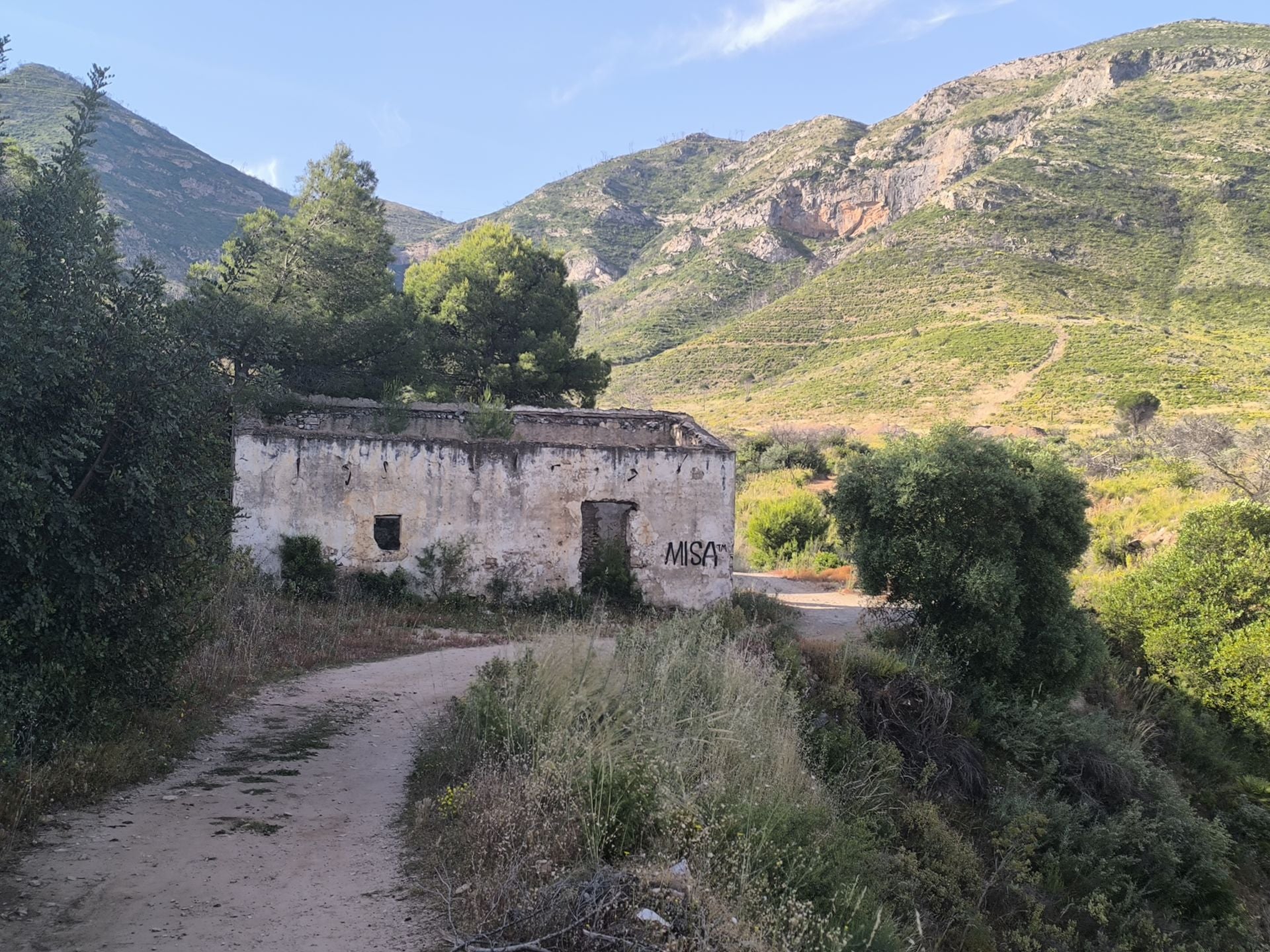
There are no signs explaining what happened here. Nor are there interpretive panels or signs to understand that, in the middle of this mountainous landscape located between Alhaurín de la Torre and Alhaurín el Grande, the remains of an important mining complex linked to the extraction of argentiferous galena during the 19th century survive.
Visitors to the area might suddenly encounter semi-collapsed staircases, stone walls, old deposits, and industrial structures built alongside the mountain. Some are partially covered by vegetation; others still display arches, channels, and conduits that allow one to imagine the intense activity that took place here over a century and a half ago. All of this on a small plain at the foot of the large mountain massif of the Sierra de Mijas, in a setting of enormous scenic power.
The feeling is strange. On one hand, the place conveys abandonment. Graffiti, ruined remains, and vegetation invading part of the constructions show decades of disuse and little protection. On the other, just observing the magnitude of some buildings is enough to understand that this was not a minor site.
Above, old mining structures in the Llanos de la Plata. In the second photo, remains of the industrial complex linked to argentiferous lead. In the last image, the traces of the 2022 fire, still visible. (J.A.)The Llanos de la Plata still preserve part of the memory of a practically forgotten era of Málaga's industrial history. A place where for decades the mountain was excavated in search of minerals and where galleries, wash houses, spoil heaps, and structures linked to the processing of the extracted material still survive.
Historical Interest
The geologist from Málaga, Juan Carlos Romero, through documentation gathered at the Aula Museo de Geología de Málaga, describes this site as an area of argentiferous lead and zinc mineralizations in dolomitic marbles of the Sierra de Mijas. That is, it is not just a suggestive name: here there was actually an exploitation associated with silver-containing minerals.
The historical interest of these mines is documented at least since the mid-19th century. One of the publications from the Aula Museo recalls that the argentiferous lead mines of the Llanos de la Plata—also mentioned as Santa Rita, San José, Los Angelitos, or Caño del Inglés—were first mentioned in 1848 by the mining engineer José de Aldama Ayala and later, in 1853, by Antonio Álvarez de Linera, chief engineer of the Málaga district.
Galleries and mining constructions hidden among the vegetation. (J.A.)This same documentation also includes a revealing fact about the importance that the extractive activity reached in the area. According to the historical works cited by the Aula Museo, in 1847 these mines produced 50,000 arrobas of mineral and 10,400 arrobas of good quality lead, in addition to some ounces of silver obtained after processing the extracted material. Part of that production was later processed in industrial facilities like the Las Mezquitas smelting plant.
Even today, it is relatively easy to imagine the movement that must have taken place here during those years. The landscape combines old industrial infrastructures with trails, cuttings, spoil heaps, and gallery entrances scattered among pine forests and areas affected by the fire. The whole has something of a scene frozen in time, especially when touring the abandoned structures or discovering old constructions semi-buried among the vegetation.
The memory of the harshness of mining work also remains very present. The visit to the site itself allows one to sense the enormous physical effort of those who worked long hours underground, in damp, dark, and narrow galleries, largely excavated with manual methods and under especially harsh conditions.
Location and Access
The Llanos de la Plata are relatively close to the Lauro Golf complex, between the municipalities of Alhaurín de la Torre and Alhaurín el Grande. The main access is usually through forest tracks and roads near this urbanization and golf course. Although part of the old structures and galleries can still be toured from the outside, specialists and disseminators remind that many areas present risks due to collapses, hidden wells, or deterioration accumulated after decades of abandonment, so it is not recommended to access the interior of the mines.
Despite its evident historical, geological, archaeological, and landscape interest, the Llanos de la Plata remain a great unknown even to many people from Málaga. There is currently no tourist or heritage development that allows for the correct interpretation of what still survives in the area.
The site is currently unmarked. (J.A.)However, specialists and disseminators have been advocating for years the need to protect and recover this site as a great space of industrial archaeology linked to mining in Málaga. The complex still preserves enough remains to become a unique cultural and tourist attraction related to a little-known facet of the history of the province.
At the foot of the north face of the Sierra de Mijas, not only do old industrial ruins remain. The traces of the enormous human effort of generations of workers who helped write a barely known page of Málaga's mining history also remain. It is hard to understand how such heritage continues to be hidden, abandoned, and with hardly any explanation for those who pass by today.
- More topics
- Alhaurín de la Torre
- Málaga (Province)

Latest news





Upcoming events
12
Nov
El Desembarco, la traición de Viriato at La Caja Blanca
12
Nov
HOMER El Mero Mero at Sala Trinchera Málaga
13
Nov
Marbella Startup Lab – Innovate & Collaborate
13
Nov
Candlelight: Coldplay & Imagine Dragons at Sala Fundación Unicaja María Cristina
13
Nov
Candlelight: Tribute to Ludovico Einaudi at Anantara Villa Padierna
Similar News

Málaga Airport Makes History with More Than Three Million Passengers in One Month
Málaga

Port of Málaga looks beyond its docks to support future growth
Málaga

Guide to the Virgen del Carmen Processions in Málaga and the Province
Málaga
