


Malaga's Álvaro Lozano reaches the final of one of the world's most prestigious cello competitions

30/05/2026 at 00:07h.
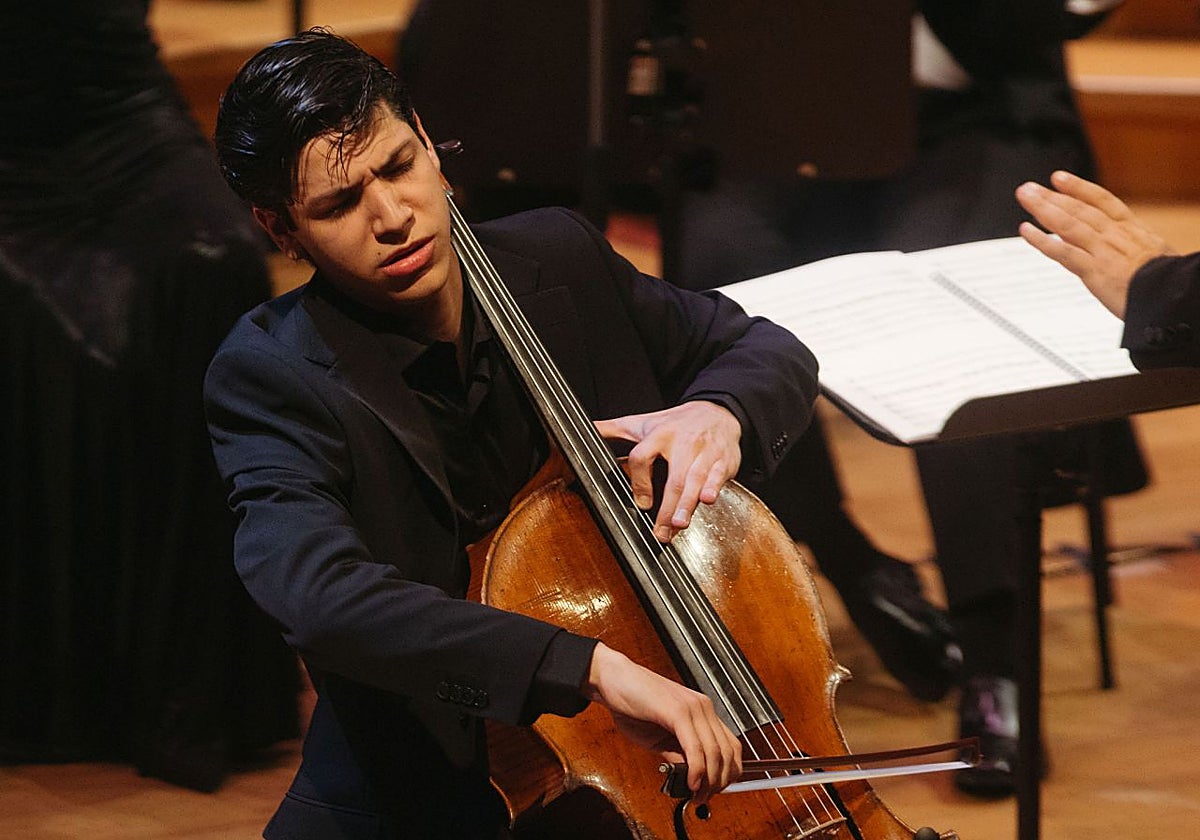
After finishing his performance of Shostakovich's First Cello Concerto in Brussels, the audience responded with a standing ovation. Álvaro Lozano Cames (born in Málaga, 2006) had just completed a performance that places him among the international elite of his instrument. At only 20 years old, the musician from Málaga has become one of the twelve finalists in the Queen Elisabeth Competition, considered one of the most prestigious classical music competitions in the world.
The magnitude of this achievement is better understood with a figure: 185 cellists aspired this year for a spot in the final. Only twelve made it to the stage of the Palace of Fine Arts in Brussels. Among them, a young man trained at the Martín Tenllado Professional Conservatory of Music in Málaga who just three years ago left his city to continue his studies at the Reina Sofía School of Music in Madrid.
185 cellists aspired this year to a spot in the final; only twelve have made it
The final of the Queen Elisabeth is not just a competition. For many performers, it represents the gateway to the international circuit of major concert halls, orchestras, and festivals. From its various editions have emerged some of the most influential musicians of recent decades. Therefore, regardless of his final ranking when the jury announces the results this Saturday, Lozano's presence among the finalists already represents one of the greatest achievements by a musician from Málaga of his generation.
The journey that took him to Brussels began in a family where music was a part of everyday life. After training in Málaga and passing through the Orchestral Studies Academy of the Barenboim-Said Foundation, he entered Reina Sofía under the tutelage of Jens Peter Maintz. Since then, he has expanded a trajectory that includes performances with the RTVE Orchestra, the Málaga Philharmonic, the European Youth Orchestra of Madrid, or the German Kölner Kammerorchester.
His resume also accumulates some of the main awards for young cellists, including the Antonio Janigro, the Gustav Mahler Cello Competition, the Intercentros Melómano, or the Pedro Bote Contest, distinctions that explain his progression, although perhaps none have the symbolic weight of this week in Belgium.
Months of intensive study, daily sessions of up to ten hours with the instrument, and meticulous physical and mental preparation have culminated in a performance that is now part of the recent history of classical music in Málaga. Now it remains to know the jury's verdict. But what is already clear is that the name of Álvaro Lozano has moved beyond just circulating among conservatories and specialists. Brussels has placed him on the international cello map.
Brussels has placed Lozano, whose name was already circulating among conservatories and specialists, on the international classical music map
The finalists have spent the last week virtually isolated in the Queen Elisabeth Music Chapel in Waterloo, where they prepare an unpublished work that they only know a few days before performing it before the jury. This test is added to the performance of a major cello concerto accompanied by an orchestra, one of the most anticipated moments of the competition.
For the final, Lozano chose a score that has been part of his repertoire for years, Dmitri Shostakovich's Cello Concerto No. 1: a work of enormous technical and expressive difficulty that allowed him to display very different registers to the Belgian audience, from the tension and drama of some passages to the lyrical depth that characterizes the instrument.
The result was a performance received with a long ovation, a response that represents the fruits of months of preparation with study sessions of between eight and ten hours a day and a routine of mental training aimed at facing the pressure of one of the most demanding stages for a young performer.
A world reference
The Belgian competition, founded in 1937 and named in honor of Queen Elisabeth of Belgium, is considered one of the major benchmarks of international classical performance. Each edition is dedicated to a different discipline — piano, violin, singing, or cello — and brings together young musicians from some of the world's leading conservatories and academies.
The name of Álvaro Lozano has been known for years in conservatories and specialized auditoriums. The final of the Queen Elisabeth now places him before an international audience and in one of the most observed showcases of classical music.
- More topics
- Museo Reina Sofía
- Brussels
- Waterloo
- Music

Latest news





Upcoming events
12
Nov
El Desembarco, la traición de Viriato at La Caja Blanca
12
Nov
HOMER El Mero Mero at Sala Trinchera Málaga
13
Nov
Marbella Startup Lab – Innovate & Collaborate
13
Nov
Candlelight: Coldplay & Imagine Dragons at Sala Fundación Unicaja María Cristina
13
Nov
Candlelight: Tribute to Ludovico Einaudi at Anantara Villa Padierna
Similar News

Málaga Airport Makes History with More Than Three Million Passengers in One Month
Málaga

Port of Málaga looks beyond its docks to support future growth
Málaga

Guide to the Virgen del Carmen Processions in Málaga and the Province
Málaga
