


Nightmare for Allergy Sufferers in Malaga: Olive and Grass Pollen Reach Extreme Levels

15/05/2026 at 00:25h.
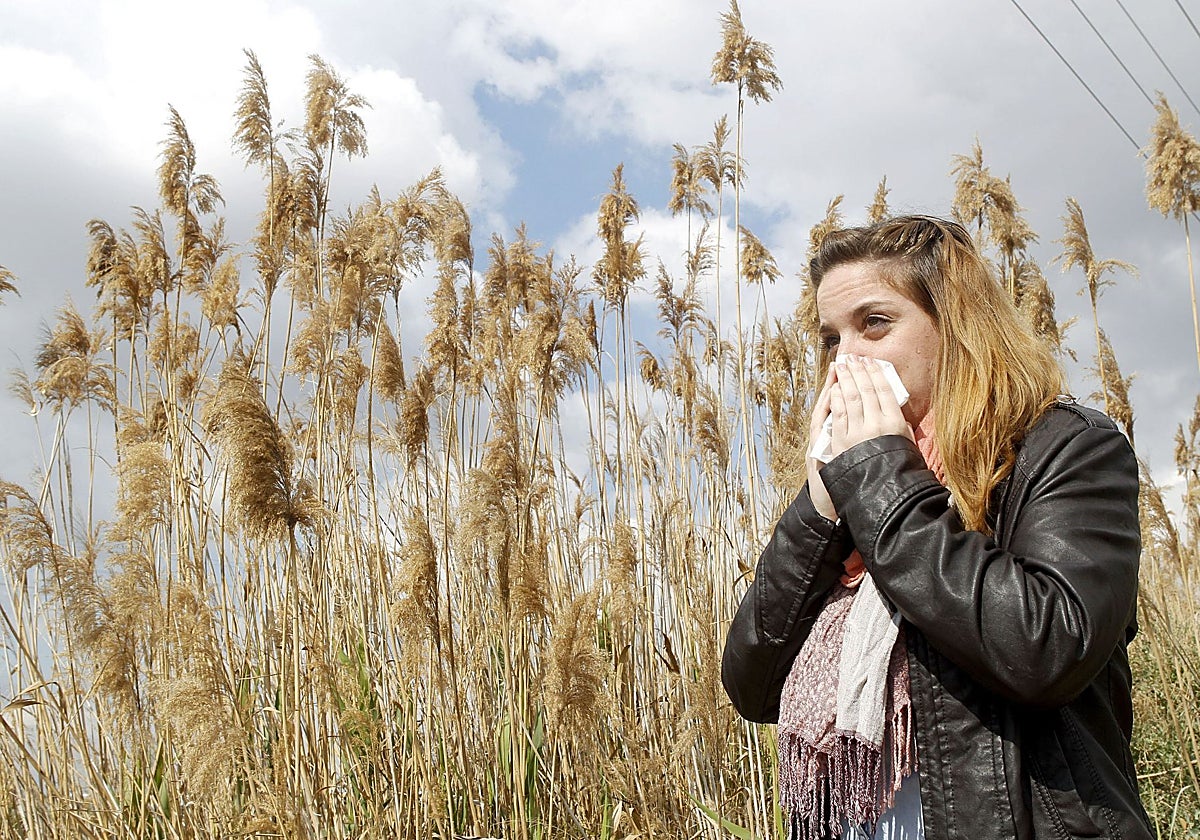
It's unusual for the levels of olive and grass pollen to coincide at extreme levels at the same time in the province of Málaga. Normally, the peak of the former is reached earlier, in early May, and from there, it starts to decline, usually followed by the turn of the grasses. However, this year, factors such as the abundant winter rains and other conditions have created this perfect storm for allergy sufferers. The first record of this was the measurement on May 5. It should be remembered that samples are processed and counted a week later.
1,300
grains per cubic meter of air
have been recorded for olive pollen. It's almost triple that of the previous week.
Data from the University of Málaga's measurement network endorse and quantify the reality of specialist consultations. “This year, those allergic to grasses are having a very tough time in Málaga. And if they have both sensitizations [to olive as well] the second half of May is looking bad,” states categorically José María Vega, an experienced allergist who is very busy these days. The expert adds issues such as the abundance of winter rains as a major factor that promotes this virulence.
Additionally, the high prevalence of common cold virus variants also contributes to overlapping symptoms and taking a toll on immune systems. Normally, the distinction between the two is that allergies cause intense itching of the eyes, nose, throat, and palate, watery mucus, and last for weeks, while colds cause sore throat, mild fever, thick mucus, and are self-limiting (about a week).
“This year, those allergic to grasses are having a very tough time in Málaga. And if they have both sensitizations the second half of May is looking bad”
José María Vega
Allergist
Antonio Picornell, assistant professor in the Area of Botany, Department of Botany and Plant Physiology at the University of Málaga, conducts a meticulous weekly count of the data recorded by the Teatinos station. In the previous weekly count, olive reached 500 grains per cubic meter of air. Currently, levels of 1,300 have been measured. The trend is stable, when logically the concentration should have already begun to decrease.
The sudden and early explosion of grasses has complicated everything. Concentrations exceed 200 grains/m3, also considered extreme. “Levels are rising significantly and the trend is upward,” highlights Picornell, who, however, assures that these are not historic values but there is that not so common confluence of pollens.
Moreover, nettles and pellitory, at moderate levels, as well as chenopods (spinach, chard, beets, quinoa...), are also joining the 'party', pointing upwards, as does plantain (although it is now at low levels).
200
grains per cubic meter of air
have been recorded for grasses in Málaga, entering into extreme values.
Regarding grasses, with high allergenic capacity, some examples are cereals like rice, wheat, oats, and corn, as well as grass, bamboo, and sugar cane... But there are thousands of species worldwide.
Very common in the region
In the autonomous community of Andalusia, almost 25% of the population suffers from respiratory allergies, which equates to more than 2.5 million people. Most are caused by the pollens of the aforementioned grasses and olive and result in symptoms of rhinoconjunctivitis or bronchial asthma, according to data from the Andalusian Society of Allergology and Clinical Immunology (SEAIC).
Do not underestimate it
Doctors emphasize that the problem should be taken very seriously: anyone with rhinoconjunctivitis, already quite bothersome in itself, can progress to more pronounced and even asthmatic states. In this sense, they recommend going beyond mere antihistamines, and resorting to a resource that still works very well: vaccines. Meanwhile, many common-sense guidelines help. Nasal washes with saline solutions and corticosteroid sprays (with a medical prescription) can help reduce symptoms. In more serious cases, one must resort to bronchial inhalers and more potent anti-inflammatory drugs. And, of course, all kinds of hygiene measures and habits help. Especially, the fundamental: trying to minimize exposure to the allergen by seeking the coast, avoiding outdoor sports activities, wearing glasses and masks, washing clothes thoroughly...
0.25
allergists
per 50,000 inhabitants are only available in the public health system of Málaga, according to Alergosur.
We always talk about reactions to pollen, but allergies can occur at any time of the year and at any age and there are many types (food, materials, animal hair, mites, chemical substances...) And whatever the type, it can cause reactions from mild to very severe. And it's not due to a drop in defenses, it's the opposite, due to a rise in immunoglobulin E.
Lack of allergists
Despite being an increasing phenomenon, there is also a shortage of professionals in the public health system of Andalusia. In fact, the Andalusian Society of Allergology and Clinical Immunology (Alergosur) recently warned about this after preparing a report. According to their data, the average ratio is only 0.44 allergists per 50,000 inhabitants, a figure well below the recommendation set by the World Health Organization (WHO), which establishes at least one specialist per 50,000 inhabitants. No Andalusian province reaches this minimum standard. In this regard, Málaga presents the most worrying indicators, with a ratio of 0.25. Currently, the province has 9 allergists for more than 1.7 million inhabitants.
“The prevalence of allergic diseases has seen a significant and steady increase in recent decades, becoming a major public health issue. Not only is there an increasing number of cases: the severity and complexity of current allergic patients is also increasing, which requires a specialized multidisciplinary approach,” they summarized in a statement after releasing the aforementioned document.
- More topics
- Allergies
- UMA - University of Málaga

Latest news





Upcoming events
12
Nov
El Desembarco, la traición de Viriato at La Caja Blanca
12
Nov
HOMER El Mero Mero at Sala Trinchera Málaga
13
Nov
Marbella Startup Lab – Innovate & Collaborate
13
Nov
Candlelight: Coldplay & Imagine Dragons at Sala Fundación Unicaja María Cristina
13
Nov
Candlelight: Tribute to Ludovico Einaudi at Anantara Villa Padierna
Similar News

Málaga Airport Makes History with More Than Three Million Passengers in One Month
Málaga

Port of Málaga looks beyond its docks to support future growth
Málaga

Guide to the Virgen del Carmen Processions in Málaga and the Province
Málaga
