


What secrets does the Vatican hide? 'Conclave', the thirst for power, and other very secular issues.
"When you look out a window in Rome, you can see a nun smoking a cigarette while walking down the street, or two priests taking a 'selfie', or a bishop drinking a Starbucks coffee, and that's how I wanted to portray the headquarters of the Catholic Church," explains the Oscar-winning German filmmaker Edward Berger.
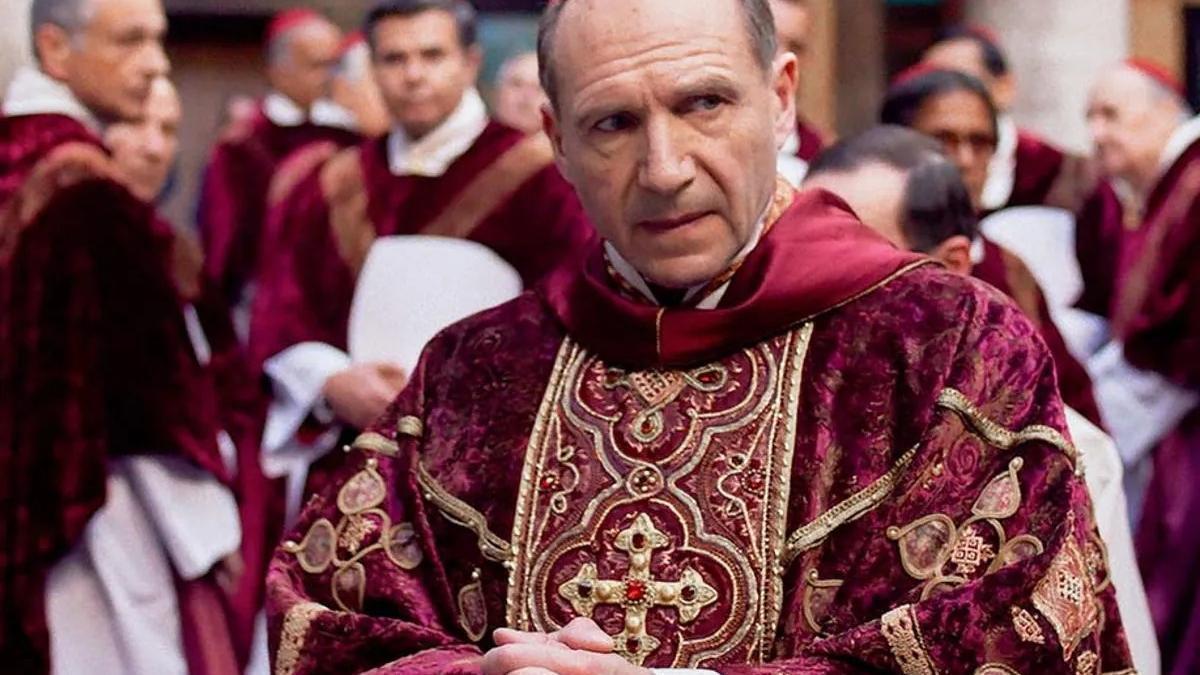

In a nutshell, 'Conclave' could be defined as a succession of scenes that take place almost entirely within the Vatican's premises, involving gentlemen in cassocks talking and talking, often whispering, about matters concerning Catholicism. How does it manage, despite this, to generate enough suspense to keep the viewer with their nails dug into the armrest? "I have always been fascinated by the political thrillers of Alan J. Pakula, films like 'The Parallax View' (1974) and 'All the President's Men' (1976)," explains director Edward Berger by way of explanation. "I love his narrative precision, and the atmosphere of paranoia and claustrophobia that his films exude, so I decided to draw inspiration from them. When I read the novel by Robert Harris on which 'Conclave' is based, I realized that it does not talk about God but about ambition, the thirst for power and other very secular issues." Instead of being set in the Vatican, indeed, the story told by the film "could take place in the offices of the White House, any multinational company, a newspaper's newsroom, or any institution where a high position becomes vacant, and several people start to sharpen their knives to occupy it."
Ralph Fiennes in 'Conclave'. / EDITORIAL
This is the first feature film Berger has directed after ‘All Quiet on the Western Front’ (2022), which won the Oscar for Best International Film and many more awards, and is considered one of the titles that will undoubtedly compete for the main awards that Hollywood bestows. If the predecessor portrayed the horrors of World War II, ‘Conclave’ sets up a perhaps less bloody but possibly just as brutal war scenario: the turbulent process of electing a new Pope, during which the cardinals seclude themselves to deliberate and which, at least in this case, involves a good number of conspiracies, betrayals, secrets, and unexpected plot twists. Meanwhile, comments its director, it poses a dilemma: "Where should the Church go? Should it adapt to current social and cultural dynamics or, on the contrary, return to conservatism in response to extremism, intolerance, and prevailing violence? It's a debate that is never overcome."
The visible head in that argumentative premise is Cardinal Lawrence (magnificent Ralph Fiennes), who is in charge of coordinating the selection process while being battered by a crisis of faith. "I think any of us can identify with the insecurities of that character regarding his own beliefs," says Berger. "I myself have doubts and constantly ask myself questions. What movies am I entitled to make? What is my work for? Should I be doing something else? If the realm of religion and that of filmmaking are similar in any way, it's that neither operates according to rules and empirical data. What is the best religion? What is the correct way to make a movie? There are no certainties, and therefore faith is required. And faith, of course, entails doubts."
While accompanying Lawrence, ‘Conclave’ is dedicated to demystifying the rituals and routines that take place inside the Vatican, and to proving that its inhabitants are nothing divine. "When you look out a window in Rome, you can see a nun smoking a cigarette as she walks down the street, or two priests taking a 'selfie', or a bishop drinking a Starbucks coffee, and that's how I wanted to portray the headquarters of the Catholic Church," explains the German filmmaker. "They are people like you and me, who use mobile phones, vape, catch colds, and who commit sins and then repent." It is a predominantly masculine world, almost as much as the army unit fought by the protagonists of 'All Quiet on the Western Front'. "Both films are a product of my interest in demonstrating how toxic those structures can be," he adds. "'Conclave' talks about the oldest patriarchal institution in the world and, at the end of the film, within it a crack opens through which light and fresh air can filter, and the promise of a more plural and inclusive future."
Raised as a Protestant, Berger abandoned religious practice during his adolescence. "It no longer made sense to me. However, I believe that the different beliefs within churches fulfill a very important function. Without these institutions, we would lack History, tradition, and cultural identity. I don't necessarily mean the Catholic Church, but religions in a broader sense." He insists that 'Conclave' is by no means an anticlerical film, and that he did not make it with the intention of offending anyone. "Who am I to attack the Church? However, there will be people who argue with my approach, or who might even feel offended by it. After all, we live in times of confrontation, polarization, and radicalization." Dark times, adds the director, immediately mentioning the rise of the far right, a threat that extends around the world but has a different meaning in his native Germany. "I am deeply ashamed of my country," he says. "I am unable to understand how, after having brought horror to the world not once but twice, there are so many Germans capable of forgetting that past and recovering the kind of hate speech that caused so much damage more than 80 years ago. I want to believe that we will soon overcome this threat, I long to believe it."

Latest news





Upcoming events
12
Nov
El Desembarco, la traición de Viriato at La Caja Blanca
12
Nov
HOMER El Mero Mero at Sala Trinchera Málaga
13
Nov
Marbella Startup Lab – Innovate & Collaborate
13
Nov
Candlelight: Coldplay & Imagine Dragons at Sala Fundación Unicaja María Cristina
13
Nov
Candlelight: Tribute to Ludovico Einaudi at Anantara Villa Padierna
Similar News

Málaga Airport Makes History with More Than Three Million Passengers in One Month
Málaga

Port of Málaga looks beyond its docks to support future growth
Málaga

Guide to the Virgen del Carmen Processions in Málaga and the Province
Málaga
