


Neither Marbella nor Nerja: Málaga's secret refuge to escape the heat in May that has the last beach in the province
Manilva is a paradise for its beaches: from Sabinillas to Los Toros, passing through Duquesa-El Castillo and especially Punta Chullera.

There are corners that seem designed to stop time just before summer speeds everything up. In the province of Málaga, when May unveils its most pleasant version, there is a destination where the sea, history, and agricultural tradition coexist smoothly. A place where the heat is not yet oppressive and the landscape offers a perfect respite between spring and summer. This setting has its own name and is located at the westernmost end of the Costa del Sol.
Situated next to the border with the province of Cádiz, Manilva stands out as one of the most unique municipalities of Málaga thanks to its dual identity. On one hand, it maintains a deep agricultural tradition linked to the cultivation of Muscat grapes; on the other, it displays a strong tourist vocation connected to its eight kilometers of Mediterranean coastline. During the month of May, this enclave gains special prominence within tourism in Málaga. The mild temperatures allow for comfortable exploration of its natural and urban spaces, in a context where the pace is slower than in the central summer months.
A historical heritage spanning centuries
A tour through Manilva is also a journey through time. Among its main landmarks stands the Castle of La Duquesa, a fortress built in 1767 on the remains of an ancient Roman villa. Its original purpose was to defend the coast against pirate incursions, reflecting the strategic importance of this point on the Malaga coastline. This legacy is complemented by the Fortín de Sabinillas, now converted into the Municipal Archaeological Museum. Inside, items such as ceramics, coins, and funerary objects ranging from the 1st to the 5th century are preserved, testifying to the Roman presence in the area.
Another significant site is the Tower of Chullera, a watchtower of Nasrid origin situated on a rocky headland. This point marks one of the most unique areas of the municipality, Punta Chullera, characterized by its cliffs, coves, and a high ecological value environment. The Church of Santa Ana, built in the 18th century, and Villa Matilde, a former residence linked to the family of Blas Infante and now an exhibition space, complete a heritage that connects different historical stages of the municipality.
Eight kilometers of coastline and the last beach in Málaga
One of the distinctive features of Manilva is its coastline. Along its eight kilometers of coast, beaches with very varied profiles unfold. Some, like Sabinillas, Los Toros, or Duquesa-El Castillo, have fully developed tourist infrastructures and services.
However, it is in the area of Punta Chullera where the landscape takes on a more natural character. Here are located coves and stretches of coast less intervened, with crystal clear waters and rocky formations that define one of the most unique spaces of the Malaga coastline. This enclave is known for housing the last beach in the province of Málaga before entering into Cadiz territory.
Trails and landscapes between the sea and agriculture
The territory of Manilva is not limited to its coast. The municipality also offers a network of natural paths that allow exploring its surroundings from different perspectives. Among them stands out the section of the Litoral Path, which connects beaches, agricultural areas, and natural viewpoints.
These routes reflect the coexistence between the Mediterranean landscape and agricultural activity, especially visible in the Muscat grape crops that have been part of the local identity for decades.
Puerto de la Duquesa, a reference on the western coast
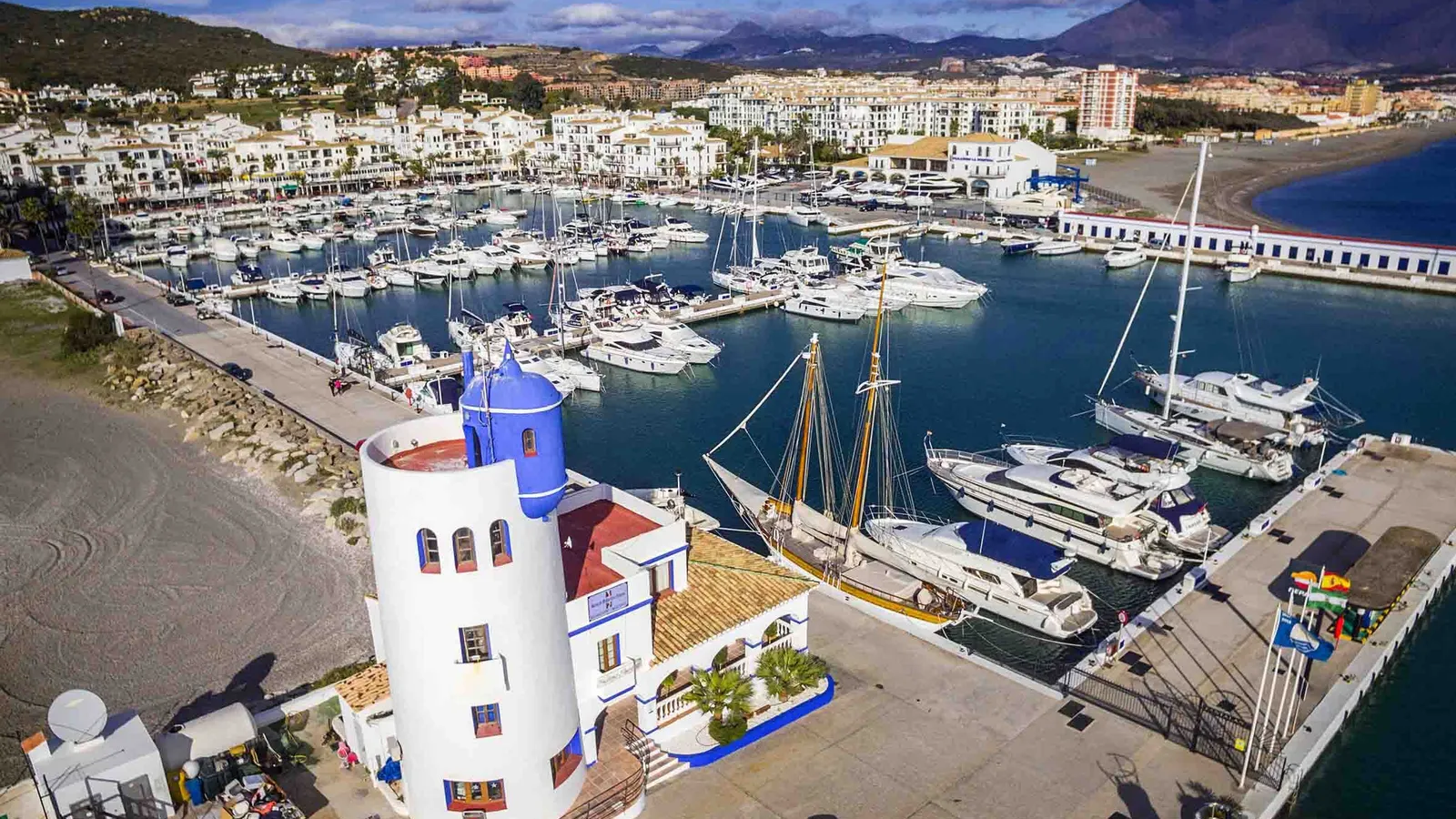
In the axis connecting Marbella with Sotogrande is located the Puerto de la Duquesa, considered the most western port of the province of Málaga. This space, which usually receives the Blue Flag, has established itself as one of the main points of tourist activity in the municipality.
Its surroundings gather dining establishments, shops, and leisure spaces that contribute to invigorating the cultural life of the area. Additionally, its location makes it a strategic point for practicing water sports and other activities related to the sea.

Latest news





Upcoming events
12
Nov
El Desembarco, la traición de Viriato at La Caja Blanca
12
Nov
HOMER El Mero Mero at Sala Trinchera Málaga
13
Nov
Marbella Startup Lab – Innovate & Collaborate
13
Nov
Candlelight: Coldplay & Imagine Dragons at Sala Fundación Unicaja María Cristina
13
Nov
Candlelight: Tribute to Ludovico Einaudi at Anantara Villa Padierna
Similar News

Málaga Airport Makes History with More Than Three Million Passengers in One Month
Málaga

Port of Málaga looks beyond its docks to support future growth
Málaga

Guide to the Virgen del Carmen Processions in Málaga and the Province
Málaga
