


Getaways in Málaga during the month of flowers: routes through essential towns and unexpected corners
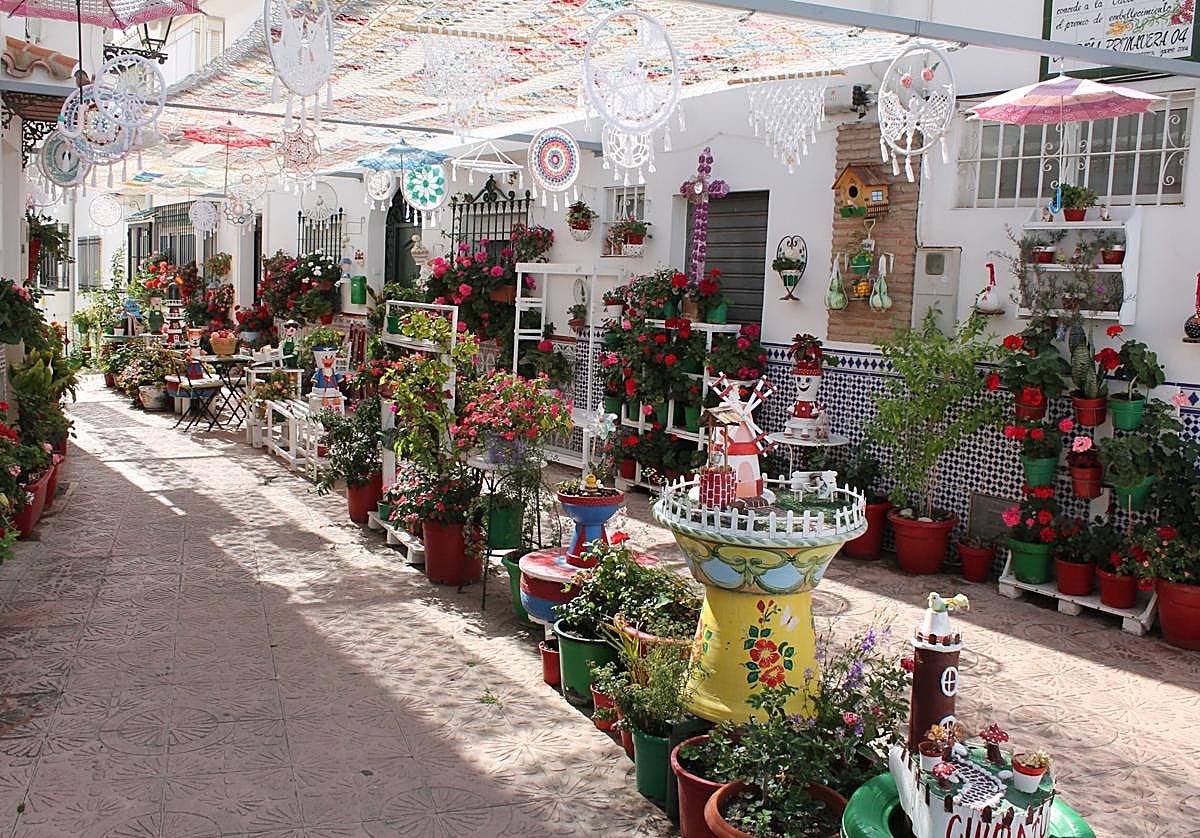

Málaga 04/05/2026 Updated at 17:16. May transforms the province of Málaga into a tapestry of colours. You don’t need to head out into the countryside to see it: simply stroll through some of its … villages to see how the whitewashed façades, flower pots and most well-tended corners are at their best. This guide brings together several easy day trips for those looking for things to see in Málaga over the coming weeks, from the Axarquía to the Serranía de Ronda and the Costa del Sol, with itineraries that combine well-known spots with others that tend to go unnoticed. It is not a run-of-the-mill list, but a selection of routes designed to let you enjoy the month of flowers at a leisurely pace, with the constant feeling of discovering something new.
Axarquía
- 1At the foot of the Sierra de Almijara: Frigiliana, Cómpeta and Canillas de Albaida
Street in Canillas de Albaida. (J. A.)In this part of the Axarquía, May begins with particular intensity. It does so in Frigiliana, one of the most picturesque villages in Andalusia. From there, the route can be extended towards Cómpeta, a natural balcony overlooking the region, and on to Canillas de Albaida, a quieter place with that air of discovery still preserved in some inland villages, all connected by a road that allows you to visit them all in a single, unhurried day.
A place that will surprise you: El Acebuchal, the hamlet that emerged from obscurityCalle Nerja, in Torrox Pueblo. (J. A.)Some distance from the sea, yet never losing sight of the Mediterranean, this itinerary offers a different way to experience the Axarquía in May. Torrox Pueblo opens the route with a historic centre that combines the white of the lime wash with the colour of the flower pots. The finest example is Calle Nerja. For its part, Algarrobo retains that Andalusian layout of narrow, steep streets that invite you to wander aimlessly. From there, Sayalonga adds its own character with unique spots and is famous for celebrating Medlar Day every first Sunday in May. This itinerary also takes you to one of the region’s great, lesser-known treasures: the old medina of Vélez-Málaga, known as La Villa, where sections of the city walls, colourful pedestrian arcades and traces of its Nasrid past around the fortress are still preserved. The route can be rounded off in Iznate, a small balcony overlooking the Vélez river valley, where the streets, well-maintained by the locals, and the sweeping views towards the coast allow you to end the day with a different perspective on this part of the province.
- 2Second line of the coast: Torrox Pueblo, Algarrobo Pueblo, Sayalonga, the old town of Vélez and Iznate
A place that will surprise you: Callejón de la Alcuza: the narrowest alley in the AxarquíaCasa Torreón, in Salares. (J. A.)Amidst minarets and streets that retain the spirit of Al-Andalus, this itinerary offers one of the most unique routes through the heart of the Axarquía. What for years has been mistakenly known as the Mudejar Route is now more accurately identified as the Route of the Minarets, in reference to those ancient mosque towers that still stand today, incorporated into churches, particularly in villages such as Árchez or Salares. A route is organised around them, starting in the hamlets of Daimalos or Corumbela and linking small villages where the Al-Andalus legacy is not merely a vestige, but part of the everyday landscape: narrow streets, whitewashed passageways and corners that invite you to pause and look around.
- 3Route of the Minarets: from Árchez, Salares, Daimalos or Corumbela
A place that will surprise you: Route of the Mills, a footpath with walkways linking a minaret to an ancient Roman road
Serranía de Ronda
- 4Bajo Genal: Jubrique, Genalguacil, Benarrabá, Algatocín and Gaucín
The old town of Benarrabá. (J. A.) At the western end of the Serranía de Ronda lies one of those routes where the landscape and the villages go hand in hand without the need to force the narrative. Between Jubrique, Genalguacil, Benarrabá, Algatocín and Gaucín lies a route where May makes its presence felt at every turn, thanks to the care with which the locals maintain the streets, squares and façades. In Jubrique, the passageways and arches invite you to lose yourself amongst flowerpots and chimneys that still recall its past; in Genalguacil, contemporary art blends with that typical mountain charm that turns it into an open-air museum; whilst in Benarrabá or Algatocín, the Al-Andalus heritage is clearly evident in their urban layout. The route gains height and perspective in Gaucín, where the spot known as the ‘Balcony of the Serranía’ allows you to round off the day with one of the most sweeping views of southern Spain, between the Genal and Guadiaro valleys and, on clear days, with the Strait in the background.
A place that will surprise you: Route of the Genal Footbridges, between the villages of the Lower GenalThe old town of Benalauría. (J. A.)This route is in the same valley as the previous one, but with a different character. Here the route gains in altitude and nuance, with villages that seem to nestle amongst chestnut groves which, at this time of year, are already displaying the greenery of their leaves. From Benalauría, hidden behind a hill that forces you to turn off the main road, to Pujerra or Cartajima, where in recent years art and colour have also found their place on the façades, there is a series of stops along a route where May offers a more leisurely version of this valley. In Benadalid, with its castle at the entrance and its streets full of battlements and flowerpots, one can clearly sense that Al-Andalus past shared by many of these villages, whilst in other places the focus shifts to the landscapes and the little surprises that await without warning.
Among them is Atajate, one of the smallest villages in the Serranía, where the houses still bear the names or nicknames of their inhabitants next to their doors – a detail that speaks volumes about the identity of this region.
- 5Upper and Middle Genal: From Benalauría to Pujerra
A place that will surprise you: The alleyway in the Serranía de Ronda that captivates Australian and American tourists
Western Costa del Sol
- 6Second line of the coast: from Benalmádena Pueblo to Manilva
Street in Casares Pueblo. (J. A.) This itinerary links some of the old town centres that best combine traditional Andalusian charm with sweeping views of the Mediterranean. From Benalmádena Pueblo, which retains its original character despite the tourist traffic along its coastline, to Manilva, at the westernmost tip of the province, the route offers a mix of well-preserved historic centres, natural enclaves and stunning viewpoints. Along the way, you’ll come across iconic villages such as Mijas Pueblo, with its network of whitewashed streets and its sanctuary carved into the rock, or Casares, which clings to the mountainside without losing sight of the sea, as well as others that offer a different flavour, such as Ojén or Istán, which officially belong to another region, the Sierra de las Nieves, and allow that mountainous landscape to stand out even more. Or Benahavís, which combines its tradition as a white village with a natural setting marked by gorges and mountain ranges. The result is a varied route, where the colour of the façades and flower pots coexists with sweeping views towards the coast in one of the most diverse stretches in the entire province.
A place that will surprise you: Villa 42, a hidden gem of a restaurant in the old town of CasaresMarbella. (J. A.)Right by the Mediterranean, two old towns await, both associated with beaches and high-quality seafront promenades. Marbella and Estepona demonstrate that the heart of their respective town centres remains one of their greatest assets at this time of year. Beyond their image linked to the coast, both towns offer the chance to rediscover, in May, a network of streets where the whitewashed walls and the colour of the flower pots take centre stage once more. In Marbella, the area around Plaza de los Naranjos and the remains of its ancient wall invite you to take a stroll that connects different periods of its history, whilst in Estepona this same route has been reinvented in recent years, transforming its centre into the well-known ‘Garden of the Costa del Sol’, with pedestrianised streets full of flowers and artistic attractions such as the Mural Route. Two different ways of approaching the same concept: that of strolling unhurriedly through town centres which, despite their tourist appeal, retain corners that still surprise those who take the time to look at them calmly.
- 7A stone’s throw from the sea: Marbella and Estepona
A place that will surprise you: Mirador del Carmen, where the beach meets culture and tradition
*Fortunately, there are many more picturesque villages to visit this May, such as Montecorto, Monda, Casarabonela, Benaoján and Montejaque, amongst others. Comments Report an error
- More topics
- Istán
- Ronda
- Algatocín
- Sayalonga
- Casares
- Vélez-Málaga
- Benaoján
- Marbella
- Montecorto
- Andalusia
- Málaga
- Ojén
- Benalauría
- Nerja
- Monda
- Benalmádena
- Genalguacil
- Daimalos
- Gaucín
- Casarabonela
- Manilva
- Mijas
- Benarrabá
- Estepona
- Cómpeta
- Sierra de Las Nieves National Park
- Salares
- Montejaque
- Torrox
- Jubrique
- Frigiliana
- Atajate
- Algarrobo
- Árchez
- Iznate
- Corumbela
- Benahavís
- Pujerra
- Canillas de Albaida
- Cartajima
- Benadalid
- Málaga (Provinc

Latest news





Upcoming events
12
Nov
El Desembarco, la traición de Viriato at La Caja Blanca
12
Nov
HOMER El Mero Mero at Sala Trinchera Málaga
13
Nov
Marbella Startup Lab – Innovate & Collaborate
13
Nov
Candlelight: Coldplay & Imagine Dragons at Sala Fundación Unicaja María Cristina
13
Nov
Candlelight: Tribute to Ludovico Einaudi at Anantara Villa Padierna
Similar News

Málaga Airport Makes History with More Than Three Million Passengers in One Month
Málaga

Port of Málaga looks beyond its docks to support future growth
Málaga

Guide to the Virgen del Carmen Processions in Málaga and the Province
Málaga
