


This is the best hiking route you can do in Malaga in May:
The itinerary does not pose any physical demands: just 1.2 kilometers of distance and an elevation change of only 20 meters. The hidden "crater" of Málaga that seems from another planet (but it isn't) and a hiking trail to discover it.
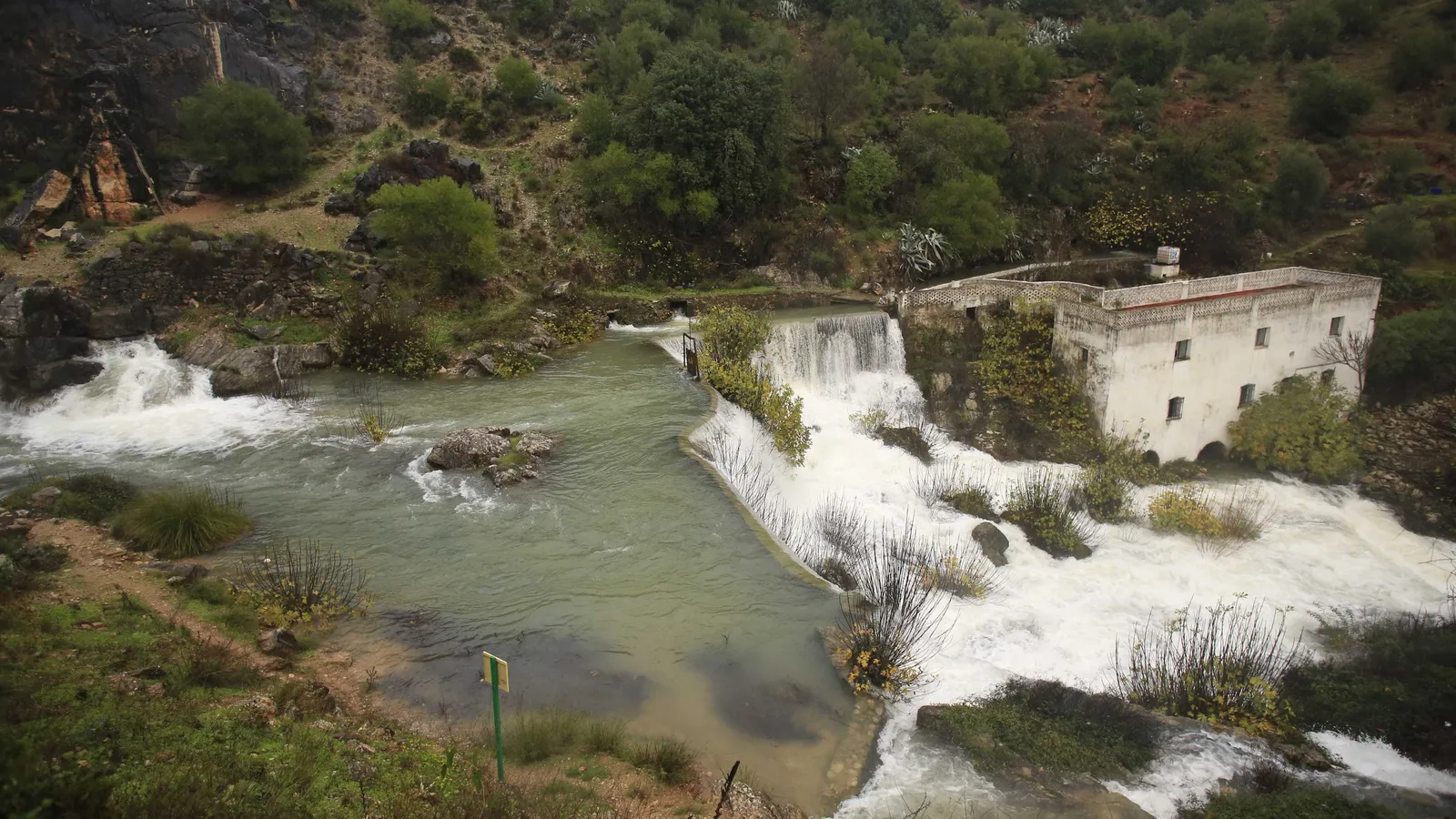

May offers a brief but precise window for those who know where to look. It's the month when April's rains still feed the springs, and streams flow with true conviction before the heat gradually diminishes them. At that exact moment of the year, the Benaoján Spring, also known as Los Cascajales or Molino del Santo, shows its best version: water bursts with strength at the base of the town, running between limestone rocks and Mediterranean vegetation, creating the kind of soundscape that those who have seen it describe as "a joy of waterfalls and flowing water." A route of just 1.2 kilometers that, at this time of year, gives back much more than it demands.
Benaoján is nestled in the heart of the Serranía de Ronda, surrounded by the reliefs of the Sierra de Grazalema Natural Park, just over 16 kilometers from Ronda and more than 115 from the capital of Málaga. A distance that places it far from the most frequented tourist circuits of the province, but at the same time makes it one of the most genuine natural enclaves in inland Andalusia.
The protagonist of the environment is the spring, a source of clear waters that emerges at the lower part of the town in a full karst landscape. The limestone rock that shapes the terrain of this corner of the Serranía has sculpted over centuries an underground water system whose most visible and spectacular expression is precisely this point where the water surfaces with a force that varies according to the time of year, but in May, after the spring rains, reaches one of its most generous moments.
The route: 1.2 kilometers, minimal elevation and accessible for everyone
The Benaoján Station – Benaoján Spring route is one of the simplest yet most rewarding hiking proposals in the province of Málaga. With just 1.2 kilometers of route and an elevation gain of only 20 meters, the itinerary does not pose any physical demands, making it a walk suitable for all visitors, including families with children or elderly people.
Powered by WikilocThe starting point is located near the Benaoján train station, a stop that retains the characteristic atmosphere of old Andalusian railway journeys. From there, the trail advances through Mediterranean vegetation accompanied by the constant murmur of the Guadiaro River, until reaching the spring that gushes at the base of the town. The route is short, but the combination of sounds, vegetation, and karst landscape makes every meter count.
The hydraulic mills: centuries of history along the spring
The water from the Benaoján Spring has not only been a landscape element: for centuries, it was a source of energy that powered a chain of hydraulic mills along the stream. The inventory compiled by Pascual Madoz in the 19th century already listed nearly a dozen of these structures in the area, some of which still leave their traces on the terrain.
Among them, the Molino del Santo, whose name today identifies a nearby rural accommodation, and the Molino del Caracol, converted into a tourist establishment that offers rest to hikers and visitors of the environment. These structures are not just industrial heritage: they are evidence of a historical relationship between the community of Benaoján and the water that sprang from its land, a dependency that shaped the daily life of the municipality for generations.
The natural environment: karst, polje, and top-level speleology
The richness of the environment surrounding Benaoján goes far beyond the spring. The territory in which the municipality is located is shaped by the same limestone substrate that generated the spring, and in this case, it takes the form of a polje (a closed karst depression) that creates one of the most peculiar environments in the interior of Málaga. The rock, the underground water, and the geological modeling combine here to create an ideal scenario for both hiking and speleology.
In the vicinity of the spring route are three caves of exceptional natural and heritage value that place Benaoján among the most significant underground points of interest in the entire Iberian Peninsula.
- Cueva del Hundidero: Monumental entrance over 50 meters high, one of the most impressive in the Serranía.
- Cueva del Gato: Iconic pool at its entrance and remains of rock art inside.
- Cueva de la Pileta: Famous for its prehistoric paintings and zoological richness, a benchmark of Andalusian rock heritage.
Why May is the best time for this route
The rains of these months recharge the aquifer that feeds the Benaoján Spring, and this accumulated energy translates in May into a particularly lively spring, with higher flow, more water noise, and riverside vegetation that reaches its most intense expression this month. The temperature in the Serranía de Ronda in May is also particularly pleasant for walking: neither the cold of winter nor the heat that begins to settle in June.
The combination of all these factors, the flow of the spring at a good moment, the spring climate, the accessibility of the route, and the density of natural and archaeological heritage in the environment, makes this outing one of the most complete hiking proposals in Málaga that can be proposed at this time of year. At 115 kilometers from the capital, in a town that time and mass tourism seem not to have yet discovered, the water runs and the waterfalls sound as if the world had just welcomed the month of May.

Latest news





Upcoming events
12
Nov
El Desembarco, la traición de Viriato at La Caja Blanca
12
Nov
HOMER El Mero Mero at Sala Trinchera Málaga
13
Nov
Marbella Startup Lab – Innovate & Collaborate
13
Nov
Candlelight: Coldplay & Imagine Dragons at Sala Fundación Unicaja María Cristina
13
Nov
Candlelight: Tribute to Ludovico Einaudi at Anantara Villa Padierna
Similar News

Málaga Airport Makes History with More Than Three Million Passengers in One Month
Málaga

Port of Málaga looks beyond its docks to support future growth
Málaga

Guide to the Virgen del Carmen Processions in Málaga and the Province
Málaga
