


The CSI of Preventive Medicine: How Public Health Responds to Meningitis

02/05/2026 Updated at 17:26.
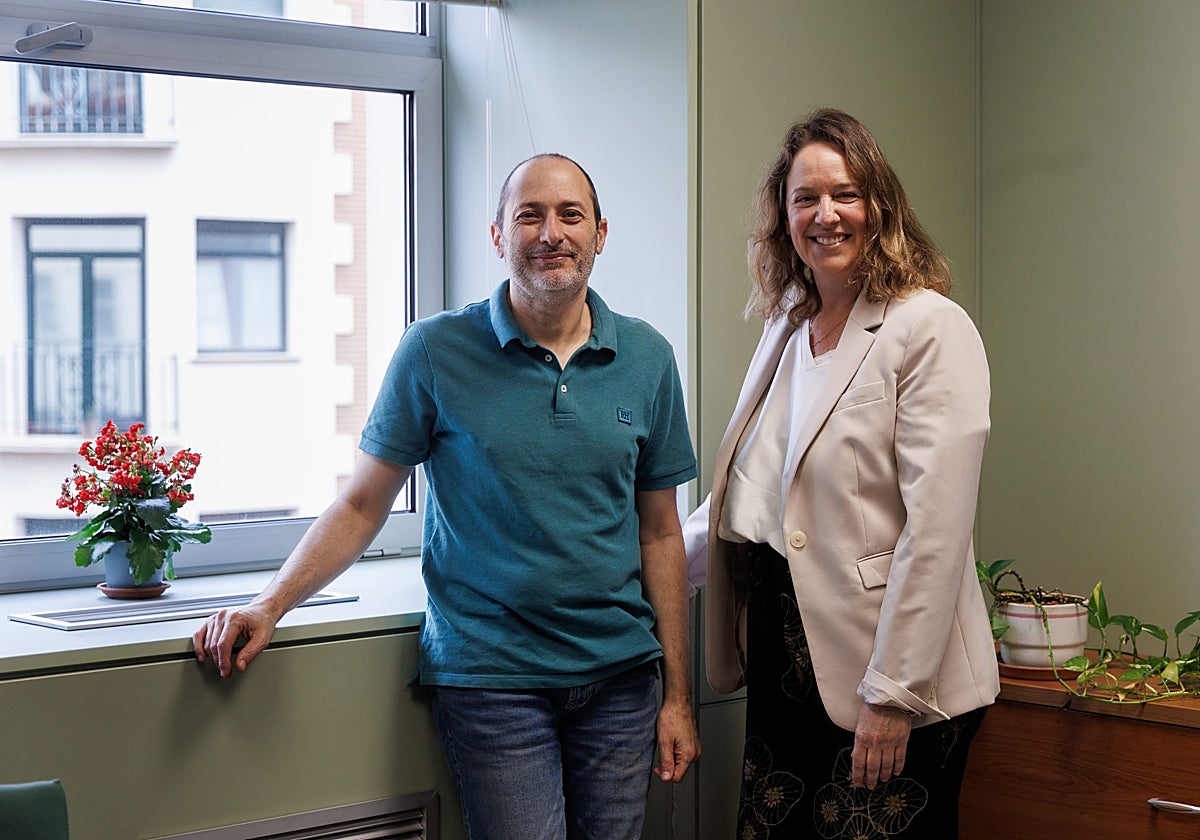
"We take care of the healthy. When there is a sick person, whether it's meningitis, legionella, or West Nile virus, the healthcare system takes care of them. Around each sick person, there are many people who are susceptible to getting sick: those are the ones we take care of," explains Daniel Moscoso, an epidemiologist at the Public Health Service of the Territorial Health and Consumer Affairs Delegation of the Junta de Andalucía in Málaga. His department, led by the head of service Carolina Calero, is responsible for surveillance, control, and prevention around notifiable diseases, those that healthcare workers are legally obliged to report to the authorities when they detect or suspect them. Their work is crucial: preventing an outbreak or an epidemic. Undoubtedly, they have become the CSI of preventive medicine.
Related news
Moscoso agrees and explains: "There you have the food part, the listeria or foodborne infections: we have to see the possible origin of the disease and then how far it goes. The case stops there and we have to investigate around the case and take measures and make sure that people take the corresponding medication." He refers to those surrounding the sick person.
Calero, on her part, emphasizes: "We have a Public Health laboratory that participates in all these investigations and tries to locate the pathogen, whether in food or in the environment, independently of the microbiology laboratory, which is in hospitals and deals with human samples." Moscoso assures that this is done in food and water.
Meningitis
The death of a five-year-old girl at the Maternal and Child Hospital from bacterial meningitis on April 20, after being treated at the Axarquía Regional Hospital, has forced these specialists to work hard. "We have an alert network, an epidemiological surveillance system that is prepared for these contingencies: there is a staff on duty from three in the afternoon to eight the next day and on weekends, apart from the usual activity of the district epidemiologists during office hours," Moscoso emphasizes, who, at the same time, adds: "This on-call epidemiologist is the one who contacts the relatives, who learns about the case and, depending on the need or not to administer chemoprophylaxis, is in charge of deciding to whom."
"The on-call epidemiologist is the one who contacts the relatives, who learns about the case and, depending on the need or not to administer chemoprophylaxis, is in charge of deciding to whom"
David Moscoso
Epidemiologist
Sometimes, he contacts the relatives in the hospital waiting room and recommends medication. If not, they are invited to go to the health center, where it is administered. The first objective in a case like that of Vélez Málaga is the relatives. "We also have the work or school environment, which is usually done the next day when the school is located, in addition to the healthcare personnel who have been exposed," he adds.
Medication
"That is immediate, at the moment when there is knowledge or well-founded suspicion of the germ: then medication is indicated to everyone," he says. In the case of bacterial meningitis, it is not as "contagious as measles. When we have a case in a waiting room, we have to control the entire waiting room. Meningococcal disease does not spread as much, it requires much more continued contact: that's why we look in the family or work environment, they are children who spend a lot of time together, that does need to be controlled, but it is not a five-minute contact, talking with the patient, as it could be with measles."
In a healthy person, no control is done, adds Moscoso, "because this bacterium is relatively common to find in healthy people. It normally circulates in the population. It lives in the oropharyngeal part, transmitting from person to person. Normally it does not cause symptoms." Only in very extreme cases, less than 1% of the cases, it leads to more serious conditions with neurological or septicemic effects.
In addition to locating the work and family environment, they study whether people are vaccinated, their medical history, and possible allergies, in an operation that involves many professionals: epidemiologists, hospital preventionists, and family doctors. "It's a network, preventive medicine, hospital, together with the epidemiologists, with the on-call system; it's an interconnected network in which we are continuously in contact. We have an application called Red Alert, in which when there is a case, everything is written down and we consult it there," he says.
"We take care of a complete list of notifiable diseases that, once the doctor suspects, immediately activates the network through the notification made by the doctor"
Carolina Calero
Head of the Public Health Service of the Territorial Health and Consumer Affairs Delegation
Calero, for her part, recalls that it is not only meningitis, but "a complete list of notifiable diseases that, once the doctor suspects, immediately activates the network through the notification made by the doctor, whether in the public or private sector. Once it is activated, measures of action and intervention are set in motion in different fields." For example, an intervention is made in a public establishment "because there has been food symptomatology" or in a facility, while other actions go to "contact tracing, treatment, vaccination, etc."
Every week, Moscoso and Calero estimate that there may be between 100 and 200 cases of notifiable diseases, but protocolized interventions estimate one weekly. "Here also enter listeria, legionella, any notifiable disease that requires immediate intervention, there are many," says Moscoso. But there are more: foodborne infections, West Nile virus, or measles.
Other diseases
In a case of bacterial meningitis like the one in Vélez, they look for people who live, sleep, or eat with the case, in addition to schoolmates and healthcare workers. "There have been cases of 30 children in the same daycare," he adds, to which Carolina Calero objects: "The number of people given prophylaxis is broad." Everything is coordinated through the Public Health Service of the Delegation and the homonymous units in the districts.
Calero explains: "Listeria, for example, can also be very serious and the contagion is through food, normally. A study of these, of the case, is done to see if they are made at home or outside, if it has gone to a public establishment it involves a significant investigation."
The advice of the head of the Public Health Service is clear: "It is very important to keep the vaccination schedule up to date," and she insists: "We work in health prevention, promotion, and protection."
comments Report an error

Latest news





Upcoming events
12
Nov
El Desembarco, la traición de Viriato at La Caja Blanca
12
Nov
HOMER El Mero Mero at Sala Trinchera Málaga
13
Nov
Marbella Startup Lab – Innovate & Collaborate
13
Nov
Candlelight: Coldplay & Imagine Dragons at Sala Fundación Unicaja María Cristina
13
Nov
Candlelight: Tribute to Ludovico Einaudi at Anantara Villa Padierna
Similar News

Málaga Airport Makes History with More Than Three Million Passengers in One Month
Málaga

Port of Málaga looks beyond its docks to support future growth
Málaga

Guide to the Virgen del Carmen Processions in Málaga and the Province
Málaga
