


The trails that end at crossroads and hermitages in Malaga: 22 routes between faith, history, and landscape

Málaga, 29 April 2026. Updated at 1.47 pm. From a cross that has stood there for decades and remains a meeting point for pilgrimages, to a hollow in the rock where, almost without any rules, images have been placed over time, turning it into a small, spontaneous shrine. These are just some of the sights that await at the end of more than twenty trails in the province of Málaga.
These are hiking routes that traverse regions such as the Axarquía, the Guadalhorce Valley, the Sierra de las Nieves and the Serranía de Ronda, offering experiences that combine nature, heritage and local traditions. These are itineraries for discovering unique spots in the inland and along the coast, many of them linked to ancient religious pilgrimage routes and places steeped in history.
Axarquía
- Frigiliana 1Cruz de Félix and Cruz de Pinto
Cruz de Félix, in Frigiliana. (J. A.)This route through the Sierra de Almijara connects two sites of great symbolic significance within the same landscape. On the one hand, the Cruz de Félix, where the physical structure no longer remains, yet the site retains its meaning intact; on the other, the Cruz de Pinto, situated on a commanding vantage point with sweeping views of the coast and the inland countryside. Both are part of challenging routes that combine riverbeds, narrow paths and ascents to panoramic ridges. Together, they offer a complete experience, where the effort is rewarded by the landscape and that sense of tradition and the memory of the land.
Hiking routeOne of the most demanding climbs in the Axarquía, with a route leading to one of the highest points in the municipality. The cross situated at the summit not only serves as a visual landmark but is also linked to a legend about a sailor who erected it after being saved from a shipwreck. The route is long and steady, with a significant cumulative elevation gain, but it rewards hikers with spectacular panoramic views of the coastline and the Almijara mountain range. It is a route for hikers accustomed to a strenuous hike, with a finish offering a stunning landscape. A few months ago, the cross that had stood there since 1971 was vandalised, although a group of volunteers re-erected it in the same spot.
- Nerja 2Cuesta del Cielo
Guadalteba
- Carratraca 3Hermitage - Llano de los Arenalejos
Remains of the hermitage destroyed by lightning in Carratraca. (J. A.)This circular trail through the Sierra Blanquilla combines nature, history and heritage in an accessible route, though with a demanding start. From the town centre, the path climbs to a small chapel and the remains of an old 19th-century chapel which was never actually used after being destroyed by lightning. This detail lends a unique character to a route that then levels out amongst pine forests and old mining ruins. It is a short but very comprehensive route, where the interest lies not only in the destination but also in the historical features that mark the way.
More informationAlthough it no longer has a visible cross, this hill retains its symbolism in its very name and in its status as a territorial landmark. The route climbs along tracks through olive groves, pine forests and areas of wind turbines until it reaches the triangulation point marking the summit. The ascent is gradual and offers sweeping views of the Seville countryside and the Antequera plain. It is a route that stands out from the rest on this list, more closely linked to the open landscape and the interpretation of the territory than to any specific physical feature.
- Sierra de Yeguas 4Morrón de la Cruz
Northern Sierra of Málaga
- Archidona 5Path to the Sanctuary
Entrance to the Sanctuary of the Virgin of Grace, in Archidona. (J. A.)This route connects the town centre with the old fortress where the Sanctuary of the Virgin of Grace is situated, passing by the Chapel of the Holy Christ. The climb, steady but gradual, takes you past various historical landmarks, such as walls, gates and the remains of buildings that bear witness to the intermingling of cultures. The value of the route lies not only in the destination, but in the path itself, which combines heritage and landscape. It is a short but very comprehensive route, ideal for understanding the history of Archidona whilst gaining height towards one of its most iconic sites.
Guadalhorce Valley
- Álora 6Cruz del Hacho
The climb up Mount Hacho is one of the great classics of hiking in the Guadalhorce Valley. The certified route ascends from the town centre to the cross situated at the summit, along a demanding but well-signposted trail. The path alternates between steep and gentler sections, with the summit always in sight. From the cross, you can enjoy a panoramic view of Álora Castle and the valley. It is a very popular route that combines physical exertion with visual rewards at one of the region’s most recognisable landmarks.
More informationThis route leads to one of the most symbolic sites in the Guadalhorce region, situated across several municipalities. The climb from Puerto Blasón is steady but manageable, along a tarmac track. The chapel is not only a geographical landmark but also a cultural one, as it hosts one of the province’s best-known verdiales gatherings. The open landscape and the clarity of the route make it accessible, especially in spring, when the surroundings are at their best.
- Cártama 7Path to the Hermitage of Las Tres Cruces
More informationThis certified trail connects the town centre of Coín with one of its most iconic landmarks. The route alternates between urban areas, orchards and more rugged terrain until it reaches the chapel, which is closely linked to local pilgrimages and traditions. The changing landscape adds variety to the route, moving from developed areas to more natural ones. It is an accessible, well-signposted route with a clear destination, reinforcing the idea of a meaningful path within the region.
- Coín 8Path to the Fuensanta Chapel
More informationThis circular route climbs from Pizarra up to the Sierra de Gibralmora to reach one of the most symbolic sites in the Lower Guadalhorce: the image of the Sacred Heart of Jesus, popularly known as El Santo. The ascent combines stretches of pine forest with more open paths until reaching this natural viewpoint, which offers sweeping views of the valley and the Sierra de las Nieves. The descent completes the route, passing close to the Fuensanta de Pizarra Hermitage, one of the oldest and most unique churches in the province, partly carved out of the rock. It is a very comprehensive route, combining landscape, tradition and heritage in a single walk.
- Pizarra 9Ruta del Santo and Fuensanta Hermitage
Sierra de las Nieves
- Tolox 10Father Ventura’s Cross Trail
Father Ventura’s Cross, in Tolox. (J. A.)This certified trail ascends from the town centre via a Way of the Cross featuring fourteen crosses marking the route. The climb is short but demanding, with zigzagging sections that ease the gradient. It is a route much used by local residents, which reinforces its link with local tradition. The end, at the cross, serves as a natural conclusion to a route steeped in symbolism, where the path itself carries as much significance as the destination.
More informationA classic among the mid-mountain routes on the Costa del Sol, with several access options from Marbella or from the Juanar refuge. The trail climbs through woodland until it reaches a cross situated on a high point with sweeping views of the coast. It is a well-known and popular route, combining accessibility, scenery and hiking tradition in one of the area’s most popular spots.
- Ojén 11Cruz del Juanar
More informationThis route connects the hamlet of Jorox with the cross situated in the area known as La Mesa. Rather than a demanding route, it is a traditional path linked to the local pilgrimage, which gives it a strong cultural dimension. The route is short and straightforward, yet it offers a good insight into the relationship between the village and its surroundings. It is a route that is highly representative of hiking linked to popular traditions.
- Alozaina 12Cruz de Jorox
More informationChapel of the Virgen de la Nieves. (J. A.)This trail ascends from Tolox towards the natural park area, following the valley of the River Horcajos. The route gains height gradually and combines sections of track with more natural paths. Closely linked to the local pilgrimage, it is a trail with deep-rooted traditions. The final section, through a pine forest, marks a clear change in landscape that reinforces the feeling of arriving in a more sheltered area.
- Tolox 13Route to the Virgen de las Nieves Chapel
More informationAn easy route connecting Yunquera with this chapel, which is the focus of great local devotion. The path runs along wide tracks with little elevation gain, making it accessible. Along the route, cultivated areas alternate with small natural enclaves. The chapel stands in a peaceful setting that reinforces its traditional character. It is more of a cultural experience than a sporting one.
- Yunquera 14Porticate Trail
More informationThis circular trail starts in the town centre and heads into the foothills of the Sierra Blanca to a small rock cavity where an image of the Virgin is preserved. More than a conventional chapel, it is a natural sanctuary with strong symbolic significance. The route alternates between ascents and descents through shaded areas and ravines, featuring varied Mediterranean vegetation. The final detour to the hollow reinforces that sense of discovery, in a secluded spot of great traditional significance.
- Ojén 15Sendero de la Virgencita
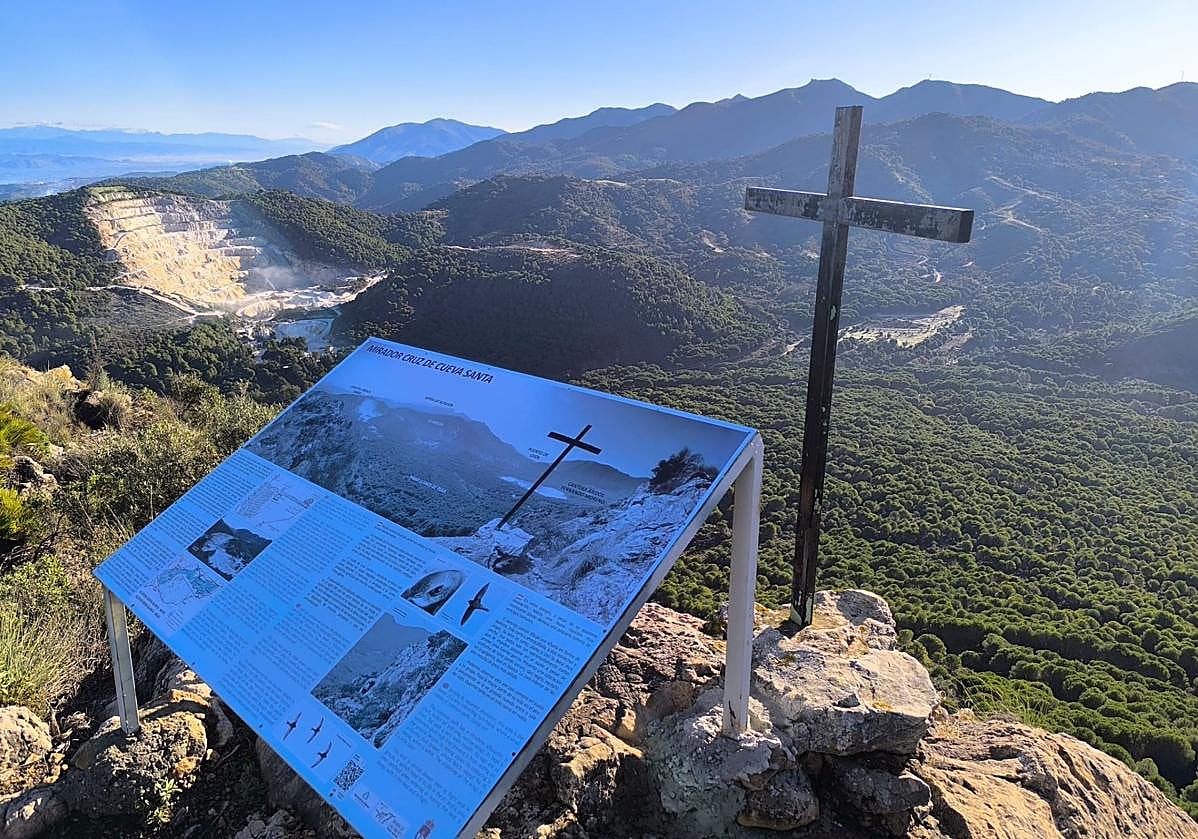
More informationCross situated above the Cueva Santa de Monda. (J. A.)This linear route climbs up the Sierra Canucha to a hollow that has been transformed into a natural sanctuary. The route is gradual but steady, with a narrower final stretch leading to the grotto, where religious images are gathered. Beyond its spiritual significance, the site stands out for its historical and geological interest, having been inhabited since the Bronze Age. The nearby viewpoint provides a panoramic finale to a route that combines physical exertion, landscape and religious symbolism, as it features a large cross.
- Monda 16Cueva Santa
Málaga city
- Málaga 17Cruz de San Antón
A circular route leading to one of the city’s best-known peaks. The path climbs through pine forests to the cross situated atop one of the hills. It is a short, accessible and very popular route, allowing you to enjoy nature without straying far from the city.
More informationOne of the most comprehensive destinations due to its various access options. The route climbs along tracks to the chapel, passing by the Torre de los Verdiales on the way. The site combines festive tradition, landscape and heritage in a setting closely linked to the popular culture of Málaga.
- Málaga 18Chapel of Los Verdiales
Costa del Sol
- Mijas 19Calvario Chapel and Cruz de la Misión
Cruz de la Misión, on the Mijas Red Route. (J. A.)This route allows you to combine two of the best-known landmarks of the Mijas mountains in a single walk. From the town centre, the path climbs along stony, signposted sections until it first reaches the Cruz de la Misión. Furthermore, it starts practically at the Calvario Chapel. Combining both sites within a single itinerary gives the route a sense of coherence, whilst also offering continuous views of the coastline. It is an accessible yet comprehensive route, ideal for understanding the hiking network in this area.
Vega de Antequera
- Alameda 20Cruz de la Camorra
This trail starts in the town centre and climbs up to the Sierra de la Camorra. The route is short but steep, with the cross situated atop a rocky outcrop serving as a landmark. It is a route closely linked to local tradition, particularly around the Day of the Cross, offering sweeping views over the interior of the province.
Serranía de Ronda
- Ronda 21Virgen de la Cabeza Chapel
A short, accessible route leading to a cave chapel situated in a unique setting. The route follows a wide track until a final cobbled section. It stands out for its historical significance and the views over the Tajo de Ronda, making it a very rewarding option. However, the chapel is usually closed to the public.
More informationChapel of the Cruz del Milagro, in Montejaque. (J. A.)This route takes you to one of the most unique spots in Montejaque. The path climbs through a mid-mountain landscape to a very iconic site in this part of the Serranía de Ronda: the Virgen de la Escarihuela chapel and, just a few metres away, the Chapel of the Cruz del Milagro. Both are linked to the same legend. Beyond their religious significance, their value lies in their connection to tradition and in the views of the surrounding Serranía.
- Montejaque 22Chapel of the Cruz del Milagro / Hermitage of the Escarihuela
* There are also other significant crosses along well-known hiking routes, including some sections of the Great Malaga Path or the Serranía de Ronda route, amongst others, such as the Cruz de Humilladero in that town in Malaga; the Cruz de Piedra in Atajate; the Cruz de Hierro in El Chorro (Álora); the Cruz del Picacho in Valle de Abdalajís; the Cerro de la Cruz in Igualeja; the cross at the Los Sauces recreation area in El Burgo; the cross at Cerro Coronado in Málaga; the Cruz de Solano in Montejaque; the one at Llano de la Cruz (Ronda); and the Cruz Ventura in Jimera de Líbar.
There are also places named after a cross, such as the Cruz de Camarolos in Villanueva del Rosario. Comments Report an error

Latest news





Upcoming events
12
Nov
El Desembarco, la traición de Viriato at La Caja Blanca
12
Nov
HOMER El Mero Mero at Sala Trinchera Málaga
13
Nov
Marbella Startup Lab – Innovate & Collaborate
13
Nov
Candlelight: Coldplay & Imagine Dragons at Sala Fundación Unicaja María Cristina
13
Nov
Candlelight: Tribute to Ludovico Einaudi at Anantara Villa Padierna
Similar News

Málaga Airport Makes History with More Than Three Million Passengers in One Month
Málaga

Port of Málaga looks beyond its docks to support future growth
Málaga

Guide to the Virgen del Carmen Processions in Málaga and the Province
Málaga
