


The perfect May bridge is in Malaga: these are the towns you can't miss
White villages, sea viewpoints, and unique places to disconnectI'm from Malaga and these are the 4 bars where you can best enjoy, feel, and eat Malaga
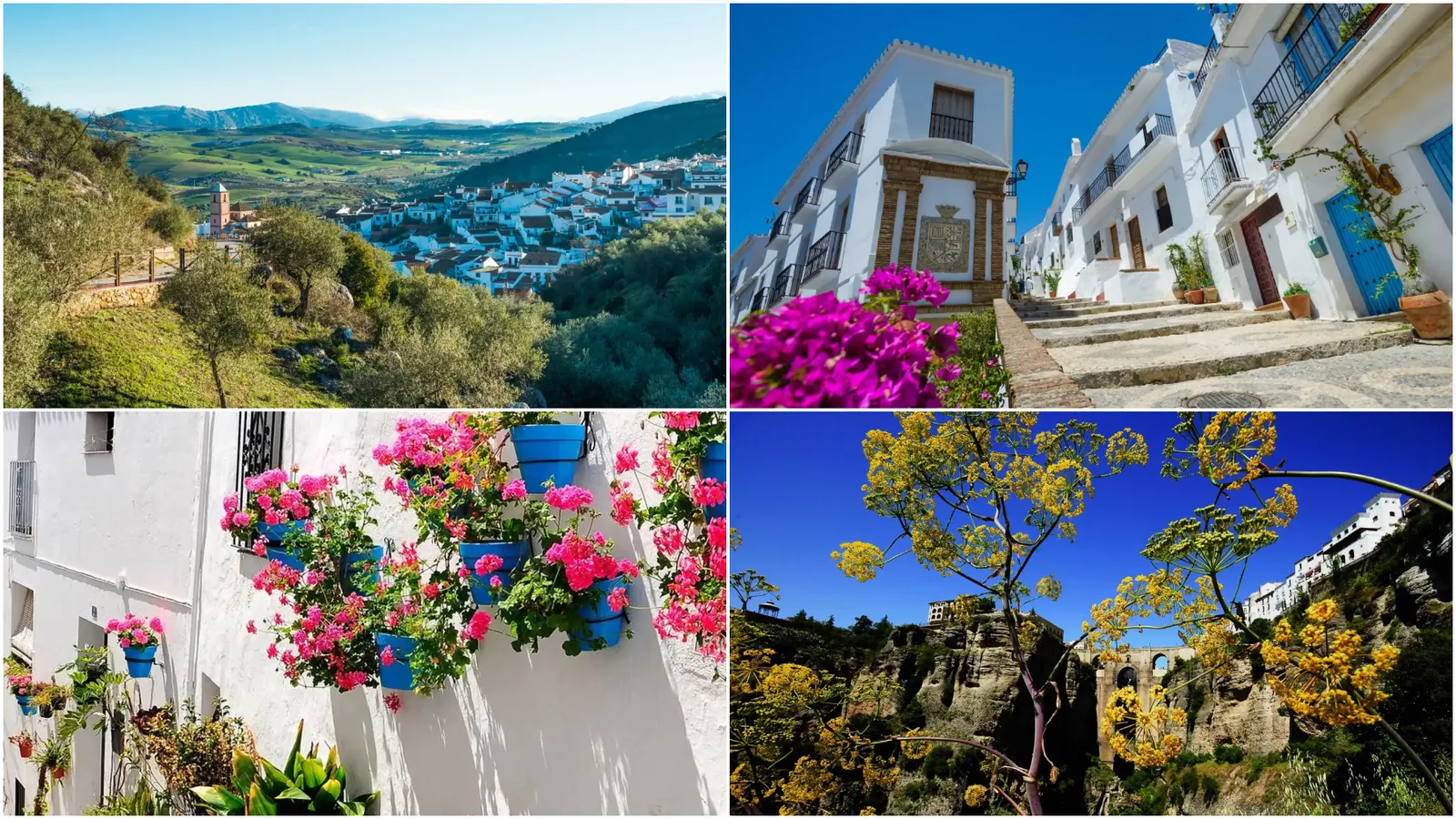

There are dates that are marked in red on the calendar, but others are painted in white and blue, like the facades of the villages of Málaga that seem to reflect the light of spring. The May bridge, with May 1st falling on a Friday, opens a window of several days where time seems to stand still among alleys, squares, and landscapes that tell stories without needing words.
The province of Málaga presents itself during these dates as a mosaic of destinations that combine heritage, nature, and tradition. From historical sites to white villages overlooking the sea or hidden in the mountains, the territory offers multiple options to explore without leaving its borders. Among them, towns such as Ronda, Nerja, Antequera, Frigiliana, and Mijas stand out, along with other lesser-known spots that complete the map of the interior of Málaga.
Antequera: Prehistoric Footprints and Monumental Legacy
Antequera stands as one of the major historical references in the province. Its dolmen complex, composed of Menga, Viera, El Romeral, and El Alcaide, constitutes one of the most relevant testimonies of European megalithism and is declared a World Heritage Site by UNESCO.
This municipality, the largest in Málaga, also preserves a wide architectural heritage ranging from fortifications to religious buildings, reflecting centuries of history accumulated in its urban fabric.
Archidona: Balance between Urbanism and Heritage
In the north of the province, Archidona is known for its unique Plaza Ochavada, an octagonal square, considered one of the urbanistic jewels of Andalusian Baroque.
The municipality also has a medieval castle-fortress with a double line of walls and a set of religious buildings such as the Hermitage of the Virgin of Grace or the Convent of Santo Domingo, which reflect its historical and artistic evolution.
Casabermeja: Patrimonial Richness in the Axarquía
A few kilometers from the capital is Casabermeja, a nucleus that gathers four spaces declared as Cultural Heritage Sites. Among them stand out the Church of Our Lady of Socorro, the Cemetery of San Sebastián, the pictorial ensemble of Peñas de Cabrera, and the Tower of Zambra.
Its natural environment, marked by the mountainous landscape of the Axarquía, completes a proposal that combines history and routes in the midst of nature.
Casares: Fortress over the Sierra
Casares rises on a hill dominated by the remains of a 13th-century Arab castle. This fortress, linked to the defense of the Nasrid Kingdom, retains parts of its original walls and defines the profile of the municipality.
The natural environment surrounding it, like the Sierra Crestellina Natural Site, reinforces the connection between landscape and history, with views reaching the Mediterranean.
El Acebuchal: Recovered Memory in the Mountain
Between Frigiliana and Cómpeta is El Acebuchal, a village that was abandoned for decades after being evacuated in 1949.
Its recovery, driven by descendants of its former inhabitants, has allowed the revival of this enclave situated in the Natural Park of the Sierras de Tejeda, Almijara, and Alhama. Cobbled streets and traditional architecture define its identity today.
Frigiliana: Moorish Essence in the Axarquía
Frigiliana is one of the most representative towns of the Andalusian style. Its historic quarter, known as Barribarto, retains narrow streets, stairways, and passageways that reflect the Moorish legacy.
The church of San Antonio, built on a former mosque, and the white facades decorated with flower pots are part of an urban landscape that keeps the tradition alive.
Genalguacil: Contemporary Art in the Genal Valley
In the heart of the Serranía de Ronda is Genalguacil, known as the "museum-village." Since 1994, this municipality has hosted artist meetings whose works remain exhibited in streets and squares.
This concept turns its urban center into an open-air gallery integrated into the natural environment of the Genal Valley, adding a unique cultural dimension.
Mijas: Tradition on the Sierra Slope
Mijas offers one of the most recognizable images of the province, with its location on the slope of the sierra and its urban layout of white houses.
In the Plaza de la Virgen de la Peña is the sculpture of the donkey, a symbol of the municipality and a reflection of its history linked to traditional work. Its location allows combining views of the sea and the mountains.
Nerja: Balconies Open to the Mediterranean
On the eastern coast, Nerja is known for its direct relationship with the sea. Places like the Balcón de Europa offer open panoramas of the Mediterranean, while spots like the Parque Verano Azul or the Chanquete's Boat evoke its recent past.
The municipality combines cliffs, beaches, and an urban center that maintains its maritime essence.
Ronda: History and Landscape in Balance
Ronda concludes this tour as one of the most emblematic destinations. Its gorge, along with its Andalusian legacy and its network of white streets, creates an urban landscape of great visual impact.
The historic ensemble, with courtyards, coats of arms, and traditional architecture, reflects a fusion between nature and heritage that has made Ronda one of the most recognized enclaves in the province.

Latest news





Upcoming events
12
Nov
El Desembarco, la traición de Viriato at La Caja Blanca
12
Nov
HOMER El Mero Mero at Sala Trinchera Málaga
13
Nov
Marbella Startup Lab – Innovate & Collaborate
13
Nov
Candlelight: Coldplay & Imagine Dragons at Sala Fundación Unicaja María Cristina
13
Nov
Candlelight: Tribute to Ludovico Einaudi at Anantara Villa Padierna
Similar News

Málaga Airport Makes History with More Than Three Million Passengers in One Month
Málaga

Port of Málaga looks beyond its docks to support future growth
Málaga

Guide to the Virgen del Carmen Processions in Málaga and the Province
Málaga
