


The best-kept secret of Axarquía: a village with Muslim history, mountains, and one of the best wines of Málaga
Sedella is the gateway to one of the most impressive natural spaces in Málaga. The Pozuelos de Sedella viewpoint and its incredible views on an easy hiking trail.
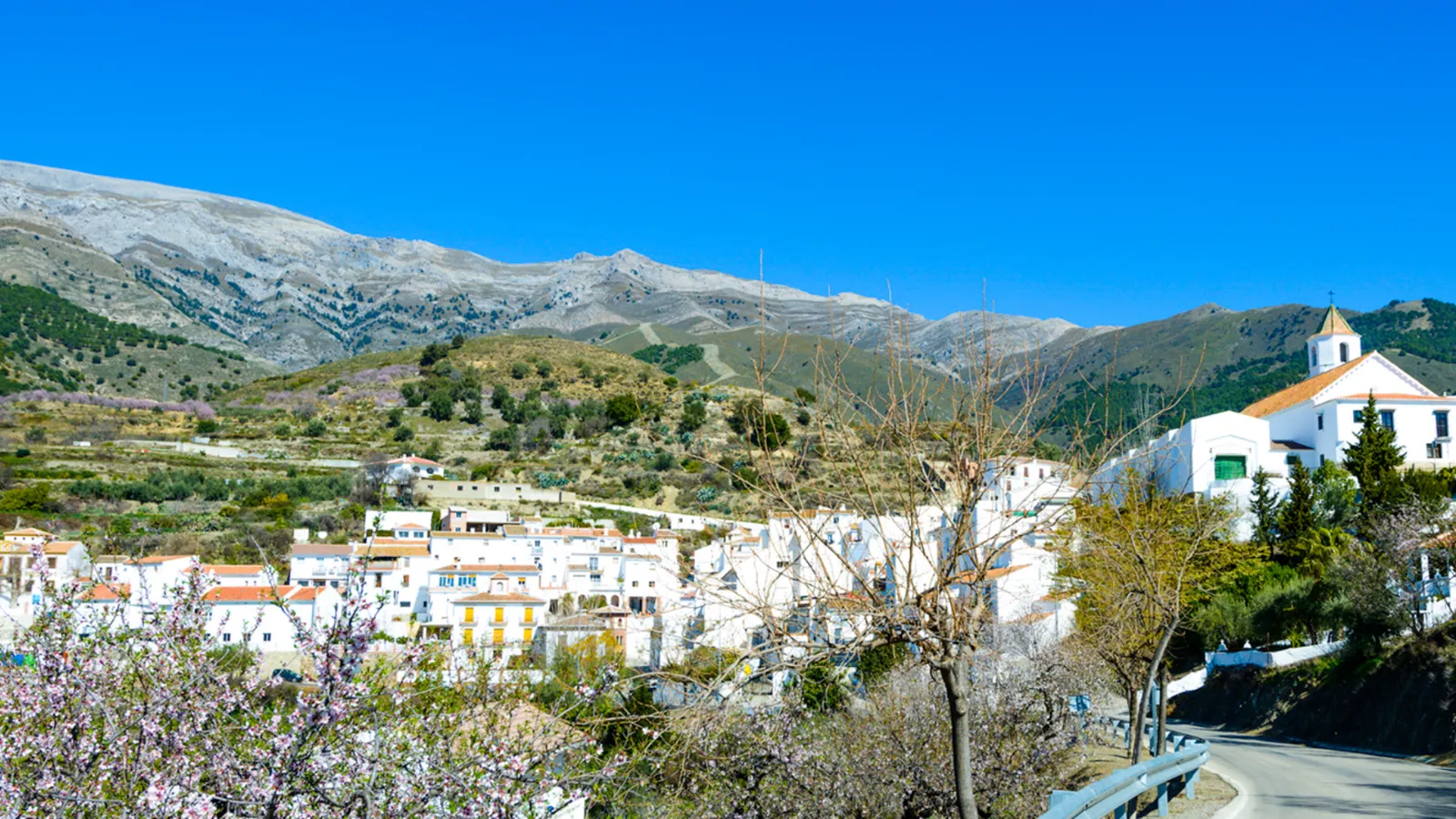

There are towns in the Axarquía region of Málaga that seem to exist in their own time, oblivious to the hustle and bustle of the nearby coast. Sedella is one of them. Nestled between the Sierras de Tejeda and Almijara, its narrow streets, whitewashed facades, and flower-laden balconies tell a story that began long before the town was even named. A history of Phoenicians, Romans, Moors, and Catholic Monarchs has left this small municipality in the Axarquía region with a rich heritage that is hard to absorb in just one visit. And, as if that were not enough, on its slopes at 800 meters above sea level grows a wine that one day received 94 points from Robert Parker and was recognized as the best in Andalusia.
Phoenicians, Romans, Al-Andalus, and the Moorish rebellion: centuries of history in a single town
Archaeological remains found around Sedella attest to the presence of Phoenicians and Romans in this territory, and the town's name itself may derive from the Latin term sedilia, linked to rural properties. During the Andalusi period, the town was known as Xedalia, and after the Christian conquest in 1487, it was renamed Villa Castillo. The Lordship of Sedella was granted by the Catholic Monarchs to Diego Fernández de Córdoba, and later passed into the hands of the town's mayor, Gabriel de Coalla.
The 16th century brought one of the most tumultuous chapters in local history: the Moorish rebellion, in which Sedella was one of the initial hotspots of the uprising. The subsequent expulsion of the Moors left the town virtually depopulated, until the arrival of the so-called "old Christians" revitalized its streets. Centuries later, the earthquake of 1884 seriously affected the locality, although without causing any fatalities.
A local legend attributes the current place name to a visit by Queen Isabel the Catholic to the area. After a fierce battle at the Arroyo de la Matanza, the queen reportedly exclaimed "Sé de ella" (I know of her), referring to the battle, thus giving rise to the name the town has held since then.
Mudéjar Route and monumental heritage: the legacy of Al-Andalus in stone and lime
Sedella is part of the Málaga Mudéjar Route, a route that connects the towns where the cultural footprint of Al-Andalus is best preserved in the province. And in Sedella, this legacy is visible in almost every corner of the urban area.
The most unique monument is the Casa Torreón, a former 16th-century Mudéjar style mansion fortress that belonged to Diego Fernández de Córdoba. Its tower combines Renaissance elements with Moorish aesthetics, a mix that reflects the moment of transition between two worlds that coexisted for years in this corner of Andalusia.
La Casa Torreón de Sedella / malaga.esIn the town center, the church of San Andrés stands on an ancient temple, of which the tower remains, which was once the minaret of the local mosque. Inside, it houses sculptures, a monstrance, and liturgical objects from the 17th and 18th centuries. On the outskirts, the hermitage of the Virgen de la Esperanza, from the 17th century, was built on the remains of the Arab castle of Sedella, embodying the evolution of a space from defense to worship. It houses the images of Our Lady of Hope and Saint Anthony.
The monumental heritage is completed by the public laundry, at the entrance to the town,, and the so-called Roman bridge —a popular name used by all the locals, although its origin may be medieval—, a structure that connects the present with centuries of local history and integrates into the landscape with serene elegance.
La Maroma, El Saltillo, and the third longest suspension bridge in Spain
Sedella is also a gateway to the Natural Park of the Sierras de Tejeda, Almijara, and Alhama, a protected area of more than 40,000 hectares that is home to one of the most important communities of Iberian ibex in Spain. From many points in the town, the peaks of the nearby sierras can be seen, and on clear days, the outline of the Mediterranean.
The highest horizon in the view is La Maroma, the highest peak in the province of Málaga at 2,065 meters above sea level. The climb to its summit is one of the most demanding and rewarding routes in the area, but the park also offers more accessible options: the Salto del Caballo, the Cueva Horeada, the mirador de los Pozuelos, the Camino de Arrieros.
pozue
This is what the views from the Los Pozuelos lookout near Sedella look like. / malaga.esAmong all of them, the El Saltillo route stands out, connecting Sedella with the neighboring town of Canillas de Aceituno via the third longest suspension bridge in Spain, suspended more than 50 meters above the riverbed. A journey that combines sea and mountain views in a single route, and which has become one of the most photographed trails in the Axarquía region of Málaga.
Gastronomy: fennel stew, parpuchas, and kid goat with wine
The cuisine of Sedella faithfully preserves its Arab and rural roots. The fennel stew, of Arab origin, kid goat with wine, and goat with garlic are the most representative dishes of a recipe book that has been passed down from generation to generation. Among the most curious preparations are the parpuchas —cod omelettes with cane honey— and the roscos tontos, of clear Moorish inspiration, which reflect the cultural depth hidden in the cuisine of a town of just a few hundred inhabitants.
The wine of Sedella: 94 points from Robert Parker and recognition as the best in Andalusia
If anything has projected the name of Sedella beyond the province and Spanish borders in recent years, it is its wine. The vineyards grow on the slopes of La Maroma, at 800 meters above sea level, in a terrain that combines Mediterranean influences with the unique conditions of the mountain. The predominant grape variety is Romé, native to the Axarquía, which produces wines with a personality difficult to find elsewhere in Andalusia.
One of the wines made in Sedella has received a score of 94 points out of 100 from international critic Robert Parker, one of the most influential figures in the wine world, and has been recognized as the best wine in Andalusia. A recognition that turns this small municipality in the Axarquía into a wine tourism destination with solid arguments to compete with much more renowned wine regions.
Festivals and traditions: from San Antón to the Virgin of Hope
The festival calendar of Sedella reflects the identity of a town that keeps alive traditions with centuries of history. In January, the feast of Saint Anthony includes a procession, animal blessings, and horse races through the streets. And in August, the festivities in honor of the Virgin of Hope bring together music, recreational activities, and popular devotion in a town that, during those days, comes to life in a particularly intense way.

Latest news





Upcoming events
12
Nov
El Desembarco, la traición de Viriato at La Caja Blanca
12
Nov
HOMER El Mero Mero at Sala Trinchera Málaga
13
Nov
Marbella Startup Lab – Innovate & Collaborate
13
Nov
Candlelight: Coldplay & Imagine Dragons at Sala Fundación Unicaja María Cristina
13
Nov
Candlelight: Tribute to Ludovico Einaudi at Anantara Villa Padierna
Similar News

Málaga Airport Makes History with More Than Three Million Passengers in One Month
Málaga

Port of Málaga looks beyond its docks to support future growth
Málaga

Guide to the Virgen del Carmen Processions in Málaga and the Province
Málaga
