


The exclusive accommodation of Cuevas Bajas: has a housekeeper and an astonishing art collection
A lawyer transforms a large house into the Casona de Santa Ana, a tourist project with personalized service and a meticulous blend of antiques and contemporary pieces.
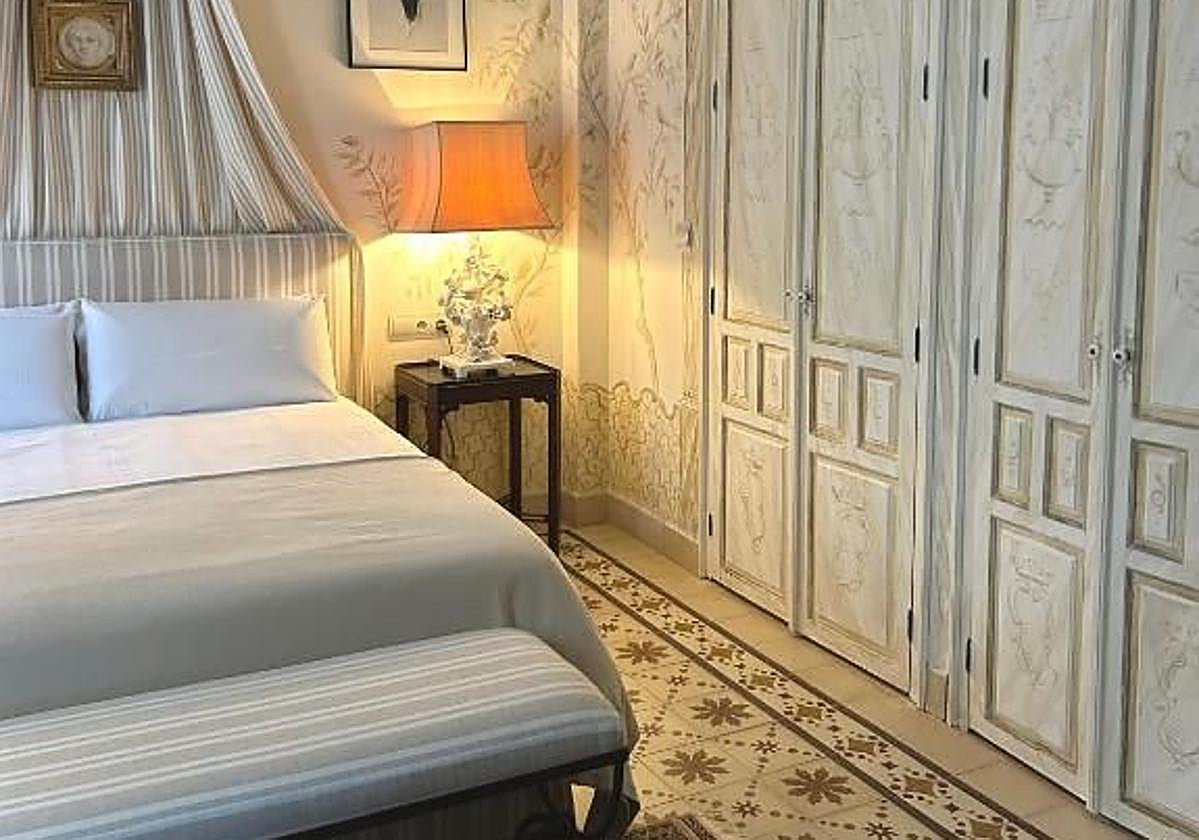

Housekeeper, wall trompe l'oeils, and a 16th-century altarpiece coexisting with contemporary art. This is not an urban palace or a hotel in a big city. It is located right in the center of Cuevas Bajas, in the north of the province of Málaga, where the Genil river borders the territory of Córdoba. In the heart of this town, just a few meters from the San Juan Bautista church, is the Casona de Santa Ana, which, for the past two months, has become one of the most exclusive accommodations in Andalusia.
Behind this accommodation is José María Ramírez, a lawyer and owner of the property, who initially purchased the house with no tourist intent. "We initially bought it as a home, but it turned out to be too big for us," he explains. From there, the project took a different direction: "Why not make it a rural house? We decided that almost a month after buying it."
The house, built in the 1940s, belonged to a wealthy local family and features a type of architecture that is unusual in the area, with elements linked to Antequera architecture. As the owner details, it is a large house that originally functioned as a family residence associated with a large property. After its acquisition, it was refurbished to adapt its spaces for tourist use while preserving some of the original structure.
Inside, the intervention combines ancient elements with modern ones. "We are not pretending it's a house from the era: it is a house from the era, but updated," Ramírez asserts. Among the resources used are trompe l'oeils in various rooms, present in bedrooms, bathrooms, and common areas, and the incorporation of decorative pieces from different periods.
The house also houses a vast collection of objects and artworks owned by the owner. "It is filled with artworks, antiques: there are pieces from Rome, Greece, Romanesque art, Gothic, and even a 16th-century altarpiece," he details. This includes ceramic elements and other artisanal pieces, in an arrangement that combines historical objects with contemporary creations.
One of the distinctive features of the accommodation is the presence of a housekeeper. "It's a person who is in the house for whatever you need: they open up, they prepare the rooms; if you feel like having a snack or anything, they are attentive to you," the owner explains. As he adds, this service aims to provide ongoing attention during the stay, not following the usual hospitality model.
"It's not like a restaurant or hotel where you raise your hand and someone comes; it's something more peculiar, more personal," he specifies. The person in charge of the service lives in the house and attends to both basic needs and more specific requests during the stay, from preparing simple meals to organizing spaces.
The operation of the accommodation also allows different levels of use. Guests can access individual rooms with common services, but there is also the possibility to use entire areas of the house or request private spaces for specific stays. According to Ramírez, the house has lounges, dining rooms, patios, and terraces that can be adapted to different situations, from a couple's stay to larger gatherings.
In terms of offerings, the house is organized into different types of rooms, from more basic stays to larger suites, some of which have areas around 40 or 50 square meters, as the owner details. Prices vary depending on the category and season, usually starting from over 110 euros per night in the simplest rooms to nearly 180 or 190 euros in the higher-end rooms, with breakfast included as part of the main service.
This structure allows adapting the stay to different customer profiles, from shorter getaways to more complete experiences that combine accommodation, use of common spaces, and personalized attention. Additional services on demand, such as meal preparation or private use of certain areas of the house, are also available, in line with the flexible approach of the accommodation.
This approach is linked to targeting a specific type of client, interested in tranquility and a more reserved use of space. The house does not function as an establishment open to the public in the traditional sense, but prioritizes the stay over the continuous transit of visitors. "It is not open to the public," the owner states in the interview, explaining that access is limited to those who stay or reserve the space. In fact, there isn't even a sign, so it might even go unnoticed to those walking down the emblematic Real street, a road famous precisely for other houses with well-kept facades and original architectural proposals.
The accommodation started operating a couple of months ago and has begun to receive both national and international guests. According to Ramírez, guest arrivals mainly occur through Booking and recommendations, without a broader promotional strategy in this initial phase.
Thus, Casona de Santa Ana presents itself as a tourism project that emerged from a private residence that has been adapted for this use, incorporating heritage, decorative, and service elements that define its current proposal.
Cuevas Bajas is a town in the Sierra Norte de Málaga region known for many reasons, from the possibility of practicing rafting on the Genil river to the passage of the Mozarabic Way (a Jacobean route) or for maintaining the cultivation of the 'morá' carrot.

Latest news





Upcoming events
12
Nov
El Desembarco, la traición de Viriato at La Caja Blanca
12
Nov
HOMER El Mero Mero at Sala Trinchera Málaga
13
Nov
Marbella Startup Lab – Innovate & Collaborate
13
Nov
Candlelight: Coldplay & Imagine Dragons at Sala Fundación Unicaja María Cristina
13
Nov
Candlelight: Tribute to Ludovico Einaudi at Anantara Villa Padierna
Similar News

Málaga Airport Makes History with More Than Three Million Passengers in One Month
Málaga

Port of Málaga looks beyond its docks to support future growth
Málaga

Guide to the Virgen del Carmen Processions in Málaga and the Province
Málaga
