


An intimate cycle that continues to deepen its tradition in Alhaurín de la Torre
British chamber music, the highlight of the concert held this Saturday at the 'Vicente Aleixandre' Cultural Center of the municipality
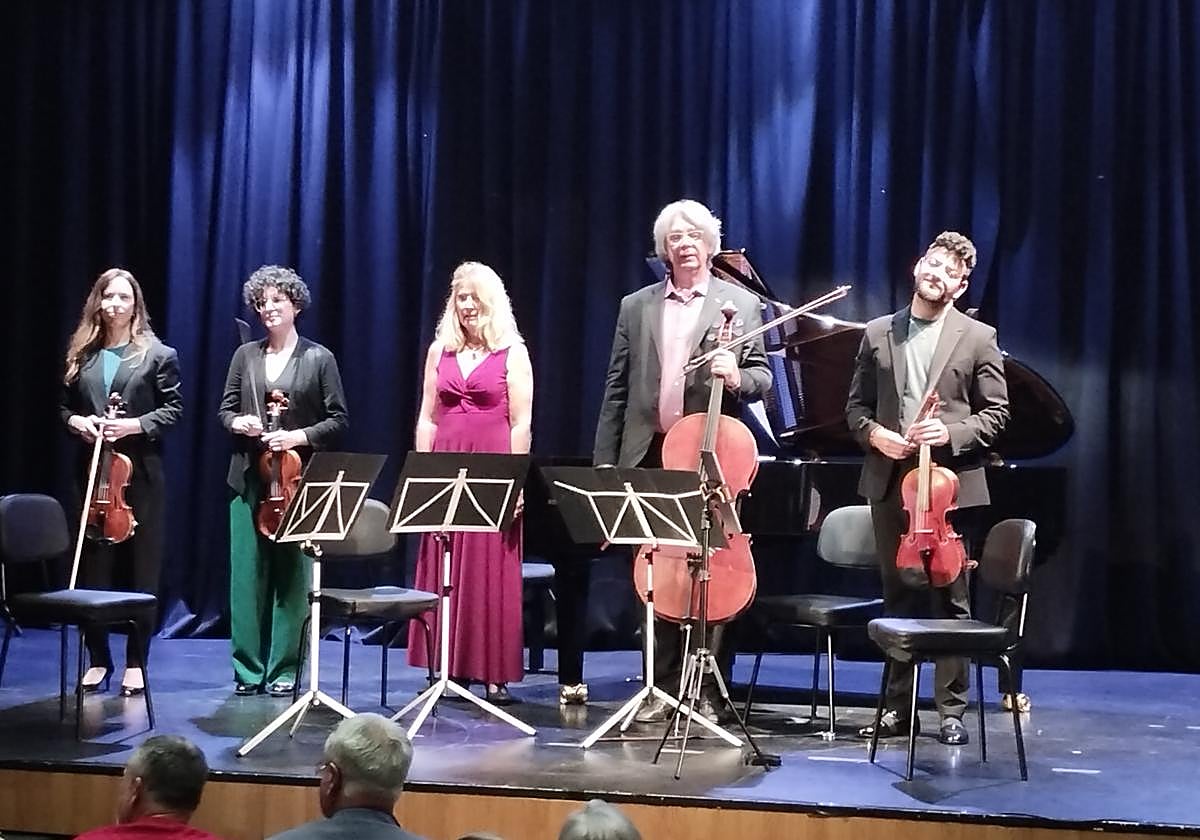

As Antonio Heredia Bayona, professor of the Department of Molecular Biology and Biochemistry at UMA, pointed out in his opening speech, the concert held yesterday, Saturday, April 18, at the 'Vicente Aleixandre' Cultural Center in Alhaurín de la Torre, as part of the Chamber Music Series he has coordinated since its inception, was a long-standing commitment. The unique and exquisite program had been carefully planned for the spring of 2020, but the sudden outbreak of the virus we all remember and the precautions imposed by its health management made its celebration unfeasible. Yesterday, six years after its conception, what was imagined finally took tangible form. British content: Edward Elgar (1857-1934) and Frank Bridge (1879-1941), that is, the two names that can be considered symbols of the resurrection of their country's music, connecting with the late Romanticism of the continent (Elgar) and the decisive opening to the turbulent 20th century (Bridge, who was Britten's teacher). Indeed, after the death of Purcell in 1695, the islands had not produced a single composer of international renown: a very long silence attributed to the overwhelming influence of Haendel in the second half of the 18th century and to the more conservative Mendelssohn, of the oratorios, in the first half of the 19th.
The very happy event featured the Ars Nova Quartet, a group mainly from Granada, consisting of Emilia Ferriz (violin I), Marina García (violin II), Johan Rondón (viola) and Matthias Stern (cello), and the Basel-based pianist, who spends much of the year in our land, Cornelia Lenzin. On paper, a trio of titles that are not usually heard in conventional cycles, works of undeniable value, demanding in an outstanding degree, treasures of invention (and emotion) usually withheld from the general public. The cellist of the quartet, who is also a member –as are Marina García and Johan Rondón– of the City of Granada Orchestra, made an ingenious, fair, and warm presentation of all of them.
A youthful Frank Bridge to start
First played was the "Fantasy in F-sharp minor for piano quartet" (1910) by Bridge, the composer's only work for this ensemble, indebted to sonorities and harmonies reminiscent of Fauré, and at the same time expressive of the intelligent sense of form of the English author, here applied to a type of architecture, the arch form, which he would cultivate intensely during his career. It soon became apparent that the members of Ars Nova and Cornelia Lenzin had approached the study of the score with that communicative intent that always implies deep reflection, the ability to listen to each other, transparency of intention, and utmost respect for the text in the process of resurrection. The work that followed, the "Fantasy in F minor for string quartet," which predates the quartet (1905), brought the full string ensemble to the stage, without the piano, as a kind of lighter interlude, and in its three linked movements, we could once again enjoy a thoughtful weave of the voices of the polyphony, a notable degree of continuity in those passages where the music divides the melodic protagonism between the instruments, and a sense of proportion worthy of praise. It was like a meditative islet, preparation for the deep sea that was about to rise, imposing, immediately after.
The "pièce de résistance": a monumental and ambitious Elgar
The culmination of the evening was provided by Elgar's "Piano Quintet in A minor, op. 84" from 1918-1919, a work of powerful rhetoric, vast conception, marble without heaviness, superb with much foundation. Three movements of undeniable late Romantic inclination (Schumann, Brahms, Wagner, but with a distinctly English shimmer), of high stature, with a piano writing of Brahmsian density, which tested the tension of the group's framework in the midst of an at times howling ocean: Moderato-Allegro with a mysterious start and meaningful development, Adagio (stellar intervention at the beginning of the viola) with a lyrical quality that the musicians traced with great sensitivity, and a Finale in which the intense effort of fitting and rhythmic precision of the five magnificent musicians overcame the numerous risks of the score.
In summary, a memorable evening that highlights the necessity and merit of initiatives like those that bloom each spring, for the benefit of the entire music-loving universe of the province, in the beautiful town of Alhaurín de la Torre.

Latest news





Upcoming events
12
Nov
El Desembarco, la traición de Viriato at La Caja Blanca
12
Nov
HOMER El Mero Mero at Sala Trinchera Málaga
13
Nov
Marbella Startup Lab – Innovate & Collaborate
13
Nov
Candlelight: Coldplay & Imagine Dragons at Sala Fundación Unicaja María Cristina
13
Nov
Candlelight: Tribute to Ludovico Einaudi at Anantara Villa Padierna
Similar News

Málaga Airport Makes History with More Than Three Million Passengers in One Month
Málaga

Port of Málaga looks beyond its docks to support future growth
Málaga

Guide to the Virgen del Carmen Processions in Málaga and the Province
Málaga
