


Cortijo de Poey: the secluded corner of Vélez-Málaga that wants to be a big park
Located next to the Algarrobo road, this historic and natural site features monumental specimens, remains of an ancient oil mill, and unexpected biodiversity.
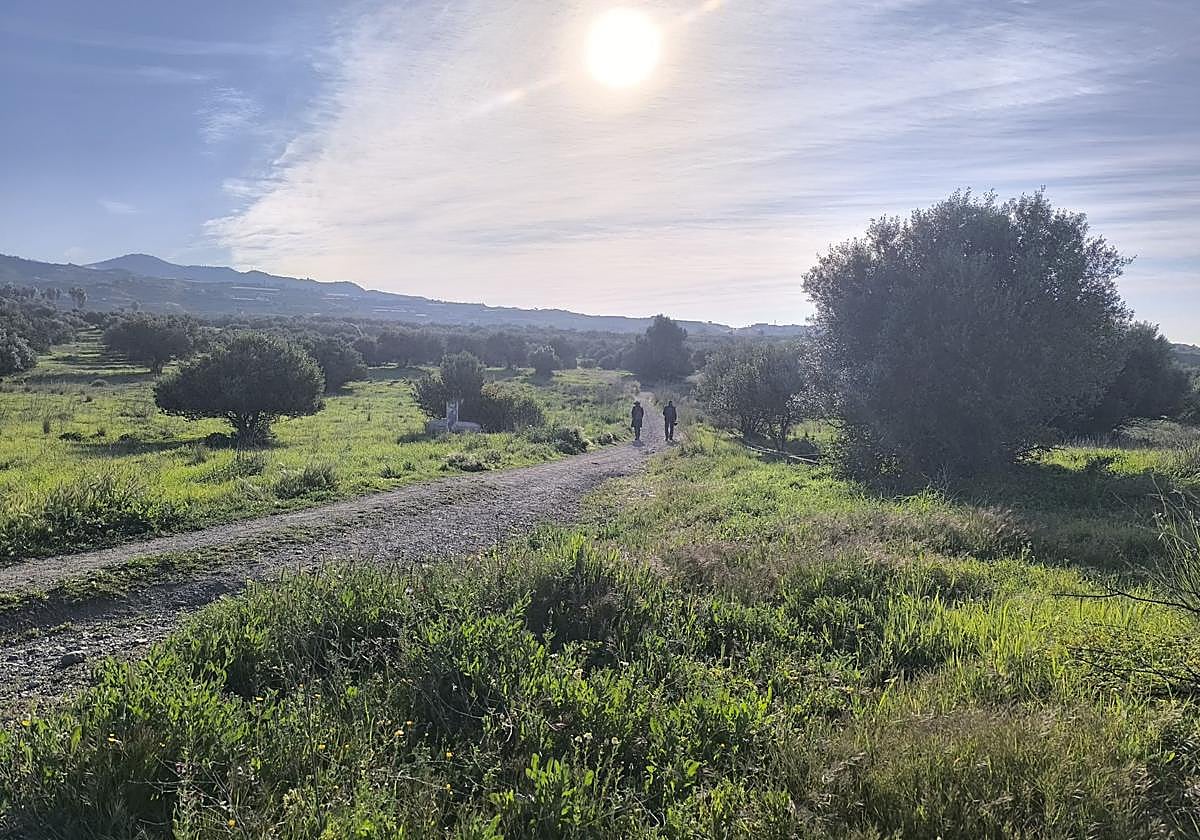

Somewhere in the Poey farmstead, among twisted logs and branches that seem sculpted by time, there is a tree that some have begun to call María Zambrano. It is not an official name nor does it appear in any catalog, but just observing its silhouette is enough to understand the association: in its bark, in its plant-like gesture, some recognize the profile of the well-known philosopher. It is one of those surprises that this enclave located on the outskirts of Vélez-Málaga offers, where imagination and memory intertwine with an agricultural landscape that has been telling stories for centuries.
This practice of naming trees is part of the initiatives that in recent years have tried to bring visibility to this space. "We have come to name all these olive trees, because they have very unique shapes," explains Francisco Lorenzo, president of Olearum, an association dedicated to the study and dissemination of olive oil culture. In this environment, several dozen large specimens have been identified, many of them centuries old, notable both for their age and their almost sculptural character.
But the value of the Poey olive grove, located next to the Algarrobo road, goes far beyond its trees. This space preserves the traces of a productive landscape linked for centuries to oil, with elements that allow understanding how this agricultural system functioned. Among them stands out the Pérez mill, an old oil mill whose origin dates between the 17th and 18th centuries and that was part of a larger complex with a farmhouse, a pool, and a hydraulic system associated with a spring.
Today, this heritage remains standing in a precarious state. "It's a gem, but it's very deteriorated," summarizes Rafael Yus, president of the Nature Studies Cabinet of the Axarquía (GENA), who has been analyzing this enclave for years. Despite having protection in urban planning, the old mill shows clear signs of abandonment, which reinforces the feeling that it is a legacy that has not yet found its place. The dumping of rubble or some looting, such as the theft of a marble plaque, are not in keeping with the centuries of history of this building.
To this historical value is added another equally relevant: the environmental. Despite its proximity to the urban center of Vélez-Málaga, the Poey farmstead maintains significant biodiversity. In the area, amphibians (up to six different ones have been cataloged), reptiles, birds, and mammals such as foxes have been documented, favored by the presence of water at points like the pool or the spring associated with it. "It's a space with very interesting wildlife to be so close to the city," points out Yus.
This combination of history, nature, and proximity has turned this place into a space already used by the citizenry. Trails marked by the passage of time allow easy exploration, while neighbors and visitors frequent it for walks or to photograph its trees. "We have seen people, even from outside, surprised, taking photos of the olive trees," says Lorenzo, who also highlights the informative sessions organized to make this heritage known.
However, the future of the Poey farmstead remains open. The lands belong to a group of owners and their development has been conditioned for years by urban expectations linked to the growth of the city. In parallel, groups like GENA have suggested the possibility of turning this space into an agro-urban park that preserves its essence, integrating public use with the protection of its values.
The proposal does not seek to transform the place into a conventional park but to recognize what it already is: a living landscape that allows understanding the agricultural past of the Axarquía and that offers, at the same time, a recreational space different, closer to the wild than to the ornamental. "It would be a way for people to get to know this environment without losing its character," explains Yus.
Among olive trees that grow without the pressure of intensive pruning and remains of constructions that still evoke another era, the Poey farmstead presents itself today as a place in balance. It is not an abandoned space, but neither is it fully protected. And perhaps there lies its uniqueness.
Because in this corner of Vélez-Málaga there are not only centuries-old trees or remains of buildings with history. There is a landscape that can still be understood, cared for, and shared. A place that invites you to stop, to look calmly, and, above all, to ask what to do with it before it's too late.

Latest news





Upcoming events
12
Nov
El Desembarco, la traición de Viriato at La Caja Blanca
12
Nov
HOMER El Mero Mero at Sala Trinchera Málaga
13
Nov
Marbella Startup Lab – Innovate & Collaborate
13
Nov
Candlelight: Coldplay & Imagine Dragons at Sala Fundación Unicaja María Cristina
13
Nov
Candlelight: Tribute to Ludovico Einaudi at Anantara Villa Padierna
Similar News

Málaga Airport Makes History with More Than Three Million Passengers in One Month
Málaga

Port of Málaga looks beyond its docks to support future growth
Málaga

Guide to the Virgen del Carmen Processions in Málaga and the Province
Málaga
