


Isabel Allende: "If a woman had written a book like 'Love in the Time of Cholera,' she would have been labeled sentimental"
The Chilean author advocates for the craft of storytelling in 'The Magic Word', a book that straddles memory and manual, while keeping a critical eye on the current political context.
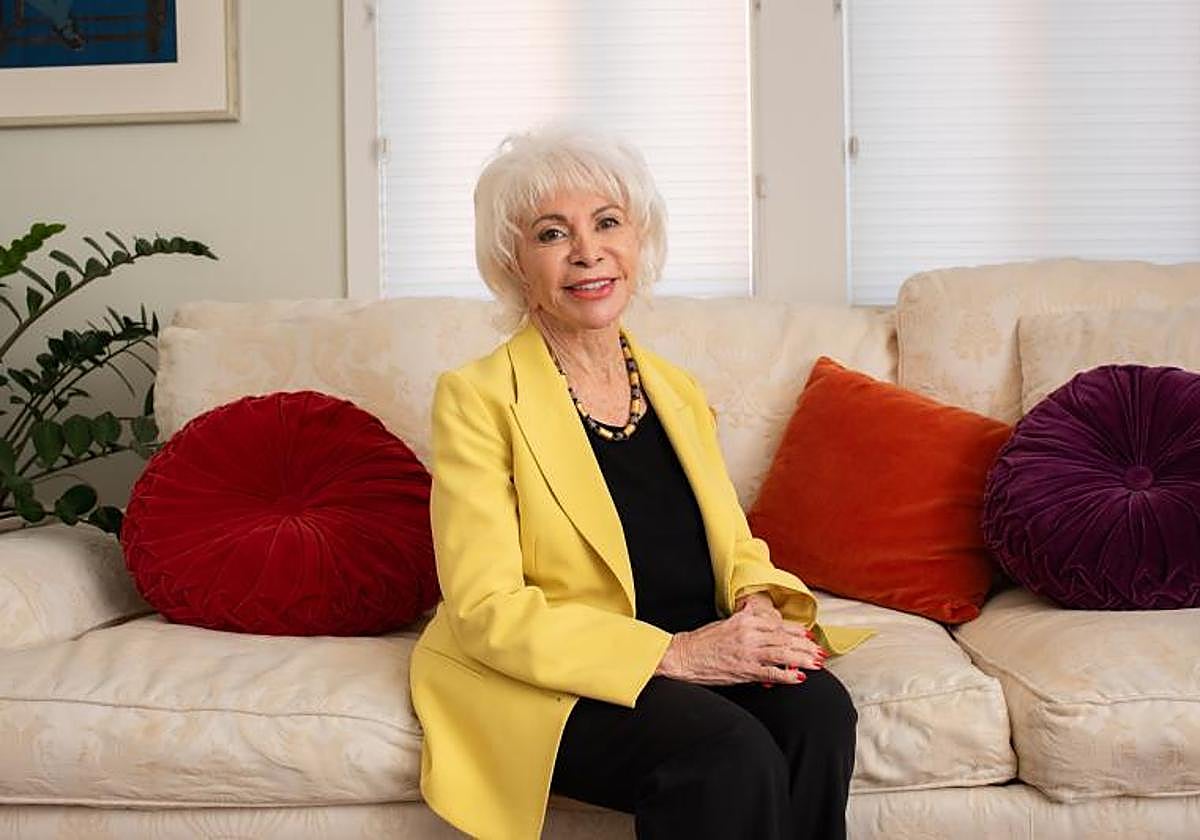

Isabel Allende, a leading figure in Latin American literature, presented her new book, 'La Palabra Mágica. Una Vida Escrita' (Plaza & Janés), this Thursday ... during an online press conference attended by over 180 accredited media outlets. During the event, she blended reflections on the craft of writing with a critical reading of the political and cultural moment unfolding in the United States, where she resides.
With a career that ranks her among the most-read authors in the Spanish language, Allende offers a very personal approach to writing in this new work. The book, straddling the line between memoir and practical guide, traverses her life experience to explain how her stories have emerged and the role literature plays in her life beyond the professional.
Far from offering definitive formulas, the author constructs a narrative that functions as a conversation with the reader. In it, writing emerges as a constant necessity, almost a way of life, rather than a choice. During the presentation, Allende insisted that writing has always been the central axis organizing her routine as well as her way of understanding the world, above any other priority.
How this manual came about and details of the creative process
The book originated from a television experience for the BBC, where she recorded a series of improvised classes on writing and creativity over a week. Throughout these sessions, where she responded spontaneously to questions, she realized she was sharing her own experience as a writer very directly. This led to the idea of transforming that material into her own project, conceived almost as a personal manual on the craft of writing.
Incorporating a dimension more intimate than technical, the author highlights the role of silence, memory, spirituality, and dreams in the creative process, and describes writing as a space where different dimensions of reality converge. In this vein, she views literature as "a way to transform personal experience"—even the most painful—"into something that can be shared."
Allende emphasizes the importance of starting without waiting for the perfect idea or the first line of the project, but rather to progress gradually and accept that writing, besides being a non-linear process, also involves erasing, correcting, and starting over. Her goal, as she explained, is to help eliminate the fear of both writing and reading—"especially among young people," whom she described as "inclined to want everything summarized and visual"—bringing literature closer to more people.
Censorship and the political context in the United States
During the press conference, the author referred to the current political context, especially in the United States, and noted that contemporary reality inevitably shapes fiction. In this regard, she admitted that today she "would find it difficult" to address certain topics from the narrative distance required by the novel, given their weight in everyday life.
Allende warned of what she considers new forms of censorship in the cultural and educational fields, especially in the United States, where, according to her, "censorship is happening in one way or another—often economically—of what is taught in universities, in classes, in schools," and added that "they are censoring half of this country's history and everything related to race and labor struggles."
The author also noted that some of her books have been subject to censorship in various states, including 'The House of the Spirits,' something that, according to her, she even considers "an honor." In her remarks, she drew parallels with episodes from her own biography, such as the repression in Chile after the military coup, considering these as dynamics that take different forms in the present.
In the same vein, Allende addressed the impact of the excess of information and the difficulty of "isolating from the noise." She explained that, in her case, she tries to limit exposure to the news for much of the day to preserve the creative space, although she acknowledges that current events inevitably seep into her work in one way or another. "I start the day with exercise (...), an hour in the morning, and then I get in here and don't watch the news until the afternoon. Because if I start looking at the phone and see all the atrocities that Trump has done, it ruins my day. I'd rather it ruin my night."
Criticism of bestselling authors and women
When asked about the alleged injustice with which bestselling authors are treated, Allende pointed out that she has very little experience with such criticism, as she does not control what is said about her and tries not to be swayed by vanity. "I don't control what is going to be said about me, nor do I get carried away if they say something good or get depressed if they say something bad."
However, she maintained that criticism is particularly harsh towards women, considering that, in cases like some of Gabriel García Márquez's works, if they had been written by a woman, they would have been interpreted more condescendingly and framed in less valued registers. "Criticism is brutal with women, not only with those who sell more but if a woman writes a book like 'Love in the Time of Cholera,' they would have branded her as sentimental (...) but because a man writes it, no one thinks that."
She added that questioning an author for selling a lot represents, in her opinion, an underestimation of the readers' judgment and an attitude she considers offensive.

Latest news





Upcoming events
12
Nov
El Desembarco, la traición de Viriato at La Caja Blanca
12
Nov
HOMER El Mero Mero at Sala Trinchera Málaga
13
Nov
Marbella Startup Lab – Innovate & Collaborate
13
Nov
Candlelight: Coldplay & Imagine Dragons at Sala Fundación Unicaja María Cristina
13
Nov
Candlelight: Tribute to Ludovico Einaudi at Anantara Villa Padierna
Similar News

Málaga Airport Makes History with More Than Three Million Passengers in One Month
Málaga

Port of Málaga looks beyond its docks to support future growth
Málaga

Guide to the Virgen del Carmen Processions in Málaga and the Province
Málaga
