


"With our foster children, we have received more than we have given."
Parents of two biological children, Sonia Mena and Juan Antonio Enamorado have made their home a refuge for several minors in need of protection.
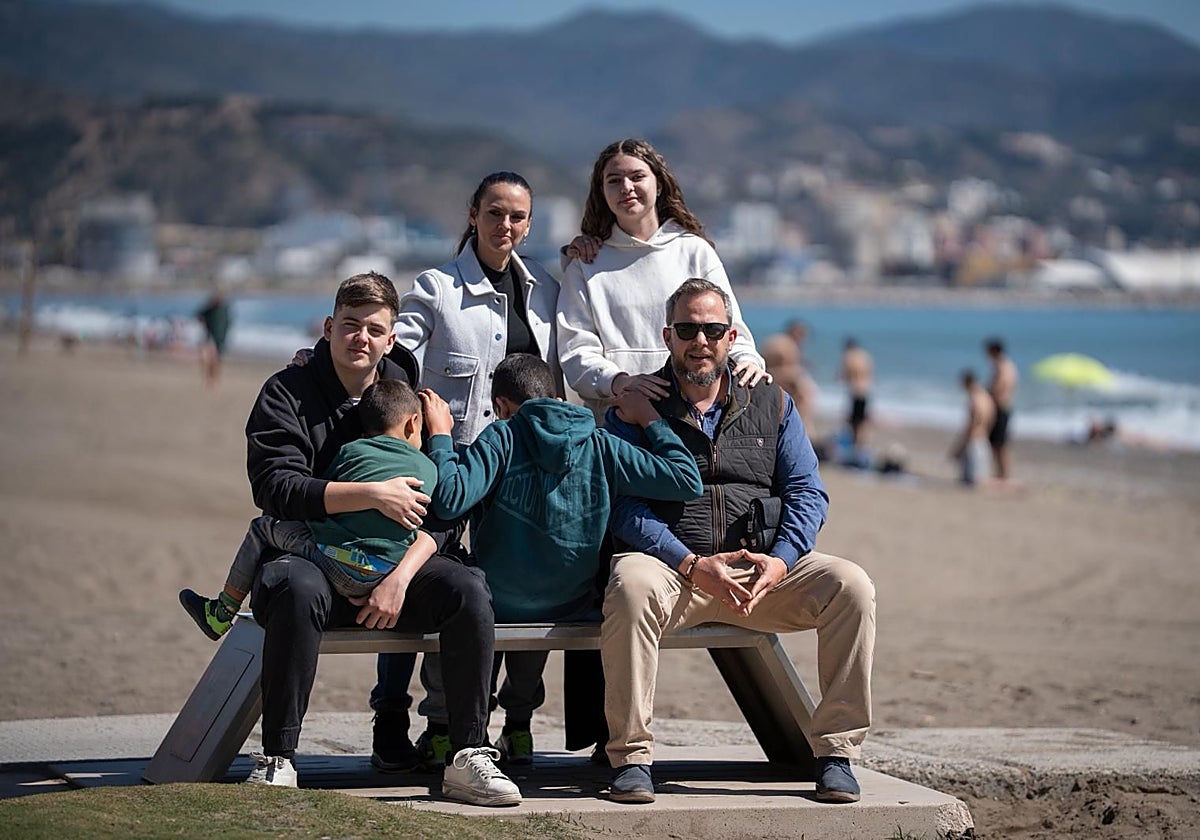

The first call came early and with hardly any time to imagine it. A few instructions and a barely outlined story: a two-year-old girl who had just been taken by the police after being abandoned in a bar. Within a few hours, the little girl moved from neglect to the protection of a family that in 2017 decided to open the doors of their home to provide, without judgment, affection and security. Since then, they have been emergency foster parents and that experience, which lasted for 14 months until the social services of the Junta de Andalucía returned her to her biological father, was followed by two more. Today, they share their home with a 12-year-old boy who arrived in the year of Covid and another four-year-old boy, whom they picked up when he was three, "completely malnourished; he wore size 9-12 months."
Sonia Mena and her husband Juan Antonio Enamorado had been building their life together for years, "since they were 17," he adds. The step they took actually arose from a coincidence that both interpret as "fate." "One day, having coffee, I saw a publication from the Hogar Abierto association in the press that made me think about the possibility of fostering a child and when I got home, my wife told me: I need to talk to you. I saw on TV that they are looking for foster families." They did not hesitate and placed themselves in the hands of that pioneering organization in Málaga in family fostering for three decades.
By then they were already parents of two biological children. They had stability, a built life and, in principle, no plans to expand it. But in Juan Antonio's memory weighed a childhood in which his own home had been an improvised refuge for other children. It was not fostering as such, but spontaneous solidarity: children of neighbors, relatives in trouble, and hospitalized mothers who at a certain moment needed someone to lend them a hand. "It was something informal among parents," he adds.
That background explains, in part, the naturalness with which they assumed the process. Courses, interviews, psychological assessments, and home visits to see their suitability. "It's not so much about an economic profile, but the warmth of a family." In fact, at that time, his husband admits, "we didn't even make 2,000 euros for four people and it was hard to make ends meet." He earned his living as a painter and she was an employee at a wholesale food distribution company. But that was not an impediment.
Four or five months after starting the procedures, the first foster placement arrived. The little girl forgotten in the bar by her mother. She came without much prior information, as is often the case in emergency situations. But the first few days were enough to sense her story: "The food she liked most was omelette, sausages, skewers, and olives with anchovies. We sensed she spent many hours in bars." There were also other signs: "She had an imperative need to be hugged. She would go with anyone, seeking contact, affection. When she left, she was a different girl," he summarizes. That transformation became the driving force that has since moved this family from Málaga.
Before taking the step, there was a conversation with their two children, a boy who was nine years old at the time and a girl of five. "They understood that the girl had needs and welcomed her as one of their own," their parents emphasize in unison. "Now they are the ones who spoil their siblings the most, they allow them everything," says the mother.
The farewell, far from being dramatic, was part of a worked process. Because the ultimate goal of fostering, they insist, is family reintegration when possible. For months, the girl spent time with her biological father at a meeting point and "in the presence of a social worker from the Junta de Andalucía who acted as a mediator," Sonia recounts. At the last meeting, the little girl hugged her father and did not look back. "We understood that she had already accepted the cycle and was going where she needed to go," reflects Juan Antonio.
Since then, they have continued fostering. After that first experience, a six-year-old boy arrived in 2020. First in temporary fostering after having been urgently fostered by another family. "When it was seen that there was no possibility of return with his biological family, they proposed permanent fostering and we said yes. And we do not rule out legal adoption if he wishes it when he turns 18."
The youngest of the family, four years old, arrived urgently on the eve of a trip planned for the summer vacation. But far from canceling the plans, they included him in them and "it was good for the adaptation." Although the beginnings were hard. "We believe he slept on the street, because in the middle of summer, if we didn't throw a blanket over him, he wouldn't fall asleep." They remember how poorly he spoke and boast with pride of the boy he is today: "He is the joy of the house, our cuddly baby," says Sonia.
He is completely integrated. "Someone from outside could not distinguish who are the biological children and who are not," he assures. In fact, he jokes that the boy has been told more than once that he is "the spitting image" of him. For their two biological children, this experience has been a real life lesson: "They have become aware, through their foster siblings, of the value of things and how privileged they are to have them from birth."
Neither Sonia nor Juan Antonio idealize the experience. They know it's not easy. They have experienced complex situations, children with difficult backgrounds. But they never considered backing out. They feel a deep satisfaction in seeing the astonishment of these children with everyday things: that there is always food in the fridge, that the tap has water, or that the light does not go out due to non-payment. "I don't see it as a 'how good I am,' but as a feeling of saving a life. They give you much more than they receive," states Juan Antonio. They know that, without their intervention and that of the Junta, these children could have had a future marked by exclusion or marginalization.

Latest news





Upcoming events
12
Nov
El Desembarco, la traición de Viriato at La Caja Blanca
12
Nov
HOMER El Mero Mero at Sala Trinchera Málaga
13
Nov
Marbella Startup Lab – Innovate & Collaborate
13
Nov
Candlelight: Coldplay & Imagine Dragons at Sala Fundación Unicaja María Cristina
13
Nov
Candlelight: Tribute to Ludovico Einaudi at Anantara Villa Padierna
Similar News

Málaga Airport Makes History with More Than Three Million Passengers in One Month
Málaga

Port of Málaga looks beyond its docks to support future growth
Málaga

Guide to the Virgen del Carmen Processions in Málaga and the Province
Málaga
