


Gaudí, a Unique Architect Between Commercialization and Sanctity
The Gaudí Year focuses attention on the Sagrada Familia, although he was the author of up to 90 projects such as Park Güell or the Capricho de Comillas.
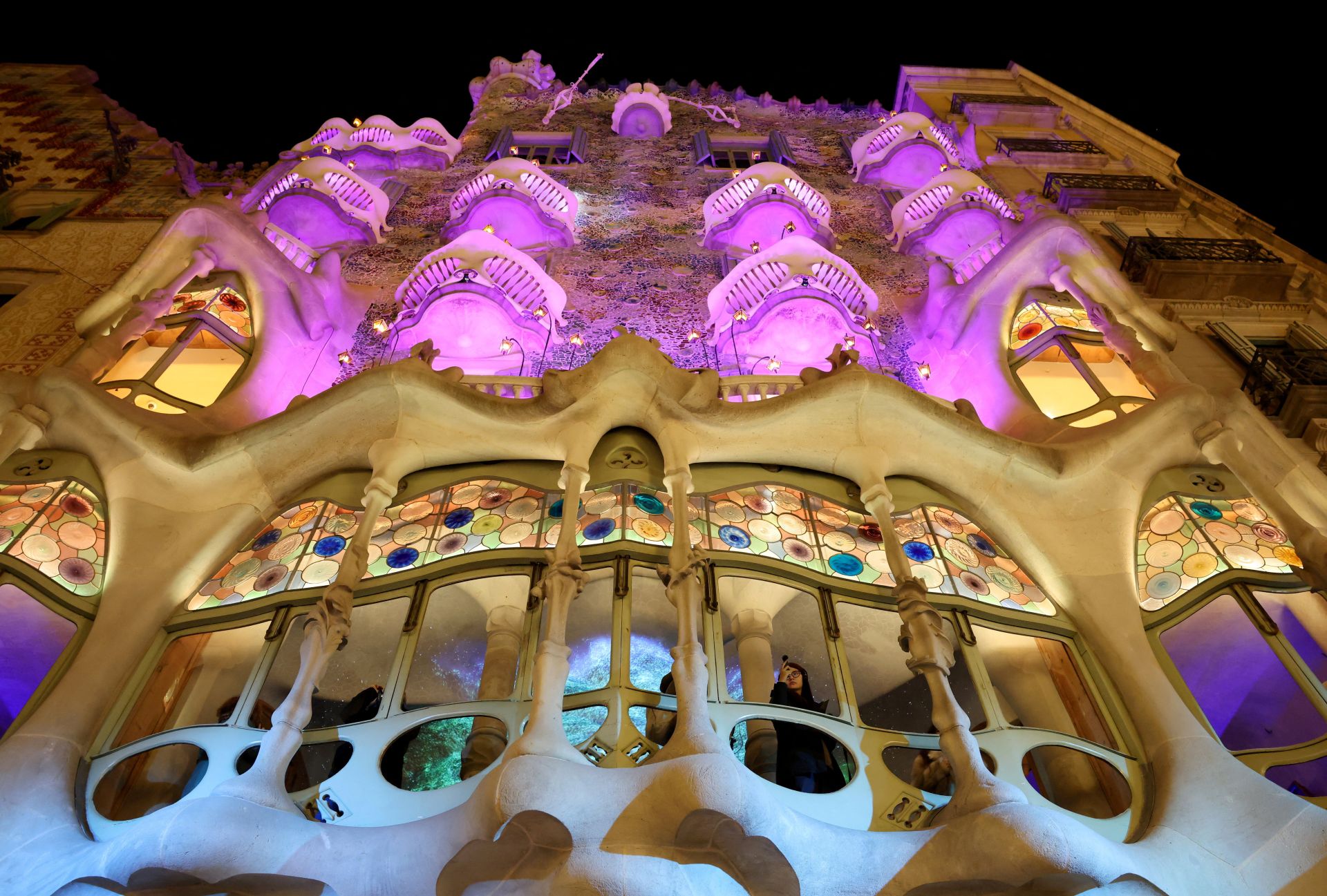

The Pope's visit to the Sagrada Familia on June 10th, to celebrate the temple's culmination in height with the crowning of the Tower of Jesus, has placed all the spotlights of this Gaudí Year on the Barcelona basilica. However, the work of the brilliant architect extends far beyond the temple to which he dedicated himself with true obsession in his last years, the one for which his beatification is now being studied. His work encompasses more than 90 projects united by a unique character, with a "telluric" component that connects the Capricho de Comillas with the Sagrada Familia, explains María Güell Ampuero, cultural journalist and trustee of the Güell Foundation.
"Few people know, but this year also marks the centenary of the public opening of Park Güell," the expert explains, recalling that in 1926, the same year the architect died, the park was opened to the residents of Barcelona, after the commercial failure of the urbanization planned by Gaudí's great patron, Eusebio Güell. The fruit of this "tandem of unique madmen," as the journalist describes them, ranges from the Palau Güell in Barcelona's Gothic quarter to the crypt of the Colonia Güell and Park Güell.
The Sagrada Familia has become a "flagship" of Barcelona, "a hugely profitable business that I’m not sure how it will be managed once the construction is completed," she acknowledges. The temple draws attention alongside other heavily monetized works such as La Pedrera, Casa Batlló, or Park Güell, which have been taken away from the enjoyment of the people of Barcelona.
An opinion that was already hinted at a year ago by writer Eduardo Mendoza, when he warned that "we need to let Gaudí rest." The journalist recognizes that "this year it's impossible, but it's true that we are overexploiting him, I’m not sure if we are going too far with Gaudí without going deeper." She ironically notes that Gaudí does not pay royalties, perhaps that's why we have the Gaudí film awards, the Gaudí fashion runway, Park Güell cookies, and all imaginable souvenirs in the shops of Barcelona airport.
It was not always like this. The discovery of Gaudí "is very recent," she points out, referring to 1992. "Many journalists came to Barcelona and couldn't believe it. No other city in the world offers so many buildings that you faint if you like Modernism. And they began to write articles explaining that they had gone for a walk in Park Güell or had gone up to the roof of La Pedrera for a jazz concert. From there, it was unstoppable."
The frenzy multiplied in 2010 when Pope Benedict XVI consecrated the temple and the television broadcast amplified the echo of the Sagrada Familia around the world. A decade earlier, the beatification process of the architect had begun, which took a definitive step with Pope Francis recognizing his "heroic virtues" and could culminate this year, coinciding with the centenary of his death.
"There is no saint architect; he would be the architect of God, and I think this is opportunism," points out María Güell when asked about the beatification of the genius. "Gaudí was religious, but at that time, who wasn't? At the end of his life, he moved to the Sagrada Familia and went mad with that project, but from there to being a saint."
She does recognize his ability to convey a spiritual, even "telluric" character to all his works. "If you enter the Sagrada Familia and see that forest of columns, you are seeing trees and you are seeing bones that are ultimately shinbones. It's like a forest on a sunny morning, that connection with nature from simplicity is what makes each building convey something." These sensations multiply if you have a good guide to explain all the symbolism he included in his works.
It's the same with the Palau Güell or the Capricho, she assures. "People remain silent; he achieves something with his buildings that is telluric. You might think it's religious, but I think it goes beyond, it's something spiritual" that is present in all his buildings. "It's clear he was ill, his hours of observation and his relationship with nature. There is nothing that doesn't relate to a bone, an animal, the sky, the moon," and this relationship with nature is what makes him unique, asserts María Güell.
As was, in her opinion, the relationship with his great patron, Eusebio Güell. "The tandem is unique, two prodigious madmen fell in love who got excited with each new project. It's an exceptional and unique symbiosis, experienced only by them," explains the journalist, convinced that such a communion has not been repeated. "Certainly not in Spain." Eusebio Güell "did everything on a grand scale and ultimately a total economic failure, but personally, an unprecedented success," recounts the descendant of Gaudí's great patron.
Gaudí had a big problem, Güell Ampuero relates, "that at no point did he paint anything white, he didn’t use paint, always noble materials, marble, wood... and the price kept rising." Güell gave him free rein, which also explains the two major economic failures of the Gaudí-Güell tandem, the Colonia Güell and Park Güell. Park Güell was meant to be a grand luxury urbanization like those in London, but only two plots were sold. And at Colonia Güell, after seeing the costs of the Church, the patron's children "said enough, not another penny more."

Latest news





Upcoming events
12
Nov
El Desembarco, la traición de Viriato at La Caja Blanca
12
Nov
HOMER El Mero Mero at Sala Trinchera Málaga
13
Nov
Marbella Startup Lab – Innovate & Collaborate
13
Nov
Candlelight: Coldplay & Imagine Dragons at Sala Fundación Unicaja María Cristina
13
Nov
Candlelight: Tribute to Ludovico Einaudi at Anantara Villa Padierna
Similar News

Málaga Airport Makes History with More Than Three Million Passengers in One Month
Málaga

Port of Málaga looks beyond its docks to support future growth
Málaga

Guide to the Virgen del Carmen Processions in Málaga and the Province
Málaga
