


Viral controversy over hanging clothes in Torremolinos: attacks, insults, and hoaxes
The ordinance stipulates that laundry should not be visible from the street when there are alternative solutions available, such as inner courtyards, rooftops, laundry rooms, or common areas.

The Torremolinos City Council initially approved, in the February plenary session, a municipal ordinance aimed at ensuring that urban aesthetics are “coherent ... and orderly, reducing visual pollution and promoting the harmonious integration of businesses.”
The ordinance was passed with the favorable vote of the PP, at the helm of the local government with a large absolute majority, and the support of Vox, while the PSOE chose to abstain. IU-Podemos, which has one councilor in the Corporation, was not present in the debate. Once published in the Official Gazette of the Province, the regulation will fully come into effect.
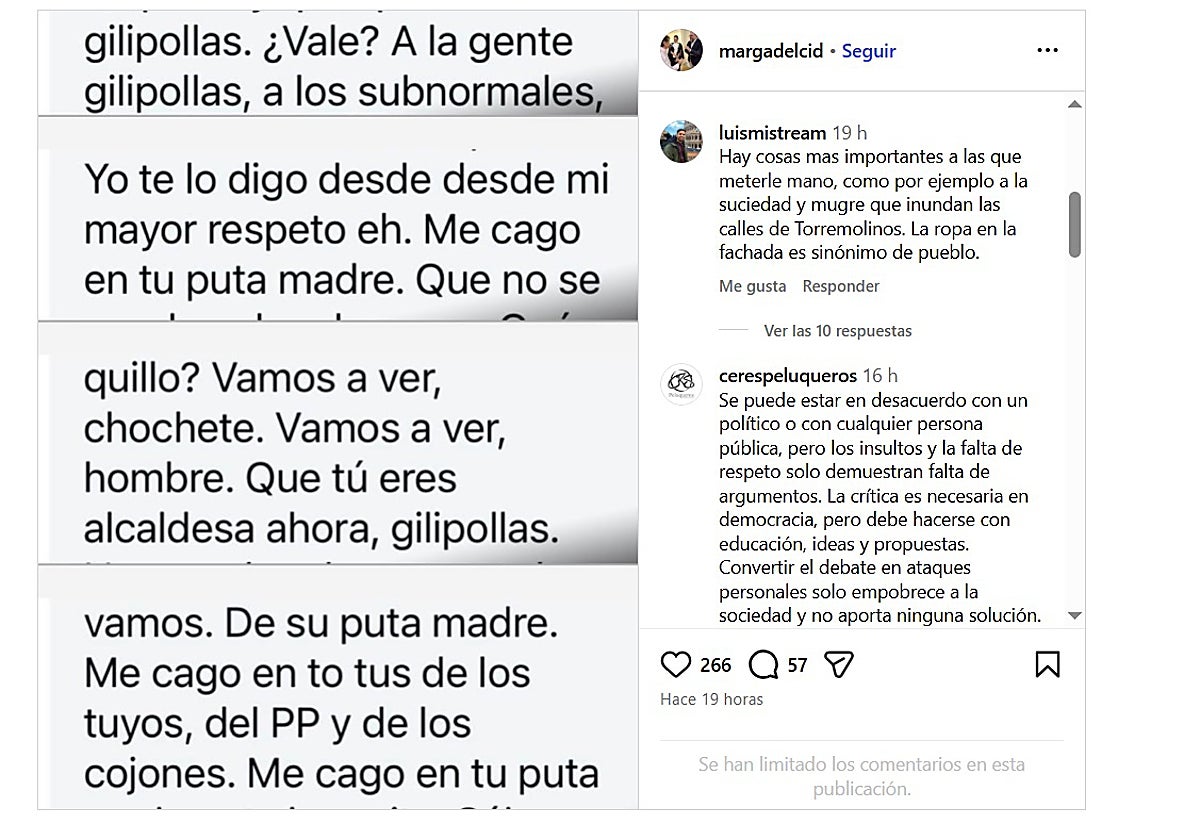
One month after this initial step, the mayor of Torremolinos, Margarita del Cid, has publicly denounced through her networks (municipal sources cannot confirm, at the moment, whether she will eventually do so before the Police or in court) being the target of insults. These derogatory terms, which the mayor reproduces in an image, include words like “idiot” or expressions like “I shit on your damn mother.”
“Nothing justifies these behaviors and that there are parties that spread lies, encourages them,” states the mayor.
At the root of this situation is the controversy that arose with one of the aspects of the regulation, which regulates the places for hanging laundry in buildings, and the controversy that followed, a controversy that has gone viral. “Nothing justifies these behaviors and that there are parties that spread lies, encourages them,” assures Del Cid.
Indeed, the mayor links these attacks to false claims regarding the intentions of her government team with the regulation. “I will not allow lies,” she concludes.
It is established that laundry should not be visible from the street when there are alternative solutions, such as interior patios, rooftops, laundry rooms, or common drying areas.
The forthcoming regulation stipulates that laundry should not be visible from the street when there are alternative solutions, such as interior patios, rooftops, laundry rooms, or common drying areas. This aspect had previously been addressed in the city, as noted by the local government, with provisions regarding hanging laundry dating back to a decree from 2005.
“It does not prohibit hanging laundry nor does it establish fines for doing so. The rule exclusively regulates the urban aesthetics of elements visible from the public road, just as it happens with commercial signage, facade colors, wiring, air conditioning units, or the accumulation of objects on balconies,” the local Administration clarifies, adding that the article does not “intrude into private life” and they insist: “The hanging of laundry is mentioned only within that framework of visual order of the public space.”
Furthermore, the Torremolinos City Council defends that, by promoting this text, they act just like other cities such as Madrid, Barcelona, or Valencia and, in general, like other environments with tourist activity.
From 100 to 750 Euros
The City Council makes it clear that the ordinance does not create a specific infraction for hanging laundry. The envisaged penalties, ranging from 100 to 750 euros, correspond to the general regime of minor aesthetic infractions, which covers cases related to facades and visible elements. Therefore, the government team argues, “to claim that fines are issued for hanging laundry” does not reflect the actual content of the regulation.
Regarding this, they add that the ordinance’s spirit is to promote appropriate aesthetic solutions, encourage a progressive adaptation, and improve the urban environment, also establishing a period for adaptation for existing elements and avoiding immediate changes.
Zones of Special Touristic Interest
With this regulation, the Zones of Special Touristic-Historical Interest are created, referring to those places that, due to their heritage, scenic, cultural, identity value, or their capacity to attract visitors, require a more strict and homogeneous aesthetic treatment. These include El Calvario, the historic center, La Nogalera, El Bajondillo, and La Carihuela, where a “restricted color palette is sought to achieve aesthetic homogeneity” in buildings, homes, or commercial premises and the commitment to the use of noble or traditional materials, unified carpentries.
As for the expected timelines, a general period of 12 months from the entry into effect is set for property owners in the affected areas to voluntarily adapt, with preference in possible municipal subsidies or aid lines and access to free technical advice from the City Council.

Latest news





Upcoming events
12
Nov
El Desembarco, la traición de Viriato at La Caja Blanca
12
Nov
HOMER El Mero Mero at Sala Trinchera Málaga
13
Nov
Marbella Startup Lab – Innovate & Collaborate
13
Nov
Candlelight: Coldplay & Imagine Dragons at Sala Fundación Unicaja María Cristina
13
Nov
Candlelight: Tribute to Ludovico Einaudi at Anantara Villa Padierna
Similar News

Málaga Airport Makes History with More Than Three Million Passengers in One Month
Málaga

Port of Málaga looks beyond its docks to support future growth
Málaga

Guide to the Virgen del Carmen Processions in Málaga and the Province
Málaga
