


Seven out of ten people from Málaga called for colon cancer screening do not attend.
This type of tumors can be cured in 90% of cases if detected in its early stages or as premalignant lesions, hence the importance of participating in this program.
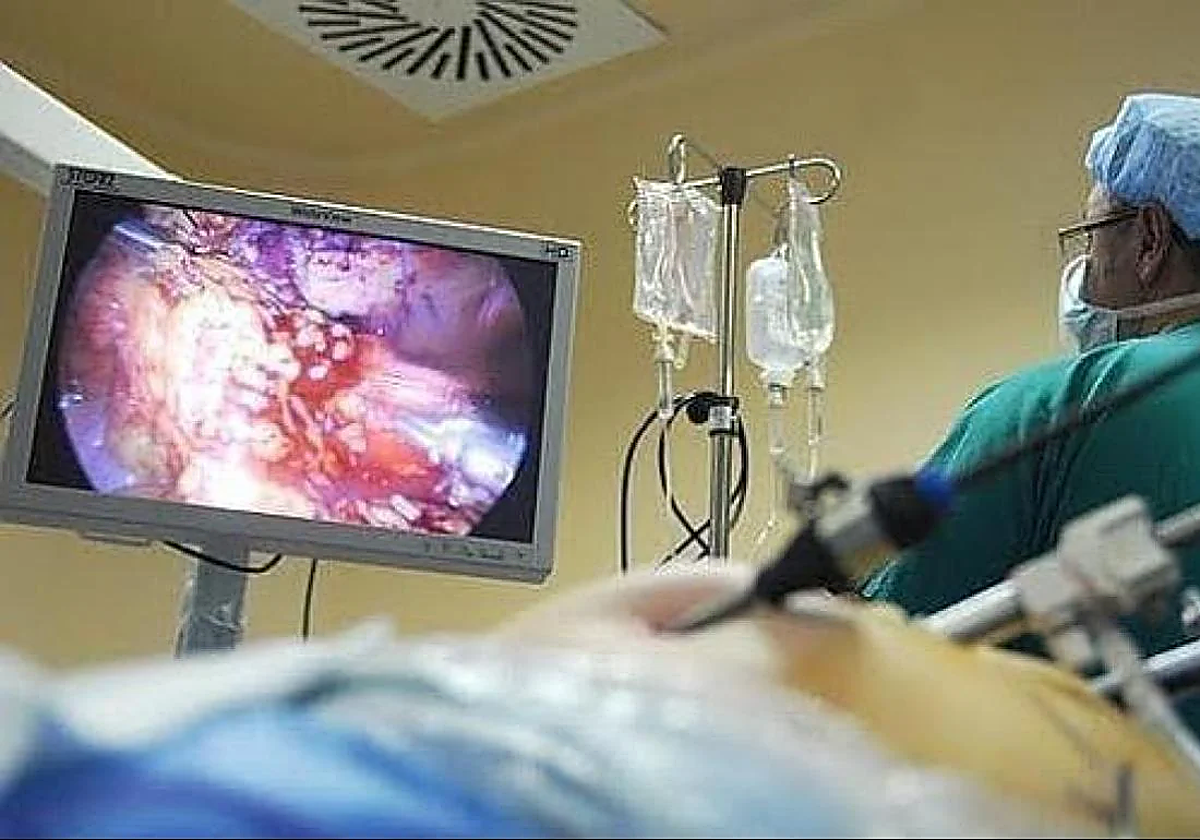

The colon screening program launched by the Andalusian Regional Government in 2014 (although it became widespread, reaching its greatest extent, in 2020) ... has allowed for the detection of a total of 3,833 adenomas (polyps or potentially cancerous lesions, although not all evolve in that way) and 116 cancers, which gives an idea of the incidence of this type of tumor. Despite everything, the major challenge remains public involvement: the president of the Regional Government, Juan Manuel Moreno, highlighted in a tweet on March 6 that participation in the screening has increased from 20% to 40%, but, he added, "there is still 60% of people who do not respond."
These are the figures for Andalusia, because in relation to the province and in 2024, the latest data available, only 28.68% of those invited participated, with Malaga having the lowest ratio in this regard in the entire community. That is, seven out of ten people from Malaga invited to undergo screening did not do so in the reference year. Sources from the Andalusian Health Service (SAS) confirmed to SUR that, in March 2026, this proportion remains correct.
Furthermore, the colon cancer screening program now covers a target population in Malaga of 507,588 people, of which 502,060 are the eligible population. The target population is all the people in Malaga who are of age to participate in this massive detection program, between 50 and 69 years old. The eligible population is the result of subtracting from the target those individuals who have recently had a colonoscopy or have a high genetic risk. Thus, 495,948 invitations have been sent out, which represents a coverage of 98.78% of the eligible population.
This March 31 is, precisely, the International Day of Colon Cancer.
Related news
"Cancer teaches you not to look too far ahead, you go day by day"
Sending of letter and kit
These invitations consist of sending a letter and a kit from the Andalusian Health Service (SAS) for individuals to take a blood sample from their stools and take it to their reference health center. This undoubtedly represents very high coverage, as it is sent to those who could and should be tested (eligible population).
As the SAS explains, colon cancer can be cured in 90% of cases if detected in early stages or as premalignant lesions. In the short term, this early detection decreases mortality between 30% and 35%.
"If we are constipated and subsequently become diarrheic or alternate between constipation and diarrhea, it is a warning sign," says Dr. Díaz Santos, which adds to sudden unexplained weight loss and blood in the stools
"This colon cancer screening consists of inviting all Andalusians of that age range to undergo a simple and painless test that analyzes the presence of blood in stools. If the result is positive, an appointment is made at their health center to inform and recommend further examinations. Thus, after the test, in indicated cases, a colonoscopy is performed," he clarifies.
Prevention
The Ministry of Health, Presidency, and Emergencies emphasizes that prevention is the best tool for taking care of health, and in this sense, early detection of colon cancer can make a big difference. It also emphasizes that the letter that arrives at Andalusian homes for colon cancer screening contains information and a test that can save lives. "Reading it and following its instructions can be the first step to detecting colon cancer in time," says the Regional Government.
In addition to early diagnosis, it is important to improve lifestyles to reduce the likelihood of suffering from it. Risk factors that promote it include overweight and obesity; consumption of alcohol, tobacco, red and processed meats, and diabetes. Against this, there are protective factors against this disease such as practicing moderate physical activity and a diet low in fat and rich in vegetables, fruits, and fiber.
It will grow
The head of Oncology at HM Hospitals in the province, Dr. Javier Díaz Santos, points out that colon cancer "is not a single thing, but an entity that includes different diseases: one is rectal cancer, which behaves differently from what would be purely colon cancer, which is the large intestine up to the last part, the rectum. Moreover, the colon does not behave the same if it is the right part, if we are talking about the ascending and transverse colon, if it is the left part, which is the descending colon and the sigmoid."
As explained by the Spanish Society of Medical Oncology (SEOM), it is the cancer "that will grow the most and will be diagnosed this year," with an increase of between 5% and 10%. In 2024, the last year for which there are data, around 1,400 were detected in Malaga.
"Something that was exceptional before, but today is not rare: seeing colon cancer extended, locally advanced, or even metastatic, at early ages, below 50 years, even at 40 years: we must delve better not only into diagnosis but also into prevention and early detection," reflects Dr. Díaz Santos.
Dr. Díaz Santos assures that today it is not rare to see young people with extended or metastatic colon cancer
Regarding early detection, he gives several keys: be careful with changes in bowel habits. "If we are constipated and later become diarrheic or alternate between constipation and diarrhea, it is a warning sign." Also if there are abnormal things in the stools: blood or "mucus." Another sign is involuntary weight loss that "is sustained over time, we are increasingly consumed, more weakened." This is what happens in screening programs: tests are conducted in search of suspicions and, if blood is found in stools, a quality colonoscopy is performed "which implies that the preparation must be good to be able to see the colon up to where the small intestine is inserted: the screening programs are population-based, public health." The advice is to join these programs, but "that must be distinguished from what comes to be hyper-early diagnosis or prevention or individual risk: each person has a different risk and we cannot put everyone in the same bag." Hence, it is essential to "individualize the risk," starting with the family doctor and, if necessary, escalating to an oncologist. "Because, based on different relatives, other comorbidities, we know that, maybe, more than hidden blood in stools, a colonoscopy or close monitoring is needed."
New treatments
In some cases, treatments such as immunotherapy can now be used. "Half of the population lives more than twenty-something months with immunotherapy in patients who have metastatic cancer with the presence of microsatellite instability," he exemplifies. In addition, this treatment increases the life rate of "long responders."

Latest news





Upcoming events
12
Nov
El Desembarco, la traición de Viriato at La Caja Blanca
12
Nov
HOMER El Mero Mero at Sala Trinchera Málaga
13
Nov
Marbella Startup Lab – Innovate & Collaborate
13
Nov
Candlelight: Coldplay & Imagine Dragons at Sala Fundación Unicaja María Cristina
13
Nov
Candlelight: Tribute to Ludovico Einaudi at Anantara Villa Padierna
Similar News

Málaga Airport Makes History with More Than Three Million Passengers in One Month
Málaga

Port of Málaga looks beyond its docks to support future growth
Málaga

Guide to the Virgen del Carmen Processions in Málaga and the Province
Málaga
