


The unions of the Clinical Hospital denounce waiting times of more than 65 hours in the Emergency Department to be admitted to the ward.
The hospital denies that there is currently a situation of collapse and states that patients are being attended to "according to clinical criteria and care priority."
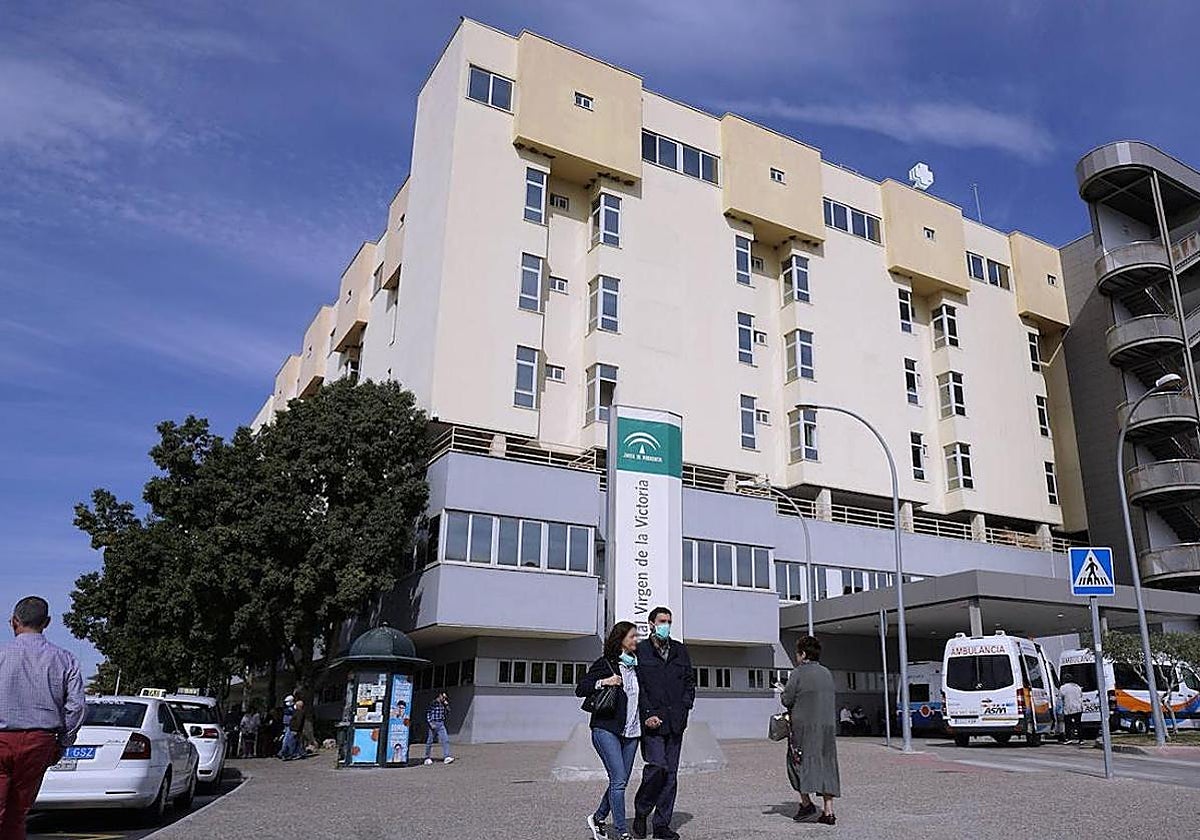

It is the umpteenth chapter of a well-known situation: the University Clinical Hospital Virgen de la Victoria serves a larger population than it was designed for, over a million inhabitants in the natural expansion area of the city, without having undergone any expansion. This causes its Emergency Department, which receives more than a thousand people a day in the Marítimo de Torremolinos, the Clinic itself, and the Guadalhorce Valley Hospital, to experience a situation of continuous overflow. The center's Staff Board, made up of all the unions, denounced this Tuesday that there are patients who have been waiting more than 65 hours to be admitted to the ward.
"We denounce the critical and sustained situation in the Emergency Service, where the healthcare collapse has become a constant, generating undignified and dangerous conditions, both for patients and professionals," they explain, to ensure that "patients remain crowded on stretchers and chairs located in corridors, waiting for tests and beds, without privacy or adequate conditions, with waiting times exceeding 65 hours to be admitted to the ward." Specifically, on Tuesday afternoon, there were 27 patients waiting for admission.
"Serious Pathologies"
The unions assert that these are patients with serious pathologies such as "cerebral hemorrhages, heart failure, angina pectoris, neurodegenerative diseases like Alzheimer's, waiting for an available bed."
They refer to "dantesque situations, such as palliative oncology patients remaining more than 24 hours on stretchers or cases of trauma patients with infectious sepsis in corridors for more than 25 hours, which constitutes a real danger and an unacceptable violation of patient dignity and safety."
The situation, they denounce, is worsened by "inefficient management" of resources: there is a room, they claim, with five beds and six chairs that, far from being used to alleviate healthcare pressure, "is used during the morning shift for inpatient patients pending discharge and remains closed the rest of the day due to lack of human resources to work with the patients, due to lack of contracts, while professionals leave to other communities to work with stability."
"This situation is also being maintained and condoned by the Andalusian Health Service, which does not take measures against an increasingly evident healthcare deterioration," say the unions
The Staff Board considers that the hospital "suffers from a serious structural problem," a situation that, according to them, "is also being maintained and condoned by the Andalusian Health Service (SAS), which does not take measures against an increasingly evident healthcare deterioration"
They state that the workers are at their limit and work in "extreme conditions," a situation that "patients suffer from."
Several professionals from the center consulted by SUR assure that "the period of high attendance is now all year round, not just the summer, when the floating population spikes, and in winter, during the outbreak of respiratory viruses." As another professional explains to this outlet, "it is the only hospital in the province without an expansion project."
Response from the Clinic
The Clinical Hospital assures that the Emergency Service is currently in a situation of high healthcare demand, "a usual context at certain times of the year in the hospitals of the Andalusian Public Health System."
In this regard, the center wants to convey that "there is no situation of collapse, since all patients are being attended to according to clinical criteria and priority of care, after their assessment in the classification area (triage), guaranteeing at all times the safety and quality of care."
The hospital permanently maintains activated contingency plans designed to respond to these peaks of activity, which include the optimization of the…

Latest news





Upcoming events
12
Nov
El Desembarco, la traición de Viriato at La Caja Blanca
12
Nov
HOMER El Mero Mero at Sala Trinchera Málaga
13
Nov
Marbella Startup Lab – Innovate & Collaborate
13
Nov
Candlelight: Coldplay & Imagine Dragons at Sala Fundación Unicaja María Cristina
13
Nov
Candlelight: Tribute to Ludovico Einaudi at Anantara Villa Padierna
Similar News

Málaga Airport Makes History with More Than Three Million Passengers in One Month
Málaga

Port of Málaga looks beyond its docks to support future growth
Málaga

Guide to the Virgen del Carmen Processions in Málaga and the Province
Málaga
