


Copland, Ginastera, and Prokofiev at the Malaga Philharmonic Orchestra
A program that challenges the inbred fixity of the European canon
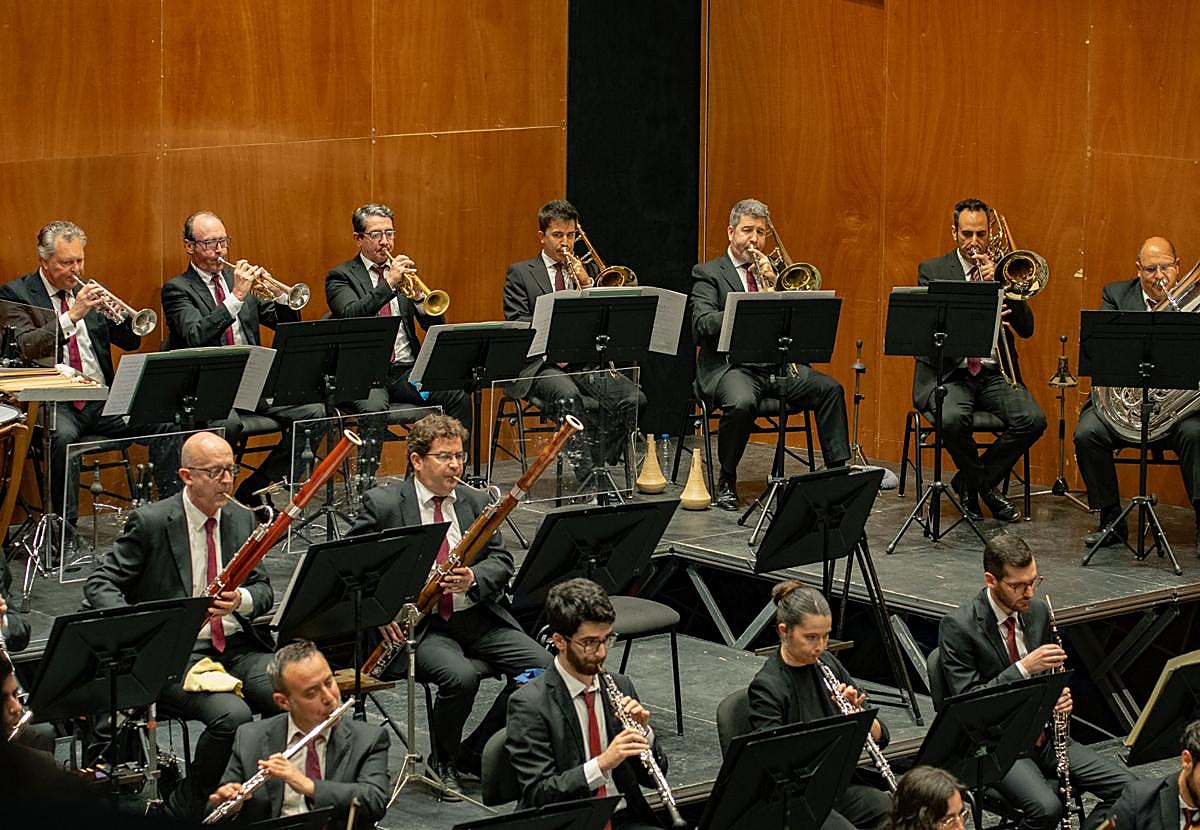

Last Thursday, March 19, the Malaga Philharmonic Orchestra (OFM) presented a new concert of its subscription season, specifically the eighth one, which featured the participation of the veteran Chilean conductor Maximiano Valdés on the podium and the stellar involvement of two lead musicians of the ensemble in the role of soloists. The evening opened with Aaron Copland's 'Quiet City', a composition for trumpet, English horn, and string orchestra, whose genesis dates back to 1939 (as incidental music for an Irwin Shaw drama), although it was transformed into an independent piece for the aforementioned ensemble in 1941. In Copland's own words, Shaw's drama "was a realistic fantasy that portrayed the nocturnal thoughts of very diverse people in a big city" and required music that evoked "the nostalgia and inner anguish of a society deeply aware of its own insecurity." Faced with such a request, Copland's piece, true nocturnal music, rises to the status of a sonic analogue of those desolate Edward Hopper paintings, with their naked characters in rooms brimming with isolation, their cafeterias lit like operating rooms at dawn, and their windows open to a chasm of miscommunication. The performance of both soloists was exemplary. On one hand, Ángel San Bartolomé, on trumpet, delivered his part with a mature sound rich in harmonics, flexible in portamentos, and always secure in delivery. On the other, Pedro Cusac acted as the perfect counterpart by soberly tracing the shadowy profile assigned to the English horn in this piece.
Expand
Following Copland's slow elegy, the robust force of Ginastera's 'Pampeana No. 3', a 1954 work evoking the epic of the Argentine landscape, was competently interpreted by Maximiano Valdés, although not to the extent of completely saving the extreme movements from a certain heavy gloominess, somewhat leaden, redeemed only by the 'Impetuously' (central rapid movement) of this famous example of the composer's so-called 'subjective nationalism'.
Masterful Prokofiev
And as the highlight of the program, Prokofiev's 'Fifth', a work from the terrible war years (1944), when the Red Army was beginning to defeat the Germans, "expression – in the author's words – of the greatness of the human spirit." Maximiano Valdés is an efficient director, an organizing intelligence that knows how to place everything in its spot, distribute weights and measures, beams of light and depths of darkness, accelerations and delays, sculpt moments and plan times, minimal details and imposing facades. He made the most of the excellent sections of the orchestra, from strings to percussion, all subjected to an intensely high level of performance, precise, uplifting, but all this, undeniable as it is, operates from a gesturality that the spectator would wish less stiff, less burdened by seriousness, more playful, a gesture that in its efficiency would more expressively accompany the emotion and enthusiasm of the sonic forms he manages to set in motion.

Latest news





Upcoming events
12
Nov
El Desembarco, la traición de Viriato at La Caja Blanca
12
Nov
HOMER El Mero Mero at Sala Trinchera Málaga
13
Nov
Marbella Startup Lab – Innovate & Collaborate
13
Nov
Candlelight: Coldplay & Imagine Dragons at Sala Fundación Unicaja María Cristina
13
Nov
Candlelight: Tribute to Ludovico Einaudi at Anantara Villa Padierna
Similar News

Málaga Airport Makes History with More Than Three Million Passengers in One Month
Málaga

Port of Málaga looks beyond its docks to support future growth
Málaga

Guide to the Virgen del Carmen Processions in Málaga and the Province
Málaga
