Costa del Sol News
The Fuengirola City Council will expand the project of the Roman City of Suel with a new phase of excavations and research work to continue enhancing one of the most important heritage sites in the municipality. The initiative will allow for the expansion of the intervened area and advance the historical knowledge of this site located around the Sohail Castle.
The mayor of Fuengirola, Ana Mula, announced the continuation of the project at an event that also featured the participation of the Andalusian Regional Government's Tourism Minister, Arturo Bernal, who confirmed the authorization of an extension for this archaeological action.
The goal is to continue bringing to light the Roman past of this enclave, considered a Site of Cultural Interest, and to deepen its research, conservation, and valorization.
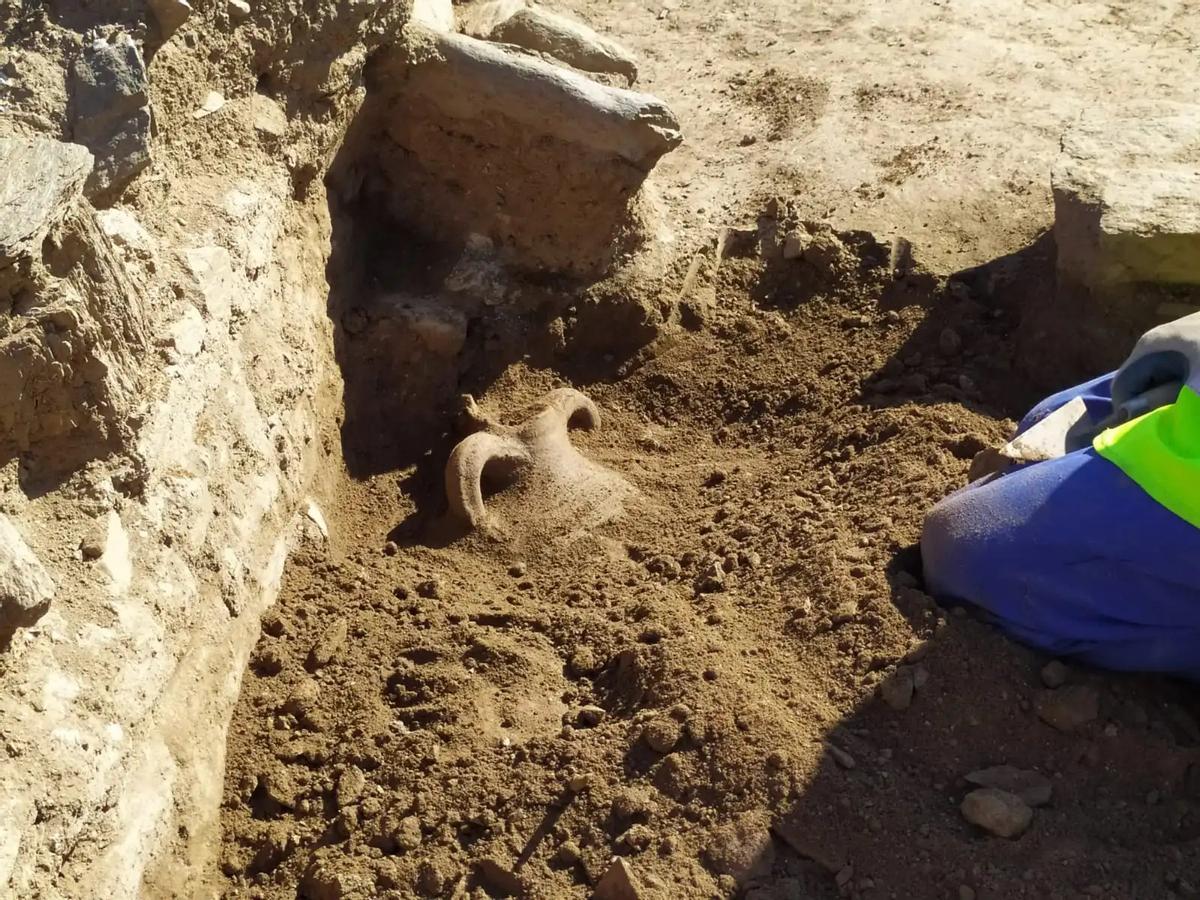
During the first stage of the project, between 2019 and 2025, 1,500 square meters of archaeological remains were uncovered, spanning from the 1st century BC to the 7th century. Among the findings are light wells, a pedestal, and various elements linked to intense commercial activity related to the sea.
Moreover, the excavation campaigns have identified streets and an urban layout from the Roman era, as well as garum factories and a significant building that could correspond to a curia, which reinforces the historical importance of Suel as a settlement linked to the economic activity of the Andalusian coast.
With the extension already granted and the contract awarded to the UTE Suel for an amount of 582,000 euros, the technical team will now work on a new surface of 500 square meters, with the forecast to reach 2,000 square meters excavated. This second phase will develop over the next five years.
Researchers will focus part of their work on an area where they believe four salting pools can be located, a discovery that would help to more precisely understand the type of production that was developed in the area, the marine species used, and the strategy for exploiting sea resources in Roman times.
The project has a strong scientific and multidisciplinary component. Research teams from the universities of Seville, Cádiz, Almería, Córdoba, Jaén, and Málaga are collaborating, along with the Central Support Services for Research at the University of Málaga and the University Institute for Research in Iberian Archaeology at the University of Jaén.
Alongside fieldwork, another pillar of this action has been dissemination. During the first phase, three scientific conferences were held with the presence of university researchers, and more than a thousand people, including school groups, collectives, and individual visitors, went through the site to closely learn about the development of the excavations and the significance of the discoveries.
The mayor recalled that the City Council has allocated more than 800,000 euros from municipal funds to these works, in a sustained commitment to the recovery of local heritage. This is complemented by the support of the Andalusian Regional Government, whose investment in various heritage projects in the city over the last seven years amounts to around two million euros.
In parallel, the City Council is finalizing the creation of a Visitor Center and Archaeological Warehouse at the Palacio de la Paz, funded by the Ministry of Tourism with 270,120.15 euros, which will serve for the study and conservation of materials extracted from the Roman City of Suel.
The action on Suel adds to other interventions promoted in recent decades by the City Council in terms of historical heritage, such as the rehabilitation of Sohail Castle, actions at the Finca del Secretario and its interpretation center, the Torreblanca Baths, or the recovery of the Cortijo Acevedo.
With this new phase, Fuengirola takes another step towards its goal of making the Roman City of Suel one of the major archaeological references in Andalusia and southern Europe, combining research, conservation, and cultural and tourist projection.