


Source of the Hundred Spouts: from criticized work to one of the most visited natural monuments in Málaga
Since 1985 until today, it has become a true place of pilgrimage during weekends after heavy rains.

Today is a feat, but initially, there were those who did not see it favorably. Even today, some criticize that a 'corset' was put on that spring. After the recent rains, the Fuente de los Cien Caños in Villanueva del Trabuco has recovered this winter one of those spectacular images that today go viral on mobile phones.
The water is once again gushing forcefully from dozens of spouts, and the sound of the spring can be heard from several meters away. As a result, many people from Malaga have headed to this corner of the province's interior to witness the natural spectacle. During the weekends, the influx has been such that it has even caused access roads to be overwhelmed by the large number of vehicles reaching this enclave at the foot of the Sierra de San Jorge. It is possible to get there on foot via the trail that starts from Villanueva del Trabuco, although it is not advisable to do so after rainy days due to the mud accumulated on the path.
This is not something new. Every time the rains recharge the aquifers of this mountain range, the fountain becomes a kind of magnet for hikers, curious onlookers, and families looking for a different plan in the midst of nature. But what today is one of the most visited natural monuments in Malaga had a quite different story at its origin.
The water that springs from the Fuente de los Cien Caños comes from inside the aforementioned Sierra de San Jorge, a mountain range that is part of the Central Limestone Arch of Malaga. Beneath these mountains lies a karstic aquifer, that is, formed by limestone rocks that act as a natural sponge.
When it rains heavily, the water seeps through cracks and cavities in the ground until it accumulates inside the mountain. When the pressure is sufficient, it emerges in the form of springs like the one that gives rise to this fountain. That's why its behavior is so irregular: it can offer a spectacular image in winter and spring and, on the other hand, be almost completely dry during the summer months or in prolonged periods of drought.
This spring is also one of the main contributions of water to the Guadalhorce River, the longest and most flowing river in the province of Malaga. Although the geographic origin of the river is located a few kilometers further north, in Granada territory, popular tradition has always pointed to this place as its birthplace. It's not strange: this is where the river really begins to gain strength. Just look at how the water flows down at the foot of the fountain.
Although the spring has always existed, the image that thousands of visitors know today is relatively recent. It was in 1985 when the Villanueva del Trabuco City Council decided to transform this place into a monumental fountain. Until then, the water freely descended down the slope of the mountain. The municipal project consisted of building several staggered retaining walls to channel the spring and distribute the water through a series of aligned spouts. The idea was to organize the spring and better harness its flow.
The initiative, however, was not to everyone's liking. In the town, there were those who criticized that artificial work in the middle of a natural setting. For a while, the fountain was the subject of debate among the residents. Over the years, however, the opposite of what some feared happened: the construction ended up becoming the great tourist symbol of the municipality. Today it is hard to imagine this place without that characteristic stone wall from which dozens of jets of water spring.
One of the most curious details of this enclave is in its very name. Although everyone knows it as Fuente de los Cien Caños, if someone stops to count them patiently, they will discover something unexpected: there are actually 101 spouts. The explanation has never been entirely clear. Some believe it was simply a mistake during construction. Others maintain that the last spout was added later. Whatever the case, this small "trick" has fueled one of the most repeated anecdotes about this place for decades.
The landscape and geological value of the place was officially recognized when the Junta de Andalucía declared this enclave a Natural Monument in 2012. With this protection status, both the spring and the natural environment surrounding it were valued.
The site is also part of an area of great environmental interest linked to the Camarolos and San Jorge mountains, where limestone formations, pine forests, and Mediterranean scrubland predominate.
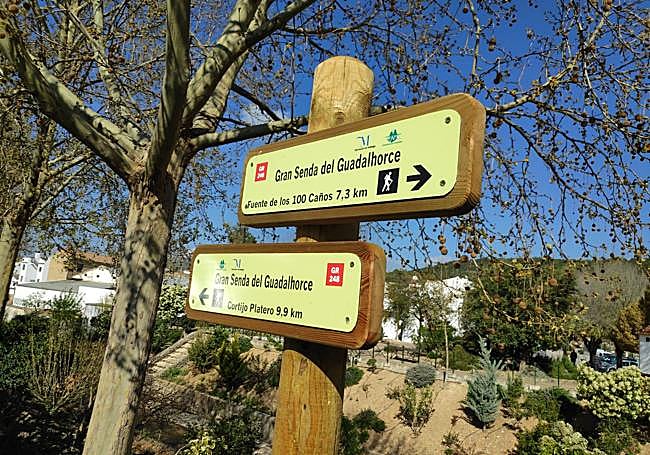
Over the years, the place has gained popularity among hikers and trekking enthusiasts. Several paths start from the fountain. In addition to the one that follows the initial course of the Guadalhorce to the urban center of Villanueva del Trabuco itself, the circular route of the Sierra de San Jorge stands out, much more demanding, but rewarding with spectacular panoramic views, a small pond, and even a group of horses that roam freely there.

Latest news





Upcoming events
12
Nov
El Desembarco, la traición de Viriato at La Caja Blanca
12
Nov
HOMER El Mero Mero at Sala Trinchera Málaga
13
Nov
Marbella Startup Lab – Innovate & Collaborate
13
Nov
Candlelight: Coldplay & Imagine Dragons at Sala Fundación Unicaja María Cristina
13
Nov
Candlelight: Tribute to Ludovico Einaudi at Anantara Villa Padierna
Similar News

Málaga Airport Makes History with More Than Three Million Passengers in One Month
Málaga

Port of Málaga looks beyond its docks to support future growth
Málaga

Guide to the Virgen del Carmen Processions in Málaga and the Province
Málaga
