


The hidden whim in a village of Málaga: a colorful tower, five floors and more than 200 works built by a neighbor inspired by Gaudí
The Axarquía House Museum, created by Antonio Montañez, surprises with its colorful architecture, historical objects, and more than 200 works. This house is a work of art, made by the Gaudí of Axarquía in Málaga, and is located in Torremolinos.
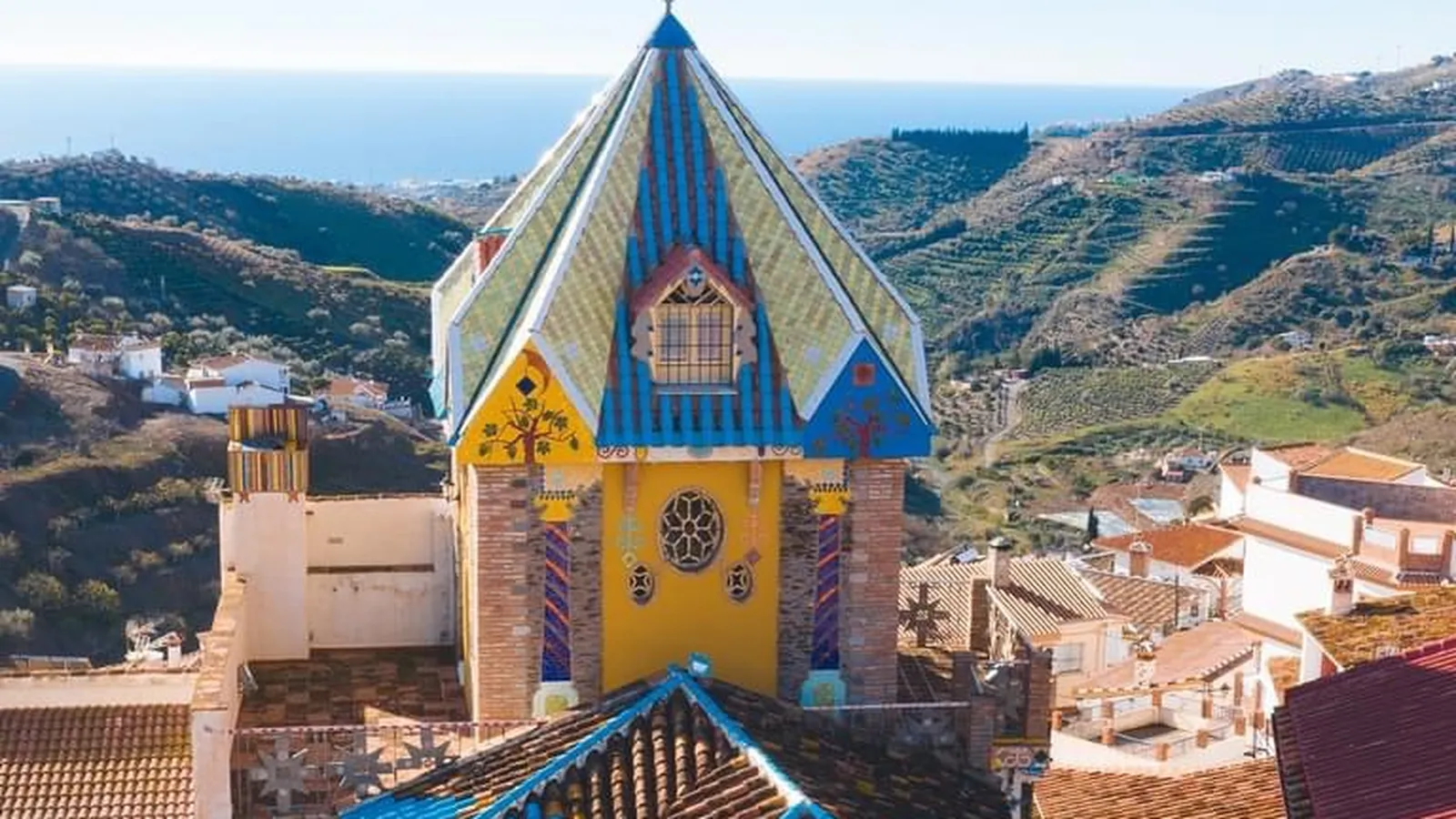

In a small village in the Malaga region of Axarquía, among white houses and landscapes overlooking the Mediterranean from inland, emerges a building that defies any expectations. Intense colors, unexpected shapes, and a tower crowning the building make this place one of the most unique creations in the area. In El Valdés, within the municipality of Moclinejo, stands the Casa Museo Axarquía, a construction popularly known as the Capricho de la Axarquía, conceived by a local who decided to transform his passion for art and local culture into a building as surprising as it is personal.
The Casa Museo Axarquía is the result of the initiative of Antonio Montañez, a self-taught creator known as the Gaudí of Axarquía. The story of this peculiar construction began over fifteen years ago, when Montañez decided to build a museum without following a conventional architectural project.
Instead of detailed plans, inspiration came from modernism and the work of Antoni Gaudí, whose influence can be seen in multiple details of the building. During approximately one year of intense work, and with the help of two bricklayer friends, Montañez managed to erect a five-story house that stands out for its originality and the creative use of materials. Most of the construction was done with demolition materials from old houses in the region, which adds a sustainable character deeply connected to the territory.
A multicolored tower that stands out in the landscape
The exterior of the building is one of the characteristics that first catches the eye. The Casa Museo Axarquía presents a colorful facade, with windows of various shapes and a tower topped by a "twenty waters" roof that has become its most recognizable element.
The style recalls the modernist trencadís, a technique popularized by Gaudí, especially visible in a large map of the Axarquía region made with tile fragments that decorates part of the exterior.
The dome of Casa Museo Axarquía. / Casa Museo AxarquíaThis play of colors, ceramics, and organic shapes creates a striking contrast with the rural environment of El Valdés, where nature and traditional architecture blend with this unique artistic proposal.
Five floors dedicated to the culture and memory of the region
In its more than 200 square meters, the Casa Museo Axarquía houses a journey through the history, culture, and traditions of the region. The building is distributed over five floors that include a basement, various themed rooms, and a lookout at the top.
Each level gathers a heterogeneous collection of objects and collectibles that reflect different aspects of life in Axarquía. Among them are old farming tools, household utensils, elements related to traditional crafts, and even curiosities such as an old manual ice cream maker. The collection includes more than 200 works and objects on display, including sculptures, paintings, and artistic pieces from various creators.
Artists and unique pieces within the museum
The Casa Museo Axarquía also serves as a showcase for the artistic talent linked to the region. Among the works that are part of the collection are creations by artists such as Francisco Hernández, Evaristo Guerra, Antonio Hidalgo, Segovia Páez, Ganfornina, Javier Navarta, Macu, and Magdalena Romero, among others.
Among the most curious objects is a large knife that, according to local tradition, could have belonged to a bandit from the region, like the legendary El Bizco de El Borge. Additionally, the museum preserves examples of the axarco, a coin used in the region that ceased circulation in the early 2000s.
Thematic rooms dedicated to the identity of Axarquía
The interior of the building includes five thematic bedrooms that pay tribute to different cultural aspects of the region. Some of them evoke musical traditions like the verdiales, while others focus on characteristic products of the territory.
The interior of Casa Museo Axarquía. / Casa Museo AxarquíaThe decoration also features recreations of raisin boxes, wine bottles, and other elements tied to the agricultural identity of the area. Details like a chameleon carved in the wooden railing reinforce the modernism-inspired aesthetics.
The basement, with a particularly ornate and personal decoration, presents an aesthetic that in some aspects recalls the style of writer Gabriele D'Annunzio's residence in Gardone Riviera, although reinterpreted from a local perspective.
An artistic project that extends throughout the village
The creative footprint of Antonio Montañez is not limited to just the museum. His work can also be seen in other parts of El Valdés, where he has participated in the decoration of public spaces.
Casa Museo Axarquía, from the outside. / Casa Museo AxarquíaAmong them are the village fountain, the adjacent children's park, and various ceramic elements located at the entrance of the village, welcoming those who arrive at this small enclave of Axarquía.
A new stage for Casa Museo Axarquía
The Casa Museo Axarquía recently began a new management stage with the collaboration of the Moclinejo Town Hall. This initiative has enabled the organization of guided tours to explore the interior of the building and its collection. During the tour, visitors can discover the various floors of the museum, observe the displayed works, and better understand the creative process that led to this unique project.
Meanwhile, Antonio Montañez continues to develop new artistic ideas. He is currently working on another construction in Torremolinos, near the Playamar area, where he intends to build an even more personal work, with multiple references to his life and family environment. In the small nucleus of El Valdés, this building has become a visible example of how individual creativity can transform a rural space into a cultural point of interest within the Malaga region of Axarquía.

Latest news





Upcoming events
12
Nov
El Desembarco, la traición de Viriato at La Caja Blanca
12
Nov
HOMER El Mero Mero at Sala Trinchera Málaga
13
Nov
Marbella Startup Lab – Innovate & Collaborate
13
Nov
Candlelight: Coldplay & Imagine Dragons at Sala Fundación Unicaja María Cristina
13
Nov
Candlelight: Tribute to Ludovico Einaudi at Anantara Villa Padierna
Similar News

Málaga Airport Makes History with More Than Three Million Passengers in One Month
Málaga

Port of Málaga looks beyond its docks to support future growth
Málaga

Guide to the Virgen del Carmen Processions in Málaga and the Province
Málaga
