


Why have the rains brought forward an allergy season that will be longer and more aggressive than usual in Malaga?
The president of Alergosur recommends that those allergic to pollen start taking antihistamines now.
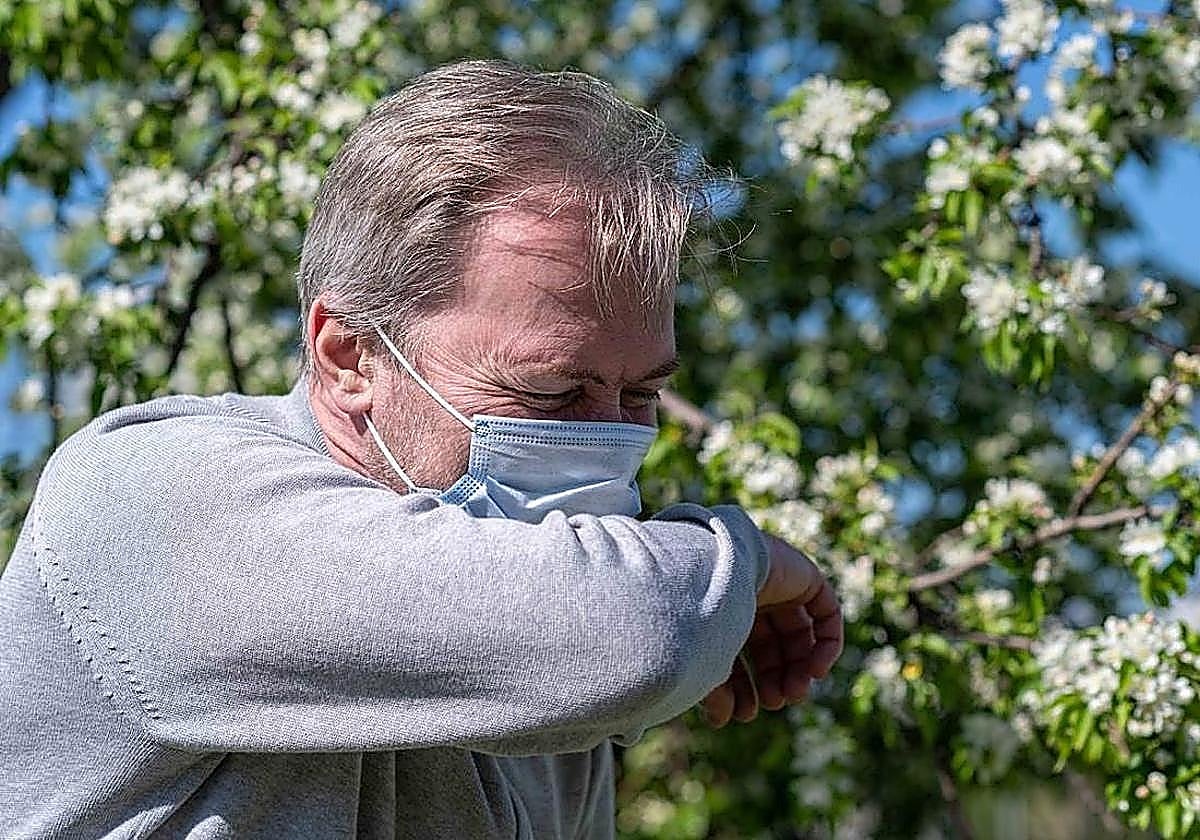

Over 293,000 residents of Malaga are allergic to pollen, according to estimates by the president of the Andalusian Society of Allergology and Clinical Immunology (Alergosur), Dr. Carmen Rondón, an allergist. This group of people is likely to suffer the most from what is expected to be a longer and more aggressive allergy season than usual, especially after the successive storms that have hit the province during January and February and the rainfall since late November. This amount of water encourages earlier pollination of many species. This, along with the heat that will arrive in just a few weeks, forms a difficult cocktail for allergy sufferers to handle.
Specifically, between 20% and 23% of the population is allergic, and of these, 75% suffer from respiratory allergies. Finally, of this last group, 90% are allergic to pollen, states the also head of the Allergology Clinical Management Unit at the Regional University Hospital of Malaga.
As Dr. Rondón says, "climate change is causing torrential rains and high temperatures to combine in the same year, creating a perfect scenario for the countryside and vegetation to flourish and for pollination rates to surpass each year: in Malaga, it seems like we are living in the landscapes of Galicia, everything is green."
It rained a little
Thus, "since it rained a bit already into the year, and there were a few days of heavy rains with these last storms, the pollination of the cypress has been slightly delayed, but it is already showing high levels in several areas of Andalusia." These high levels were already detected last week. From the beginning of this week, it is expected that "it will spread to everything."
What is anticipated is that, from these days, there will already be high levels "of urticaceae, grasses, and mainly, cypress." "Urticaceae are the main species of the parietaria family, which is a plant that pollinates very strongly in the Mediterranean area," emphasizes the allergist, to assert that in grasses, as in the last two or three years, "its pollination is advancing because we are having a lot of rain in autumn: this is going to affect allergy sufferers a lot, because we see that the onset of allergy in adulthood is becoming more frequent." Previously, it was usual for an allergic person to start having symptoms in childhood or adolescence.
"It is increasingly common to find people in their 30s or 40s who have never been allergic and who debut one spring with an asthma crisis that catches them unaware," explains Dr. Carmen Rondón.
"It is increasingly common to find people in their 30s or 40s who have never been allergic and who debut one spring with an asthma crisis that catches them unaware, because they have never had symptoms before, do not have medication at home to use, and have to go to the emergency room," warns.
She advises starting to take antihistamines now as a preventative measure, "so that when the strong outbreak hits, one is already on treatment, apart from reducing the symptoms, which are very intense." Asthmatics, she adds, should also start treating themselves preventively "with the inhalers prescribed by their doctor as soon as they begin to observe moderate levels of pollen" and those who have never been allergic, but had symptoms last year and begin to feel unwell at the start of spring, should go to their primary care doctor to be referred to an allergist. "There are very effective treatments that can modify the course of the disease such as vaccines, allergy immunotherapy is currently the only treatment aimed at the cause of the disease and that stops it from progressing to more severe symptoms, as well as stopping allergic respiratory diseases such as asthma, conjunctivitis, or atopic dermatitis," she reflects.
A pollination season that extends
But she provides more insights: the pollination season "extends over time because, with more flowering due to the rain, there are more plant species that bloom and overlap each other, not all bloom at the same time: the pollen allergic patient is usually allergic to more than one type of pollen, so they may start with symptoms from February due to the cypress and the grasses that advance or the urticaceae, and then continue during March, April, May, June, and even sometimes until mid-July," she explains, in addition to recalling that, from April to June, will come "the big peak of the olive tree," especially virulent in the Axarquía area.
Expand
Carmen Rondón, president of Alergosur. SURAntonio Picornell, on the other hand, is a doctor and works in the Department of Plant Biology at the University of Malaga. Regarding the advance of pollen levels in the environment, he confirms that the rains in recent months are a key factor. "In general, there is indeed an advance, especially with the holm oaks. This year they started to bloom two weeks earlier than last year. It is still not known if the same will happen with the olive tree and other species. At this time, we are already detecting high concentrations of pollen from cupressaceae and parietaria," he says.
His team updates every Wednesday the levels of pollen detected by the Teatinos measuring station. "During this week, the concentrations of pollen from parietaria and cupressaceae have reached high levels, and occasionally, extreme levels. The concentrations of pine and oak pollen are beginning to increase progressively. It is expected that during the coming weeks, the concentrations of these last two types of pollen will increase and that the concentrations of cupressaceae and parietaria will remain at levels similar to the current ones," the website reports.
"It is important to have a diagnosis that identifies which pollens you are allergic to or what other types of allergens," emphasizes the president of Alergosur
"It is important to have a diagnosis that identifies which pollens you are allergic to or what other types of allergens," Dr. Rondón specifies. The allergy season, therefore, has started this year in mid-February.
All this is greatly influenced by climate change and "by pollution, both industrial and from the vehicle fleet, especially diesel: studies have shown that 21st-century pollens are more aggressive than those in the 20th century, making plants adapt to these adverse conditions and become more resistant and aggressive, which means the pollens are too," she warns, predicting that this spring will be more intense than the last.
It should be noted that calima greatly affects respiratory diseases. In fact, episodes of suspended dust are occurring these days.

Latest news





Upcoming events
12
Nov
El Desembarco, la traición de Viriato at La Caja Blanca
12
Nov
HOMER El Mero Mero at Sala Trinchera Málaga
13
Nov
Marbella Startup Lab – Innovate & Collaborate
13
Nov
Candlelight: Coldplay & Imagine Dragons at Sala Fundación Unicaja María Cristina
13
Nov
Candlelight: Tribute to Ludovico Einaudi at Anantara Villa Padierna
Similar News

Málaga Airport Makes History with More Than Three Million Passengers in One Month
Málaga

Port of Málaga looks beyond its docks to support future growth
Málaga

Guide to the Virgen del Carmen Processions in Málaga and the Province
Málaga
