


Obesity drugs tested in Malaga will reduce weight by up to 30%
They will arrive in pharmacies in four years and are already achieving in trials body volume reductions very similar to those of bariatric surgery.
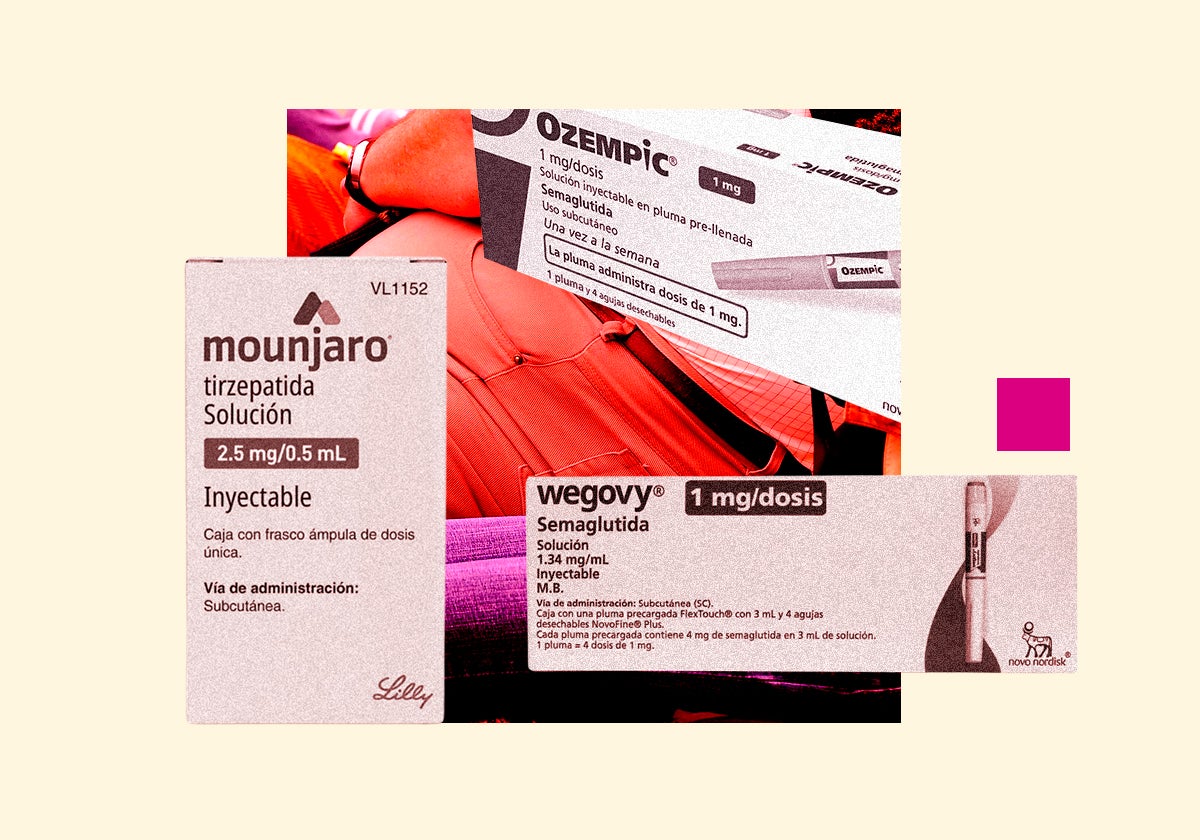

"It's a pandemic, a public health issue." Francisco J. Tinahones, head of the Endocrinology and Nutrition Service at the Virgen de la Victoria University Clinical Hospital and scientific director of the Biomedical Research Institute of Malaga (IBIMA), is emphatic when asked about obesity. The drugs commercially known as Ozempic, Wegovy, and Mounjaro, that is, the active ingredients called semaglutide (the first two) and tirzepatide (the third), have been "a revolution" in the treatment of this chronic disease, achieving weight reductions over 20%, compared to 10%-15% of their earlier versions. However, currently, there are drugs being tested in Malaga that will achieve body volume reductions between 25% and 30%.
This is not a trivial fact, because these are reductions similar to those achieved by bariatric surgery. "These drugs that control our appetite come from substances that our body produces: the intestine manufactures them to tell the brain that there is enough food," says Dr. Tinahones, also the president-elect of the Spanish Society of Endocrinology and Nutrition (SEEN), referring to Ozempic, Mounjaro, and Wegovy. "Even now there are others in development: we are conducting clinical trials with them, achieving nearly 30% weight loss. That is, we have medications that are approaching the weight loss achieved by bariatric surgery," he notes.
"We are conducting trials with 10 new molecules that follow the same strategy, using substances produced by our intestine to tell the brain to stop eating, that there is already enough food." These are multicenter clinical trials involving IBIMA and the Endocrinology and Nutrition Service at the Clinic. "They are made with drugs that pharmaceutical companies are developing," he adds. These treatments will reach the market "in three or four years." The effects are "promising," says Dr. Tinahones.
The figures refer to the results of the trials and, therefore, may vary. Not all patients achieve them.
About 350,000 people have obesity in the province and another 700,000 are overweight, according to experts. The disease is associated with more than 220 diseases. Next Wednesday, March 4th, World Obesity Day will be celebrated.
Nevertheless, bariatric surgery "can still have a place, there is no doubt: in cases of severe morbid obesity, these drugs may fall short." "But right now, it is true that it is regrettable that a person with a body mass index of 36, 37, who has diabetes and is indicated for surgery, if this drug were financed, we could prescribe it and, probably, achieve the same results as the surgery," he clarifies.
"Ultimately, surgery is an invasive method, it is true that its morbidity and mortality have significantly decreased, but we are subjecting the patient to an intervention and, in some way, modifying their intestinal tract, removing part of the stomach or shortening the intestine," he specifies.
These therapies are approved for individuals who have obesity (more than 30 BMI) or for those who are overweight but carry a significant associated comorbidity linked to excess fat: diabetes, hypertension, dyslipidemia, apnea, joint pathologies. "These drugs are not indicated for an individual who is of normal weight and wants to drop a size: that is frivolous," he specifies.
Patients using these treatments report that they have lost their appetite, "they snack less." And the benefit is automatic: all diseases associated with weight loss improve. "With reductions over 15%, it has been shown that cardiovascular events decrease, fatty liver, sleep apnea, and symptoms of joint degeneration linked to arthritis improve dramatically," he reviews, beyond the aesthetic change.
However, beware of the rebound effect. As Dr. Tinahones says, "obesity is a chronic disease that requires chronic treatment." "When you stop them, the appetite returns and the satiety disappears: it is described that a significant percentage of patients begin to regain weight," he adds, something that is not "surprising," given that blood pressure also rises if the individual stops taking pills to control it.
"They are of little use if someone says I'm going to apply it for three months, lose 10 kilos and then see what happens." Dr. Tinahones also advises changing lifestyle patterns, that is, exercising and eating correctly, but the treatment must be long-term. "Right now, these are expensive drugs and it is very difficult to propose this, but from a physiological point of view, it makes sense to maintain them in small doses for a significant period of time" to maintain the lost weight. A percentage that goes from 20% to 30% regains the lost weight and others also gain, but not as much.
These treatments have side effects ranging from diarrhea to constipation or vomiting, "but they are not excessively frequent and occur, especially, at the beginning." However, "fat is lost, but muscle is also lost." He assures that a molecule is now being studied that helps to lose weight but not muscle. "In fact, when we prescribe them, we recommend that the patient engage in physical activity." Of the three medications, only Ozempic has public coverage for treating diabetes.
"This disease is not a problem of lack of willpower of the patients to lose weight: we live with genetics that make us accumulate fat, because that has saved us in times of famine," he indicates. This is compounded by the fact that high-calorie foods are accessible, "physical exercise has disappeared from our way of working," he adds, to mention stress, lack of sleep, and other aspects such as "changes at the physiological level such as the biota, basal metabolism, or the amount of calories we consume."
"As it is a complex and multifactorial disease, preventing it requires taking it seriously, a national plan against obesity, something similar to what was done with tobacco," he concludes.

Latest news





Upcoming events
12
Nov
El Desembarco, la traición de Viriato at La Caja Blanca
12
Nov
HOMER El Mero Mero at Sala Trinchera Málaga
13
Nov
Marbella Startup Lab – Innovate & Collaborate
13
Nov
Candlelight: Coldplay & Imagine Dragons at Sala Fundación Unicaja María Cristina
13
Nov
Candlelight: Tribute to Ludovico Einaudi at Anantara Villa Padierna
Similar News

Málaga Airport Makes History with More Than Three Million Passengers in One Month
Málaga

Port of Málaga looks beyond its docks to support future growth
Málaga

Guide to the Virgen del Carmen Processions in Málaga and the Province
Málaga
