


These are the consequences for hotels and tourist accommodations on the Costa del Sol due to the suspension of the AVE service until just before Holy Week.
The direct impact on the billing for hotel establishments and vacation rentals in the province is already close to 500 million euros.
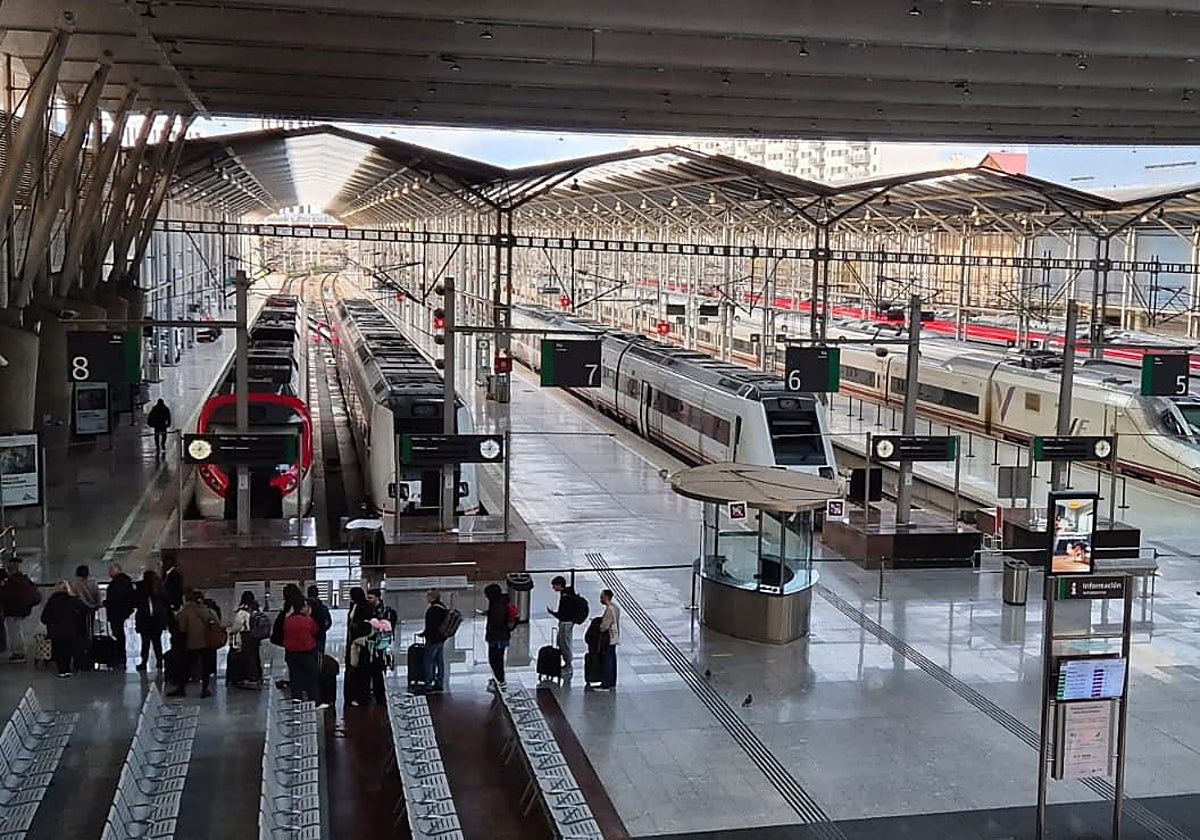

First, it was February 2, then February 7, and later the reinstatement of the high-speed line connecting Málaga with Madrid was scheduled for March 1. However, none of these deadlines have been met. Now, Adif announces that it is working tirelessly so that the Costa del Sol can regain the high-speed line, without a one-hour bus ride to Antequera. For now, the only deadline communicated to the main operators is set around March 23, just a few days before Easter and when the first vacations of the year are already planned. The Association of Hotel Entrepreneurs of the Costa del Sol (Aehcos) is already warning that they fear a leakage of travelers to other Mediterranean destinations due to the high-speed blockage, and that this situation jeopardizes the reservations of mainly Spanish tourists, and to a lesser extent, those of international visitors for Easter.
300
are the direct loss millions for the Costa del Sol hotels due to the AVE suspension.
The announcement of the new delay in the high-speed rail connection has been received like a cold shower by the tourism sector in Málaga, which already started to consider the situation as more than worrying when the reinstatement was discussed for March 1, with a 20% decrease in bookings. The new timeline for the reopening of the high-speed line implies losses that will impact the main industry of the province. Specifically, Aehcos now estimates a direct impact of 300 million euros on hotel billing, which also suffers from the storms and the train of depressions. The drop in bookings already reaches up to 30% and alarm spreads due to the direct impact on national tourism, which is crucial during Easter. "This situation is acting as a deterrent to demand, in a season where national tourism plays a key stabilizing role in the tourist flow of both the capital of Málaga and the coast and inland areas of the province," hoteliers specify.
30%
is the percentage of booking decline agreed upon by both hoteliers and the vacation rental sector.
To these direct losses in the hotels' financial results, we must add those quantified by the Association of Tourist Homes of Andalusia (AVVA-Pro) in a report sent a few weeks ago to the Confederation of Andalusian Entrepreneurs (CEA), detailing that the direct impact on the vacation rental businesses in the province was close to 200 million. That is, losses for hoteliers and tourist homes due to the high-speed crisis are nearing 500 million on the Costa.
In this report, issued before the launch of the connections from Seville and Córdoba, they estimated the direct impact on the sector of Tourist Use Housing (VUT) and tourist apartments in Andalusia at 462.5 million euros. A figure to which they added the induced impact, calculated to exceed one billion euros derived from unspent destination spending on dining, shopping, leisure, or local transport, placing the total lost profit of the tourism ecosystem at 1.541 billion euros in the region. They noted that Málaga accounts for 52% of such accommodation offerings, although they pointed out that in this calculation, a combination of the volume of places, seasonality, and accessibility is considered. The report considers a 30% reduction in booking volume for the "critical" horizon of 100 days, that is, between last February 12 and May 22, which they consider the necessary time frame for the restoration of usual user behavior of that rail corridor.
Deep concern in tourist homes, which warn of damage to Málaga's image
The impact of the suspension of the high-speed connection in Málaga since last January 18 is not only economic. The president of the Association of Tourist Homes of Andalusia (AVVA-Pro), Juan Cubo, warns of "deep concern about the railway situation currently facing the province of Málaga, with significant chances of being without a direct high-speed connection with the rest of the country for several more weeks, in the lead-up to the high season and on the eve of Easter." He emphasizes that "this situation affects the image of Málaga as a top-level tourist destination and creates great uncertainty among professionals and owners of tourist homes, as well as among travelers who had already planned their stays in the city and on the Costa del Sol." Juan Cubo insists that "this crisis seemed like a short-term issue, but seeing what we see now, concern is indeed spreading. There is now fear because it is the time to decide and book for Easter, and uncertainty leads people to opt for other destinations." He highlights that the high-speed connection is the main axis of connectivity for national tourism and recalls the weight of the vacation rental in the lodging offer, which represents 65% of the total accommodation capacity of the province, with 460,190 places. From AVVA-Pro, they warn that the railway crisis acts "as a shock that directly affects the highest value-added segment of the national market." They also alert that "the concentrated loss in the first semester reduces the recovery capacity before the summer season and can compromise financial stability." Therefore, they demand "the utmost diligence from the competent administrations to expedite the restoration of the service, as well as transparency and planning in the information given to the sector."

Latest news





Upcoming events
12
Nov
El Desembarco, la traición de Viriato at La Caja Blanca
12
Nov
HOMER El Mero Mero at Sala Trinchera Málaga
13
Nov
Marbella Startup Lab – Innovate & Collaborate
13
Nov
Candlelight: Coldplay & Imagine Dragons at Sala Fundación Unicaja María Cristina
13
Nov
Candlelight: Tribute to Ludovico Einaudi at Anantara Villa Padierna
Similar News

Málaga Airport Makes History with More Than Three Million Passengers in One Month
Málaga

Port of Málaga looks beyond its docks to support future growth
Málaga

Guide to the Virgen del Carmen Processions in Málaga and the Province
Málaga
