


A congress gathers in Malaga 190 companies and 400 experts linked to the space sector.
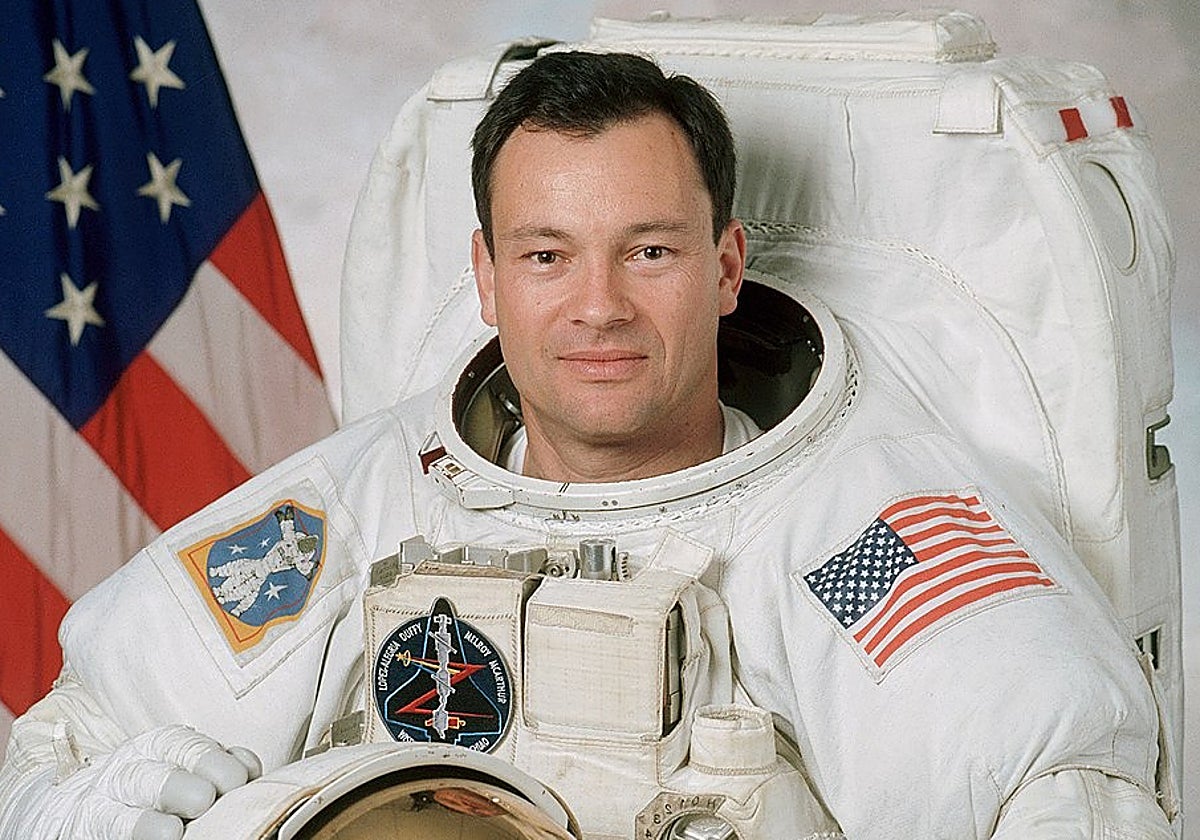
Astronauts Pedro Duque and Michael López-Alegría, among the speakers at the Small Satellites & Services International Forum, a leading event in the field of small space satellites.

Starting today, Málaga becomes the epicenter of the national and international space industry due to the Small Satellites & Services International Forum (SSSIF), a leading event in the field of small satellites that celebrates its seventh edition this year.
Under the theme 'Secure Communications and Other Dual-Use Technologies,' the congress gathers more than 190 companies linked to the space sector and around 400 experts from over 20 countries from European and international space agencies, research centers, and public institutions until Thursday. Over three days, the event will address the geopolitical and security challenges of the European space industry, as well as the technological and industrial capabilities that Spain and Europe need to develop to face the challenges of the current geopolitical situation, among others.
For the first time, the meeting includes the presence of NATO, specifically with Irene Saiz and Lieutenant Colonel Jorge Carmona, who join other major entities that are regulars at the congress such as NASA, the European Space Agency (ESA), the Spanish Space Agency (AEE), and the Spanish Air and Space Force Command. Alongside them, leading companies in the sector such as Hispasat, Indra, GMV, Oesía, Satlantis, Servitron, Sener, Telespazio, and Airbus will also participate. To complete the panel of experts, the event will have the attendance of Pedro Duque and Miguel López-Alegría, the two astronauts of Spanish origin who have traveled to space.
Miguel Ángel Vázquez and Vicente Díaz, co-directors of DHV Technology and promoters of the congress, highlighted: “When we launched the SSSIF eight years ago, we could not imagine reaching the level of participation and interest we see today, with visitors and companies coming from so many places. From the beginning, one of the pillars of the forum has been collaboration: fostering real and lasting alliances between the main agencies and companies in the sector, key to continuing to advance in the growth and international projection of the industry.”
The mayor, Francisco de la Torre, pointed out; “The SSSIF is a great opportunity to showcase Málaga's capacity to attract initiatives and investment. Málaga is today one of the hubs with the greatest potential to attract technological investment, supported by a reference Technology Park, with more than 700 companies and about 30,000 workers. Here investment counts, and in Málaga, we continue to bet on this ecosystem.”
For his part, Antonio Castro, general director of Andalucía TRADE, emphasized the ecosystem that supports the Andalusian space sector, whose turnover has grown by 25% according to the latest available data. “It is necessary to strengthen cooperation between administrations and companies, and in that goal, companies have the support of the Junta de Andalucía through 400 million euros in calls for incentives and reimbursable funds managed by Andalucía TRADE, with which we can accompany space companies in their growth projects, improvement of competitiveness, innovation, and internationalization,” he stressed.
Regarding space agencies, Juan Carlos Cortes, director of the Spanish Space Agency, highlighted the role of this congress for the industry: “the SSSIF has been established as a benchmark in the space sector at a time of change. On one hand, we have moved from exploring to exploiting space, with increasing militarization. While on the other, Spain has solid programs and capabilities, placing space on the political agenda. In this sense, the country assumes a relevant role with more than 400 million euros in launch activity, and with defense as a new actor that has come to stay in the space field.” Jorge Potti, vice president of the Space Commission of the Spanish Association of Technological Companies of Defense, Security, Aeronautics, and Space (TEDAE), also joined him.
Agenda: more than a hundred presentations
Following the institutional opening, the program has given way to various presentations focused on technologies expected to shape the evolution of communications in the coming years, such as quantum and secure communications and optical communications.
Regarding round tables, both the Spanish Space Agency and the European Space Agency participated in the table 'Secure Communications and Quantum Keys'; while in the 'Communication Strategy and Talent Retention in the Space Sector' table, the AEE, sectoral associations like TEDAE, and leading companies in the sector, have focused on the recruitment and consolidation of specialized profiles. The first day of the congress will conclude with the round table on «Dual use from the companies' perspective», led by Bufete Mas y Calvet and with the participation of Colonel Vicente Navarro from the Space Command.
The second day will be dedicated to security and will feature prominent interventions from representatives linked to defense, such as General Isaac Crespo, head of the Space Command. During this day, there will also be a table on 'Challenges of European resilience from space and national constellations', moderated by Satlantis, in which the challenges of building and deploying constellations and the implications for different European countries will be analyzed; and the table 'Space for the Benefit of Society', led by Telespazio. The second day will conclude with the round table on “International Collaboration in the Space Industry”, chaired by ICEX. To conclude the SSSIF 2026 congress, the last day will feature Michela Muñoz from NASA, who was the first Spaniard to work for this institution.
The 2026 event will include, following the success and influx of university students from the previous edition, a new workshop for developers led by internationally renowned experts, who will support startups and universities in their projects, providing lessons learned and key aspects in the development cycle of a space mission.
Security, the common thread
For this year's edition, the forum expects to gather more than 190 companies linked to the space sector and around 400 experts from more than 20 countries from European and international space agencies, research centers, and public institutions.
Under the theme 'Secure Communications and Other Dual-Use Technologies', it will address essential aspects about the technological and industrial capabilities that need to be developed in Spain and Europe to face the challenges imposed by the current geopolitical situation. It will also focus on the strategic autonomy of the old continent in the space field, reducing dependencies and increasing the reliability of its systems; and on the capabilities that need to be reinforced to guarantee technological sovereignty in a more demanding geopolitical scenario.
With sustained growth since its creation, the SSSIF has established itself as a key meeting point in the Space sector in Spain and as a benchmark event at the European level, promoting collaboration among institutions, companies, and professionals in the sector through technical debate, strategic vision, and opportunities for international cooperation. After seven editions, the congress places the city as a reference, equating it to cities like Singapore or Bremen that host similar meetings.

Latest news





Upcoming events
12
Nov
El Desembarco, la traición de Viriato at La Caja Blanca
12
Nov
HOMER El Mero Mero at Sala Trinchera Málaga
13
Nov
Marbella Startup Lab – Innovate & Collaborate
13
Nov
Candlelight: Coldplay & Imagine Dragons at Sala Fundación Unicaja María Cristina
13
Nov
Candlelight: Tribute to Ludovico Einaudi at Anantara Villa Padierna
Similar News

Málaga Airport Makes History with More Than Three Million Passengers in One Month
Málaga

Port of Málaga looks beyond its docks to support future growth
Málaga

Guide to the Virgen del Carmen Processions in Málaga and the Province
Málaga
