


Electrodes in the thalamus to stop epilepsy: the Regional has already treated three patients with this innovative technique
This operation is reserved for individuals with severe refractory pathology, in which medications have failed and conventional surgery is not possible.
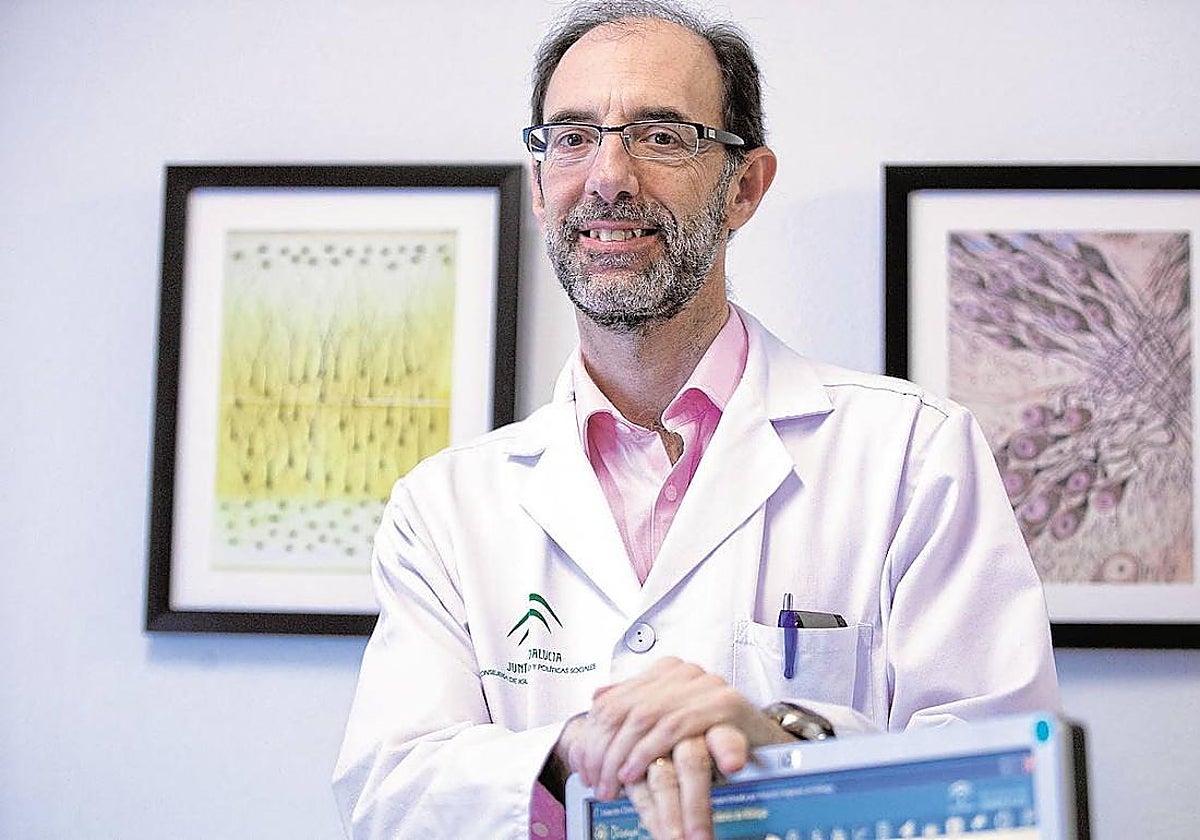

The Regional University Hospital of Málaga is one of the few Spanish centers performing the surgical technique known as deep brain stimulation on the anterior nucleus of the thalamus, a procedure reserved for patients with severe refractory epilepsy in which drugs have failed and conventional surgery is not possible.
The technique has only been applied in a few hospitals in the country, with Málaga and Clínic Barcelona being the centers with the most experience, although research and developments have been documented at La Princesa in Madrid, among others.
Epilepsy, whose international day was celebrated yesterday, is a neurological disease in which an area of the brain or the entire organ "begins to produce uncontrolled and excessive electrical discharges, that is, it translates into an increase in function. If it settles in a motor area, it will result in convulsions; if it settles in an area designated for language, we can have crises with language involvement," explains the head of the Neurology department at the Regional Hospital, Dr. Pedro Serrano, who adds that the clinical expression of the crises "is tremendously variable."
In Málaga, about 24,000 people have or have had epilepsy throughout their lives. Of these, between 8,500 and 10,000 have active epilepsy, with recurrent crises despite treatment.
New therapeutic resources
In recent years, new therapeutic resources have emerged to treat epilepsy, with 25 marketed drugs that are "anti-crisis, reduce the frequency or completely eliminate them, but do not cure the disease." In the last decade, Dr. Serrano says, new medications have been developed that directly target "the intrinsic mechanisms of the disease," what is called personalized or precision medicine. These drugs act on very specific syndromes, especially those of a genetic basis.
Expand
Epilepsy affects about 25,000 people from Málaga. SURHowever, there is a third of patients "in whom we cannot eliminate the crises despite all these treatments," explains Dr. Pedro Serrano. These "require a different, non-pharmacological approach that includes epilepsy surgery, but this is only accessible to a small percentage of patients, in whom control is not possible," he notes. Neuromodulation techniques—some non-surgical—or the innovative surgical technique known as deep brain stimulation at the thalamic level can be used. In some subtypes of refractory epilepsy that do not respond to treatment, the ketogenic diet is also used.
Regarding deep brain stimulation of the anterior nucleus of the thalamus, "we have begun to perform it at the Regional Hospital of Málaga, we are one of the few centers at the national level that do it and, so far, with quite good results," explains Dr. Serrano. So far, and since October 2025, they have operated on three patients and next week they will do so with a fourth. "The results are quite promising in patients who are refractory, in whom drugs have not solved the problem and in whom effective surgical options are not possible," he notes.
"The results are promising in refractory patients, in whom drugs have not solved the problem and where effective traditional surgery is not possible," declares Dr. Pedro Serrano
It is a procedure very similar to that used in Parkinson's disease "with the implantation of electrodes, only that the nucleus used from the thalamus is different; here we target what we call the anterior nucleus: it involves the insertion of a probe that reaches this nucleus, an electrode is implanted, and from there, with an external battery, neuromodulation begins with electrical impulses directly directed to the area," Dr. Serrano explains, clarifying that it is not a simple procedure and it is not open surgery, which significantly reduces morbidity and problems related to an intervention of that caliber. "It is one of the most powerful development lines of our Epilepsy Unit for the future," he emphasizes.
With the first of these operations "we had a truly exceptional result, the patient was absolutely free after a lifetime of daily crises, we really began to consider cases in which we had no other options," clarifies Serrano, including new clinical trials with molecules under investigation that, occasionally, are offered as an alternative.
The modus operandi is technically simple. "A small trepanation is made, and through it, a guide probe is introduced that reaches the target nucleus of the stimulation and the battery remains at a subcutaneous level, from there, it is regulated. It can be regulated with an external magnet, the stimulation can be programmed because there are different types, different frequencies and intervals, depending on the patient's needs."
The goal is to improve the patient's quality of life and reduce the number of crises. "We may encounter a case where they disappear completely, but that is not the norm," says the head of the Neurology department at the Regional Hospital
"The aim is to improve the quality of life and reduce the number of crises. We may encounter a case where they disappear completely, but that is not the norm," he notes, and recalls that the cases that respond least to treatment "require a multidisciplinary management involving neurologists, neurophysiologists, neuropsychologists, neurosurgeons, radiology doctors, neuroradiologists, or specialists in Nuclear Medicine." An Epilepsy Committee evaluates complex cases and decides the therapeutic strategy.
The goal? A unit per province
Dr. Serrano states that, within the Andalusian Health Service (SAS), a working group has been created that he and Dr. Jesús Ruiz, from the Virgen de las Nieves Epilepsy Unit in Granada, coordinate called Epiruta, "an attempt to organize in Andalusia how assistance to patients with epilepsy will be provided, which involves a reorganizational assistance." A document has been developed with the aim that no patient, regardless of where they live, is left without the possibility of accessing the best level of care.
"Thinking primarily of these especially complex patients who, if they are not at their reference hospital, do not have all those sophisticated procedures available, can be quickly referred to centers where they can be performed," he emphasizes, to specify that a step forward is the definition of what the Epilepsy Units are. "In Andalusia, to date, two medical-surgical epilepsy units are functioning acceptably, the Regional and the Virgen de las Nieves, which are defined by the ability to perform certain specific techniques, such as prolonged Video-EEG monitoring, which are video-controlled electroencephalograms and can last between 24 hours and a week, allowing us to locate where the crises come from and plan appropriate strategies for each of the patients within the group of refractory epilepsy."
The purpose of this strategy is for each province to have at least one defined Epilepsy Unit.

Latest news





Upcoming events
12
Nov
El Desembarco, la traición de Viriato at La Caja Blanca
12
Nov
HOMER El Mero Mero at Sala Trinchera Málaga
13
Nov
Marbella Startup Lab – Innovate & Collaborate
13
Nov
Candlelight: Coldplay & Imagine Dragons at Sala Fundación Unicaja María Cristina
13
Nov
Candlelight: Tribute to Ludovico Einaudi at Anantara Villa Padierna
Similar News

Málaga Airport Makes History with More Than Three Million Passengers in One Month
Málaga

Port of Málaga looks beyond its docks to support future growth
Málaga

Guide to the Virgen del Carmen Processions in Málaga and the Province
Málaga
