Costa del Sol News
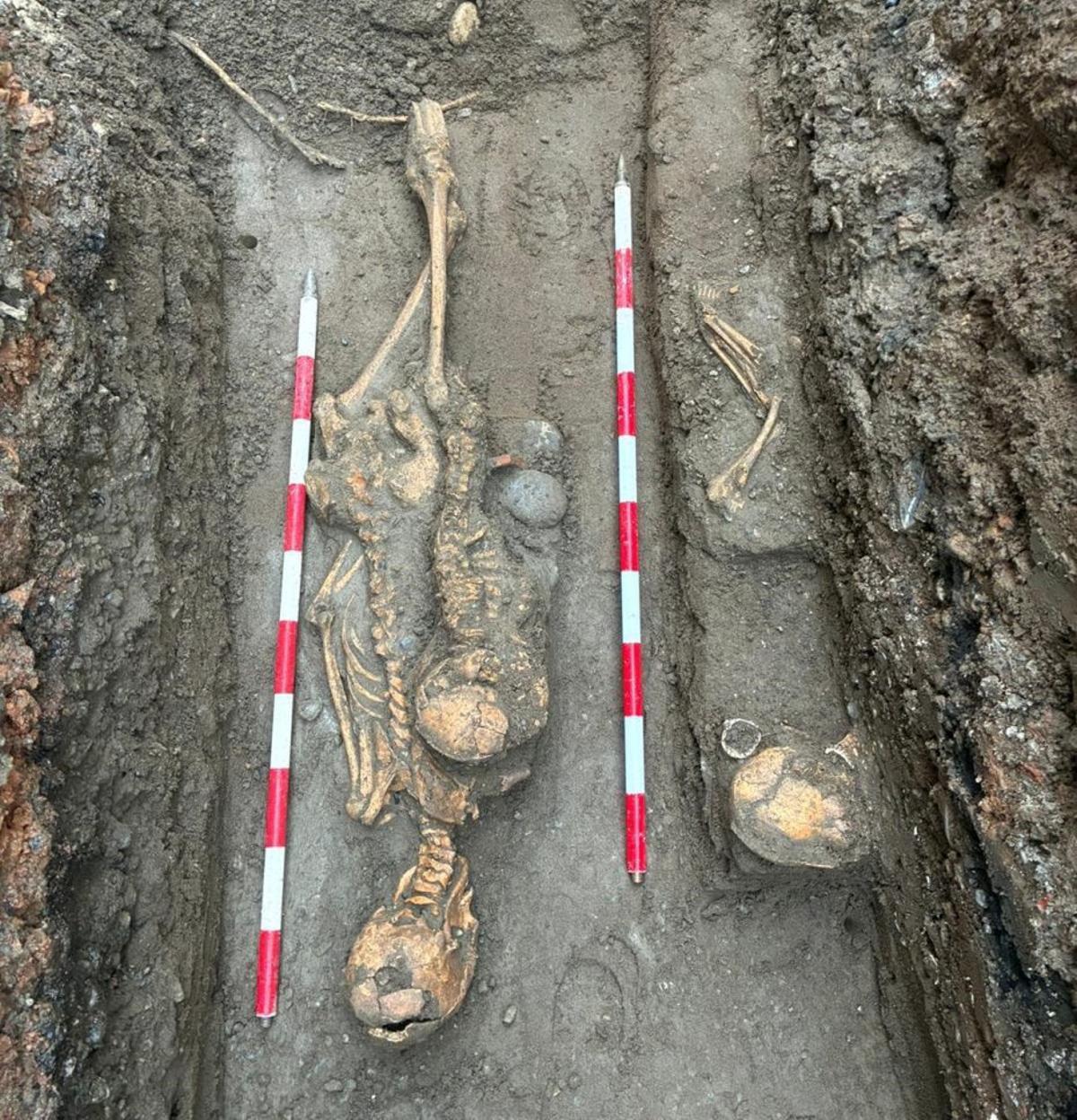
The construction of the boulevard being built by the Estepona City Council on San Lorenzo and España avenues has unearthed 12 graves from one of the two Muslim necropolises that existed in the city during the 13th and 15th centuries. The municipal archaeologist, Ildefonso Navarro, explained that this discovery occurred during the earth-moving necessary for the boulevard construction. The area where the boulevard is planned is considered an archaeological zone in the General Urban Planning Scheme (PGOU) and the Special Protection Plan for the Old Town. The City Council was already aware of the existence of this Muslim necropolis. Therefore, from the beginning of the work, a team of archaeologists coordinated with the municipal delegation of Historical Heritage of the City Council and with the authorization and inspection of heritage technicians from the Junta de Andalucía, thus following the preventive archaeology practices required by the Andalusian Heritage Law.
Mario González, an archaeologist from Menia, the company responsible for the excavations, explained that so far remains of 12 individuals have been found, who were buried following the canonical Islamic ritual, that is, facing Mecca, without clothes or grave goods, and directly in the soil. These remains add to those of another 600 individuals that have been discovered in the ten excavations carried out in recent years in areas where the two Muslim cemeteries were located in the Medina of Istibbuna, the name by which Estepona was known during the Nasrid period.
After the archaeological work is completed, the remains found in the graves will be studied by anthropologists to determine the causes of death, ages, and gender of these individuals, as well as any diseases or injuries they had at the time of their death.
The archaeological work will continue over the next few months as new earth movements occur. Archaeologist Mario González does not rule out new discoveries because studies reveal that one of the two Nasrid necropolises extended into what is today San Roque street.
The first phase of the archaeological excavations began at the end of 2024 and uncovered five bolaños, artillery pieces made of peridotite, a stone characteristic of the Sierra de Estepona. These medieval weapons could have been used during the sieges that Istibbuna suffered in the 13th and 14th centuries by Christian armies.
Additionally, ceramic remains from the medieval period have appeared, since rubble was also deposited in this area during the 18th and 19th centuries, making it very difficult to find complete pieces of significant value.