


The Candlemas traditions in Malaga: bonfires to burn the old or processions where sugared almonds are thrown
In the early days of February, this religious festival is celebrated in many towns, and it varies greatly depending on where you go.
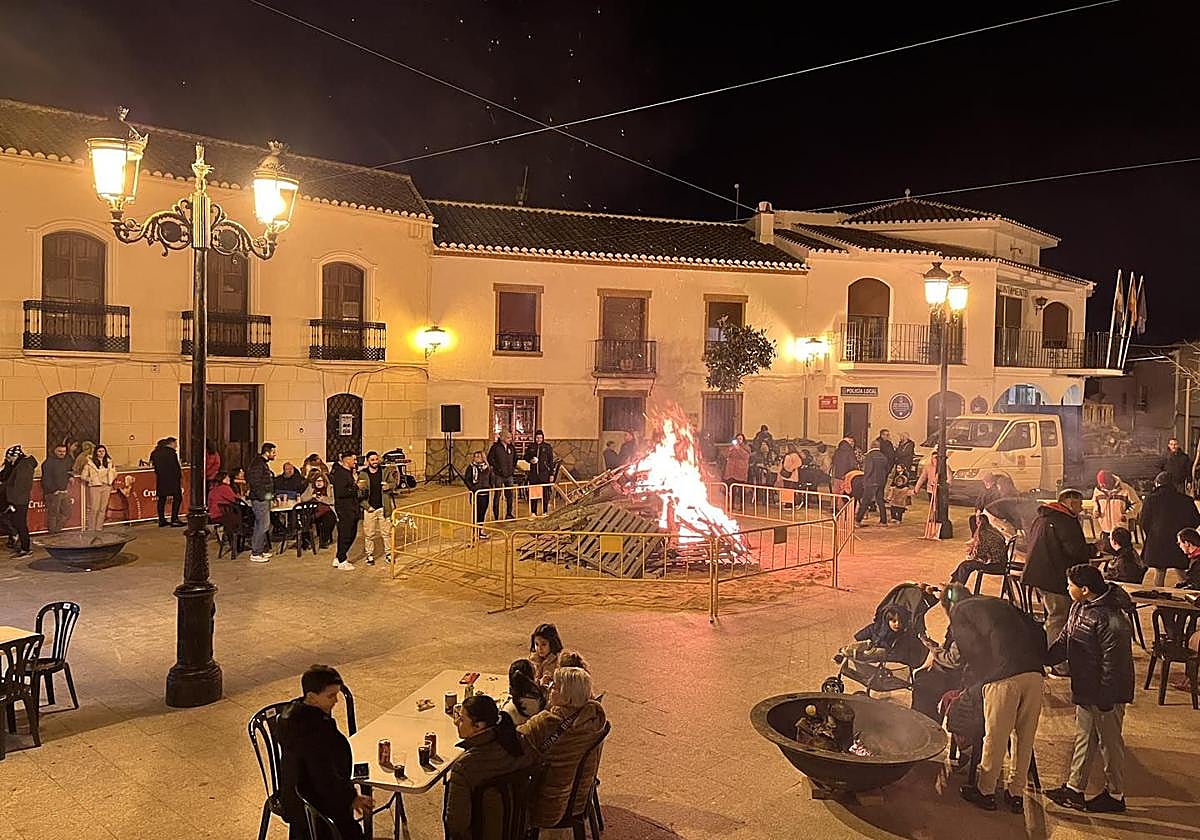

The festival of the Virgin of Candelaria keeps alive one of the oldest winter rituals in Malaga. Every February 2nd - and the days before or after depending on the town or city - the province transforms into a mosaic of blessings, bonfires, processions, and customs that still mobilize entire towns today. From the showers of sugared almonds in Benagalbón to the communal bonfires in the Vega de Antequera or the intimate vigils in Genal, the Candelaria remains an event where faith, local identity, and coexistence uniquely intertwine. These are some of the most curious and deep-rooted traditions of Malaga.
In this historical core, the Candelaria is a true patronal feast that combines devotion and popular tradition. The Virgin of Candelaria, accompanied by Saint Joseph, stars in two deeply rooted processions. One is celebrated a few days before Candelaria Day (at the end of January) and the other on February 2nd, the Feast of Candelaria. During the procession, it is common to see the striking shower of sugared almonds and peanuts that residents throw from balconies and streets onto the Virgin's throne, as a gesture of gratitude for granted favors. Additionally, children born in the last year are presented before the patron saint, and the town enjoys a festive atmosphere with morning parades, community paella, booths, and performances, including the local verdiales band.
This town celebrates one of the longest and most participatory Candelarias in the province. More than a week of religious and recreational events precede the big day, the day of the procession, which usually takes place on the Sunday following February 2nd. The festival unites the Virgin of Candelaria and Saint Blas, whose images participate in a long procession that can last up to ten hours and includes passing through the fields to bless the crops. Days before, the descent from the hermitage to the parish is organized, as well as themed masses, floral offerings, and the traditional blessing of Saint Blas's doughnuts. The popular fervor is intense: hundreds of devotees accompany the thrones among verdiales bands, music bands, and fireworks. The festival has a strong popular component among its residents, which is reinforced by the legend of the Canarian sailors and by the historic protection attributed to the Virgin after the earthquake of 1884.
This town in the Axarquía also experiences one of the most unique Candelarias, marked by the winter cold of one of Malaga's highest towns. The tradition revolves around the large bonfire that is lit at nightfall on February 2nd (or the eve if it falls on a Saturday). Residents make dolls from old clothes and straw to burn them in a ritual that symbolizes "burning the old." They also drag burning gorse through the streets before throwing it into the fire, a custom that once was led by children and today is kept alive by the entire town. The evening is completed with doughnuts, chocolate, and the warmth of a shared tradition.
In a small rural cluster at the foot of the Torcal, the Candelaria takes on an intimate and deeply symbolic character. The families of La Higuera and other nearby villages keep olive branches, sticks, and stubble throughout the year, which they burn in a large community bonfire on the night of February 1st. Each branch thrown into the fire represents a petition or wish for a loved one, usually health for the elderly or protection for the youngest. The festival serves as an annual meeting point: many residents who live outside return just for this night. Coexistence is extended with music, dance, and shared meals around the fire, making the Candelaria of Jeva one of the most emotive and family-oriented in the province.
Without leaving the region of Antequera, in addition to the religious activities of the 'capital of the Vega', there are three towns very close to each other that share a deeply-rooted tradition of Candelaria, fundamentally around the fire. In Humilladero, each neighborhood organizes its own bonfire (usually on the eve, the night of February 1st), recovering a neighborhood tradition that gathers whole families with dinners and coexistence under the stars. In Mollina, the municipality promotes a large collective bonfire where chorizos, sardines, and other local products are roasted while residents celebrate until dawn. In Fuente de Piedra, in addition to burning rag dolls, the bonfires become meeting points for preparing barbecues and sharing local wines. These three towns keep alive the ancient "winter bonfires," where the fire purifies and at the same time strengthens coexistence.
In this trilogy of towns in the Lower Genal, they celebrate the Candelaria with a strong religious component and a rootedness that remains virtually intact. In Jubrique, the Virgin of Candelaria, who is the patron saint of the town, presides over a solemn mass followed by a procession through the steep streets. In Genalguacil, the tradition includes the presentation of the children of the year and an intimate procession that gathers the entire community. In Algatocín, the festival combines Eucharist, blessing of bread rolls, presentation of newborns, and a procession accompanied by the Municipal Music School. These three mountain towns share a devotional vision of Candelaria, centered on community life, generational continuity, and the preservation of rituals that have endured for centuries.
This town usually lights one of the most spectacular bonfires in the interior of Malaga. The festival revolves around the ramones, i.e., the remains of olive pruning that residents accumulate to feed the bonfire on the first weekend of February. The bonfire illuminates the town square and serves as a meeting point for serrateños of all ages, including many who return just for this night. The evening is accompanied by roasted meat, homemade wines, music, and spontaneous dancing around the fire. The celebration has a marked identity character: it symbolizes the union of the town and the symbolic closure of the agricultural season of the olive grove.
In Sierra de Yeguas, the tradition of Candelaria remains fully alive through the bonfires by neighborhoods, lit on the eve of February 1st or 2nd (normally it is arranged so that the following day is not a working day). The younger ones are in charge of collecting wood and preparing the fire, while the elders contribute sausages and local products to roast during the evening. The scene is repeated every year: several bonfires lit simultaneously and small communities gathered to eat, sing, and share. The festival has a marked intergenerational character and represents an essential link with the agricultural customs of the area.
This town in the Sierra Norte de Malaga region celebrates Candelaria as a true fire festival, especially led by the children. The boys and girls of the town have been collecting wood and branches for weeks to light the bonfires in each neighborhood. They also make rag dolls that are burned in the bonfires, in a tradition of strong symbolism. Although some old customs have disappeared, such as singing circles around the fire, the tradition of eating fritters and other sweets along with a cup of hot chocolate is maintained.
In this town in the Guadalhorce Valley, Candelaria is experienced with a marked parochial and family character, especially around the church of San Juan Bautista. The tradition consists of celebrating a special mass on the afternoon of February 2nd, where the children born in the last year are presented before the Virgin. After the Eucharist, the candles that the faithful keep at home as a symbol of protection are blessed. Although no external procession is carried out, participation is high and maintains the liturgical essence of the festival.
Alhaurín de la Torre maintains one of the most deeply-rooted celebrations of Candelaria in the Guadalhorce Valley, closely linked to its Old Quarter and the tradition of bread rings. The festivity begins on February 1st with the display of the Virgin of Candelaria and the offering of bread rings in the parish of San Sebastián. On February 2nd, the children born in the last year are presented before the image in an emotive ceremony, followed by the blessing of the bread rings, which families keep as a symbol of protection. The procession, traditionally carried by women from the neighborhood, culminates in the square with a large bonfire and a popular snack of chocolate and fried dough. It is a celebration that combines faith, roots, and strong community participation.
This monumental city is experiencing an exceptional Candelaria this year: the Virgin will once again procession through its streets after more than a century, recovering a tradition that had not been documented for almost a hundred years. The big day will be February 1st, with a mass at 11:00 a.m. that will include the presentation of the boys and girls baptized during the last year. At noon, the extraordinary procession will start from the church of Santa Ana, organized by the Archconfraternity of Solitude, with a large entourage and the band Maestro José Antonio Galán. The image will be carried on adapted platforms by brothers and devotees. Later in the afternoon, the Archconfraternity will light the traditional bonfire in the church square, where pancakes and chocolate will be served, reinforcing the popular character of a celebration that Archidona had not experienced in generations.
*In addition to these traditions, there are others in other localities that also celebrate the Virgin of Candelaria during these days, such as Vélez-Málaga (there it is called the Festival of Light), Fuengirola, Antequera, Ronda, Cártama, neighborhoods of the city of Malaga or Alhaurín El Grande, among others.

Latest news





Upcoming events
12
Nov
El Desembarco, la traición de Viriato at La Caja Blanca
12
Nov
HOMER El Mero Mero at Sala Trinchera Málaga
13
Nov
Marbella Startup Lab – Innovate & Collaborate
13
Nov
Candlelight: Coldplay & Imagine Dragons at Sala Fundación Unicaja María Cristina
13
Nov
Candlelight: Tribute to Ludovico Einaudi at Anantara Villa Padierna
Similar News

Málaga Airport Makes History with More Than Three Million Passengers in One Month
Málaga

Port of Málaga looks beyond its docks to support future growth
Málaga

Guide to the Virgen del Carmen Processions in Málaga and the Province
Málaga
