


When the Oncologist is the Cure
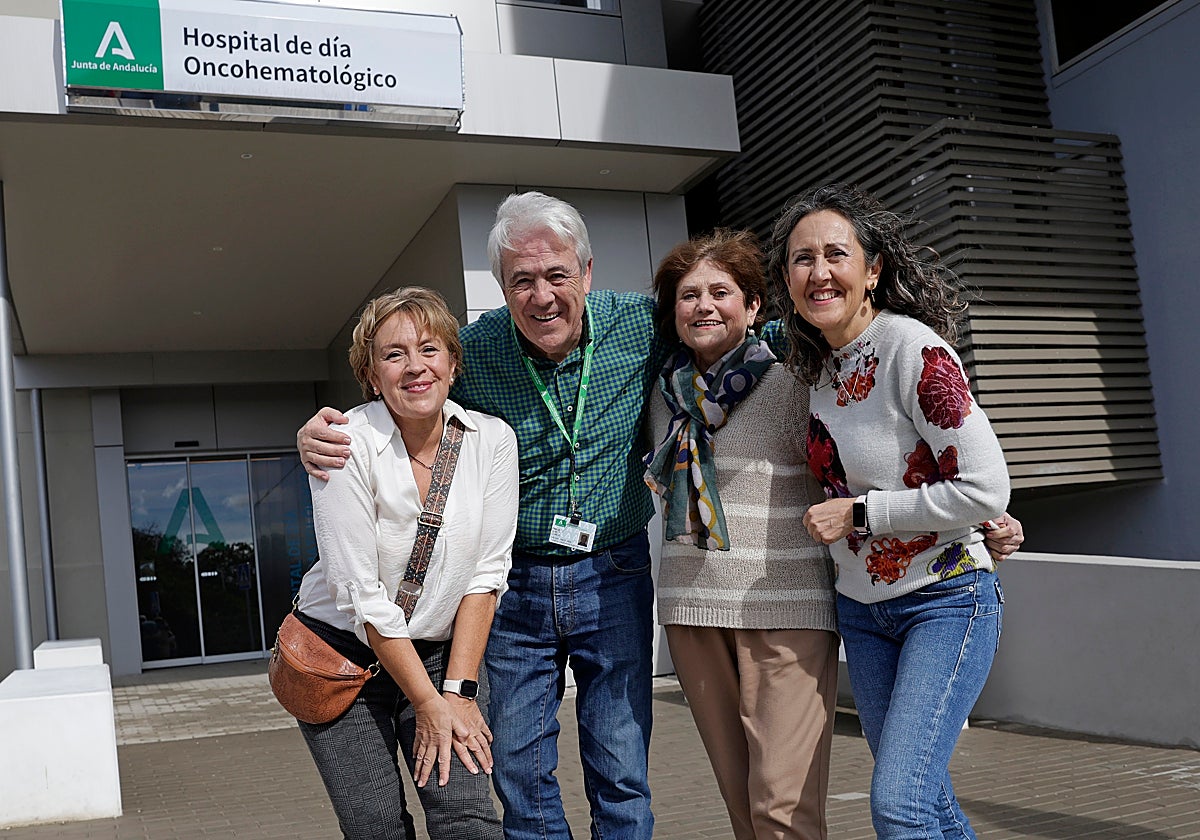
SUR brings together three women who have overcome breast cancer treated by the Oncology service of the Clínico, led until now by Dr. Emilio Alba, to discuss the importance of the relationship between specialist and patient when facing a process of these characteristics.

It's not easy to process the news. It never has been. "When it happened to me, my girls were very young, I thought I wouldn't see them... grow up, now I have an eleven-year-old granddaughter." Paqui Aguilar, a 70-year-old woman with a slight build and nervous blue eyes, speaks calmly about her experience. Over three decades ago, she faced breast cancer. To overcome the disease, a trusting and empathetic relationship with her doctors was crucial. Sometimes, the oncologist is the best treatment or even the cure.
Follow Diario SUR on Google DiscoverAdvancements over thirty years have been numerous, disruptive, almost so much that general cancer survival rates have increased from 30% to 60%, recalls the head of the Oncology Department at the Clinical University Hospital Virgen de la Victoria, Dr. Emilio Alba, a legend in the field who ended his tenure last week after three decades, but will continue consulting, teaching (he is a professor at UMA) and researching as the scientific director of the Cancer Research and Advanced Therapies Foundation (CITAC).
"The trust you have in the professional is very important because it is transmitted to you, and you go more confidently each time you have to undergo treatment," says Paqui Vargas, former president of ASAMMA
On the occasion of World Cancer Day, which is celebrated today, SUR has brought together three patients with Dr. Alba, who led the service that treated them, to analyze the increasingly prominent importance of the relationship between doctor and patient in overcoming this pathology, a connection in which empathy, the quality of the information transmitted, and above all, creating a situation in which the woman fully trusts her therapeutic guide are essential. The cure, in this case, could be said to be the specialist. "The patient has to notice that you care about her," says Emilio Alba. He comes from two meetings and asks the newspaper: "Put there that I will continue consulting, every Monday," he jokes. People think he's retiring. He has treated more than 2,500 women with breast cancer in his career.
"It throws your life upside down"
"This is a very tough disease, it throws your life and your family's life upside down, and it changes everything, even though you may heal, but you think about the disease every day," Alba points out. And he emphasizes the relationship between doctor and patient: "Trust and empathy are fundamental, the patient has to notice that you care about her," he reflects. She has to feel that her case is important. For him, what is essential is "going home with the feeling that you have done well and everything you could." He insists that now "treatment methods are more sophisticated, less aggressive, surgeries are much more precise today, less aggressive," he reviews.
"Your doctor has to be one, a person has to make the decisions, must make them with you and you need to know them," says Dr. Emilio Alba
In his opinion, most people are good, "when a patient is violent it is out of fear, people are normally kind," and he leaves a reflection that falls in the room like a heavy stone at the bottom of a pond: "In Andalusia we have to get our act together." For example, in precision medicine or in the fact that "people need to have their doctor." "The system is organized for professionals, not for patients," he notes, and adds: "Your doctor has to be one, a person has to make the decisions, must make them with you and you need to know them."
"Emilio is very clear"
Paqui, who was president of the Association of Women Operated for Breast Cancer of Málaga (ASAMMA) says: "What Emilio tells you seems like it's set in stone. I started many years ago, now things are different," she emphasizes, but insists: "The trust you have in the professional is very important, because it is transmitted to you, and you go more confidently each time you have to undergo treatment, it is important that it flows and goes well." Paqui also appreciates the clarity: "Emilio is very clear, you like to be told the truth, in the end, it is what will help you move forward." She was 33 years old when she noticed a lump, "but I never thought it could be cancer." The surgeon gave her the news. She needed chemo and radio. She highlights the importance of having a psychologist and being positive.
Expand
An image of the conversation between Dr. Emilio Alba and his patients. MIGUE FERNÁNDEZMaría José Melero is 54 years old and her tumor process began in Castilla-La Mancha. "I noticed the lump at 39 years old. It's hard to convince the primary care doctor to do a mammogram, because it was a very early age," she recalls, although a vaccine that came out 25 years ago, "the darling because it came to cure those of us with that subtype," helped her overcome the ordeal.
"At first, you're in a cloud"
"When you get the news you're like in a cloud, you don't know where your life will go, especially with young children, but it has been a learning journey: in that first stage I became very close to the professionals, they are fundamental, they are the angels that take care of us." She met Dr. Alba later in Málaga, during the review period. "He is a personable individual, you have a doubt and he always finds a moment to listen to you."
"When you get the news you're like in a cloud, you don't know where your life will go, especially with young children, but it has been a learning journey," says María José Melero, one of the patients now cured
She volunteers at ASAMMA and works closely with Dr. Alba, who gives regular talks at the association. Both María José and Emilio Alba recall the invaluable work of Dr. Nuria Ribelles, who has attended to many women and forms an almost unbeatable team with him. "She is the oldest oncologist after me, she is the architect of the organization of this service, much of what the service is because of her," affirms the oncologist.
For her, what's important "is to keep the positive aspects of what the process brings us, to know how to live life day by day and enjoy every moment." Now, she rows along with many companions. And she insists: "The trust with the doctor helped me, both Emilio and Nuria offer a lot of trust to the patients, it's essential that they give you the opportunity to explain what your fears are or what you need to know about your treatments: every time I had a doubt, they clarified it for me," she points out.
Loli Barés is an administrator at the Clínico and her process began 12 or 13 years ago. "It caught me by surprise because I felt nothing. One Sunday night I noticed a lump, and I came here on Monday, I was scared of course and then I started with the treatment, although my surroundings were more scared than I was," she tells SUR. Her colleagues smile as she speaks, although María José acknowledges that she still thinks about the disease: "It's a before and after in your life."
"The doctor is fundamental"
For her, the role of Nuria Ribelles and Emilio Alba has been fundamental. "When you start treating with Nuria she gives you a lot of confidence, she approaches you, you are scared." She had a hard time, but she overcame the treatment of chemo, surgery, and radiotherapy. "Now I'm in top shape, I do rowing and canoeing," she says, looking at María José, her accomplice in the sports field. Paqui joins the conversation and insists: "The doctor is fundamental."
"One Sunday night I noticed a lump, and I came here on Monday, I was scared of course and then I started with the treatment, although my surroundings were more scared than I was," says Loli Barés, another of the patients of the Oncology service led by Emilio Alba
In these thirty years, many things have changed in the process to overcome breast cancer, but the extended hand of doctors to their patients continues to be a safe path to open, albeit timidly, the door to hope.

Latest news





Upcoming events
12
Nov
El Desembarco, la traición de Viriato at La Caja Blanca
12
Nov
HOMER El Mero Mero at Sala Trinchera Málaga
13
Nov
Marbella Startup Lab – Innovate & Collaborate
13
Nov
Candlelight: Coldplay & Imagine Dragons at Sala Fundación Unicaja María Cristina
13
Nov
Candlelight: Tribute to Ludovico Einaudi at Anantara Villa Padierna
Similar News

Málaga Airport Makes History with More Than Three Million Passengers in One Month
Málaga

Port of Málaga looks beyond its docks to support future growth
Málaga

Guide to the Virgen del Carmen Processions in Málaga and the Province
Málaga
