


Over 90% of the new registrations in Marbella are foreigners
Only 504 of the 6,830 new residents are Spanish, 2,700 come from other European countries, and the number of Americans has increased by 30%.
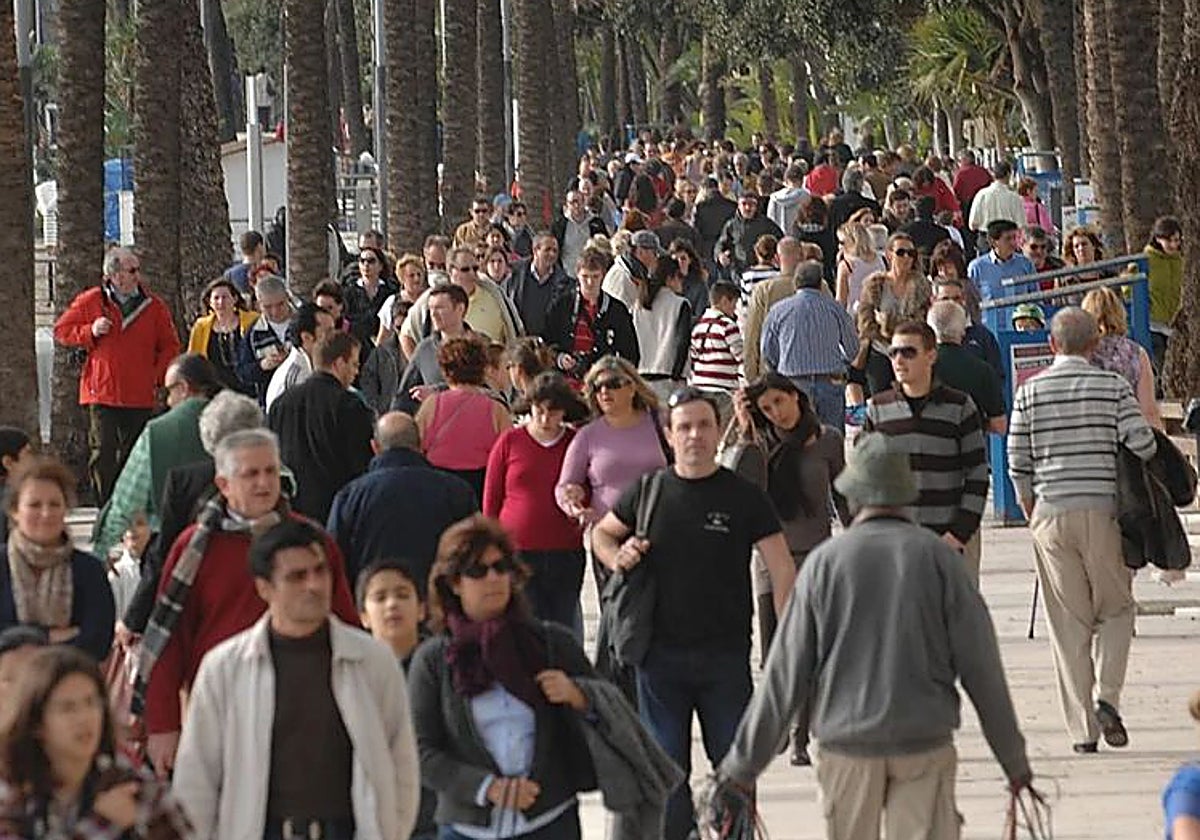

Marbella welcomed 2025 with a population of 166,590 inhabitants and ended the year with 173,420 registered residents. A growth of ... 6,830 people, primarily explained by foreigners. At the start of 2025, there were 109,710 Spanish nationals, and a year later, there were 110,214, only 504 more, while the foreign population increased by 6,326 to reach 63,206 people, making up 36.45 percent of the population, according to data from the City Council.
The comparison of the snapshots from the beginning and end of 2025 shows that Colombians were the nationality that grew the most in 2025 among the 156 present in the municipal register. In Marbella, there are 831 more Colombians than a year ago, making this nationality the fourth most significant among the foreign population (5,209 inhabitants in total). The second largest growth was recorded by people of Moroccan origin, with an increase of 452 people, consolidating this nationality as the most numerous after the Spanish, with a total of 6,133 people.
Population
6,326 foreigners
is the number of inhabitants from different nationalities in the city, 36.45% of the total.
International conflicts also seem to be reflected in the register. Thus, Ukrainians represent the third largest population growth in Marbella, with 372 more people, placing the country invaded by Russia as the origin of 5,226 inhabitants of Marbella, making it the third most significant foreign nationality. Russians also grew notably: 171 more, totaling 3,419, the fifth most common nationality other than Spanish in the register.
4,000 Swedes and Germans
Countries from the European continent and former Soviet republics are responsible for nearly 40 percent of the population growth, about 2,700 more inhabitants at the end of 2025 compared to the first day of the year. Notably, the increase registered by the British, the second most numerous foreign nationality, who went from 5,306 to 5,838 inhabitants (342 more).
Additionally, up to six European Union nationalities grew by more than three digits, topped by Swedes (258 more up to 2,033 in total), Italians (240 to total 2,844), and Germans (214 up to 2,058) and completed by the French (185), Romanians (125), and Dutch (118 more inhabitants). Poles and Irish are very close to the three digits, with 97 and 94 more inhabitants, respectively.
Moroccan, British, Ukrainian, Colombian, and Russian are the most numerous nationalities
Outside European borders, the increase of Paraguayans (340) and Filipinos (339) stands out, who are the seventh and eighth most numerous foreign nationalities in the municipal register, with 2,735 and 2,474 inhabitants, respectively, in addition to Venezuelans, who added 264 more people reaching 1,743.
The next largest increase was recorded by Americans, 164 more, placing the population of this country registered in Marbella at 725 people, which represents a spectacular growth of 29.23 percent in just one year. Canadians also grew notably (31 more) to reach 223 people, bringing the total of the two North American countries close to a thousand. Besides the aforementioned nationalities, only Argentina grew by more than three digits, 110 more inhabitants, placing at 1,553 the number of inhabitants of Marbella originating from this country.
Of the 156 nationalities present in the register, up to 48 have fewer than ten inhabitants, including six stateless persons.

Latest news





Upcoming events
12
Nov
El Desembarco, la traición de Viriato at La Caja Blanca
12
Nov
HOMER El Mero Mero at Sala Trinchera Málaga
13
Nov
Marbella Startup Lab – Innovate & Collaborate
13
Nov
Candlelight: Coldplay & Imagine Dragons at Sala Fundación Unicaja María Cristina
13
Nov
Candlelight: Tribute to Ludovico Einaudi at Anantara Villa Padierna
Similar News

Málaga Airport Makes History with More Than Three Million Passengers in One Month
Málaga

Port of Málaga looks beyond its docks to support future growth
Málaga

Guide to the Virgen del Carmen Processions in Málaga and the Province
Málaga
