


This is the best town in Málaga that you can visit in February: it is located in a valley between two natural parks.
Cortes de la Frontera lies between the vastness of the Sierra de Grazalema and Los Alcornocales. Walking among Spanish firs and finishing with a good meal: the two most rewarding hiking trails in Málaga.
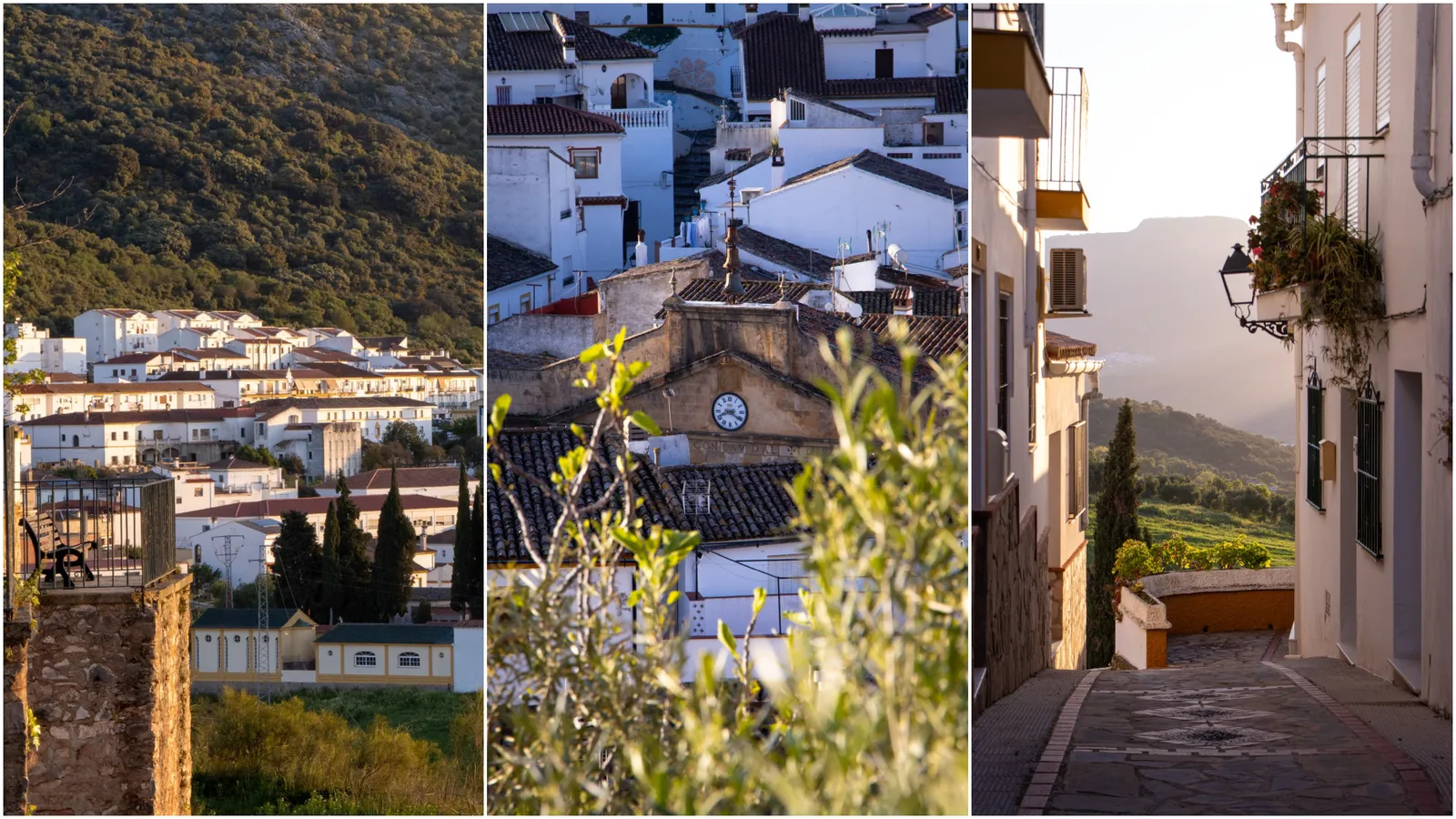

There are towns you discover on foot... and others you feel even before you arrive. In Cortes de la Frontera, the landscape unfolds like a large-format natural stage: a valley crossed by the Guadiaro river, a canyon nearly two hundred meters deep, and a white village suspended between two of the most valuable protected areas in southern Spain. Here, in the heart of the Serranía de Ronda, nature sets the pace of the calendar, history peeks around every corner, and culture is literally written on the facades. This is how this unique village in Málaga, nestled between the Sierra de Grazalema Natural Park and the Los Alcornocales Natural Park, stands.
Cortes de la Frontera is one of the few Spanish municipalities whose municipal area is divided between two large protected spaces: the Sierra de Grazalema Natural Park and the Los Alcornocales Natural Park. This privileged location, in the heart of the Guadiaro valley, makes the town a site of great ecological and landscape value.
The Sierra de Grazalema spans over 50,000 hectares and offers an environment of valleys, canyons, and caves of great uniqueness. Meanwhile, Los Alcornocales constitutes the largest cork oak forest in Spain, covering 170,025 hectares, and is a national benchmark for the richness of its ecosystems. Among the most well-known natural spaces in the municipality is the Garganta de las Buitreras, an impressive canyon shaped by the Guadiaro river, which reaches almost 200 meters deep in some areas and features passageways, cavities, and spectacular rock formations.
A historic urban center in the heart of the Serranía de Ronda
The main nucleus of Cortes de la Frontera is organized around the plaza de Carlos III, where the most important civil building of the municipality is located: the Town Hall. It is a neoclassical style construction erected in 1784 by order of Carlos III, made of sandstone and featuring an imposing facade of ten arches, of which its main part is still preserved today.
Nearby stands the parish church of Nuestra Señora del Rosario, built at the end of the 18th century, easily recognizable by its tower that stands out among the whitewashed houses. Next to this church is one of the most unique elements of the local heritage: the porch of the Casa y Capilla de los Valdenebros, popularly known as the Casa de las Tetitas due to the shape of the rivets on its gate. This house belonged to a military man ennobled for his feats and retains its heraldic shield, as well as an old underground passage that connected it to the church.
Another of the most significant buildings is the Stone House, a construction of early Christian origin, dated between the 6th and 7th centuries, which would have been used as a covert temple by Christians under Islamic rule. Later, between the 18th and 19th centuries, it was used as a wine press. This building is one of the most valuable historical testimonies of the municipal area.
The most poetic village in Málaga: verses on the facades
Cortes de la Frontera has become a unique outdoor literary space in recent years. After the pandemic, the municipality launched a cultural initiative that transformed its facades into open pages of poetry. Currently, over fifty poetic fragments are scattered through the streets of the urban center. The verses of authors such as Federico García Lorca, Miguel Hernández, Antonio Machado, Quevedo, Gloria Fuertes, Concha Méndez, Pedro Calderón de la Barca, José Antonio Sánchez, or Marina Romero are integrated into strategic corners of the village.
Monuments and architectural heritage
Among the main monumental elements of Cortes de la Frontera, its bullring stands out, the second largest in the Serranía de Ronda. It was inaugurated in 1894 and its ring reaches 30 meters in diameter, reflecting a deeply rooted livestock tradition in the locality.
Natural resources, La Sauceda, and ecological wealth
The natural environment of Cortes de la Frontera hosts oak groves, pine forests, gall oak woods, riparian forests, and a rich variety of Mediterranean shrubland. In the area, mountains such as Sierra de Líbar, with an altitude of 1,302 meters, or Sierra de los Pinos, reaching 1,397 meters, are located.
One of the most emblematic spaces of the municipality is La Sauceda, a small population center nestled in a forest environment of great scenic value. Historically, this place was a refuge for bandits and people living outside the law. Today, it has a recreational area with cabins equipped with fireplaces and no electrical supply, as well as a wide range of nature-related activities. In La Sauceda there is also the Casa de la Memoria, a space dedicated to the victims of the Nazi bombing during the Spanish Civil War.

Latest news





Upcoming events
12
Nov
El Desembarco, la traición de Viriato at La Caja Blanca
12
Nov
HOMER El Mero Mero at Sala Trinchera Málaga
13
Nov
Marbella Startup Lab – Innovate & Collaborate
13
Nov
Candlelight: Coldplay & Imagine Dragons at Sala Fundación Unicaja María Cristina
13
Nov
Candlelight: Tribute to Ludovico Einaudi at Anantara Villa Padierna
Similar News

Málaga Airport Makes History with More Than Three Million Passengers in One Month
Málaga

Port of Málaga looks beyond its docks to support future growth
Málaga

Guide to the Virgen del Carmen Processions in Málaga and the Province
Málaga
