


The new Andalusia Tourism Law, which strengthens the fight against illegal offerings, will be approved in March.
The counselor defends this regulation in Parliament, asserting that it "will organize, modernize, and strengthen the main economic sector from the principles of sustainability, coexistence, and quality of life."
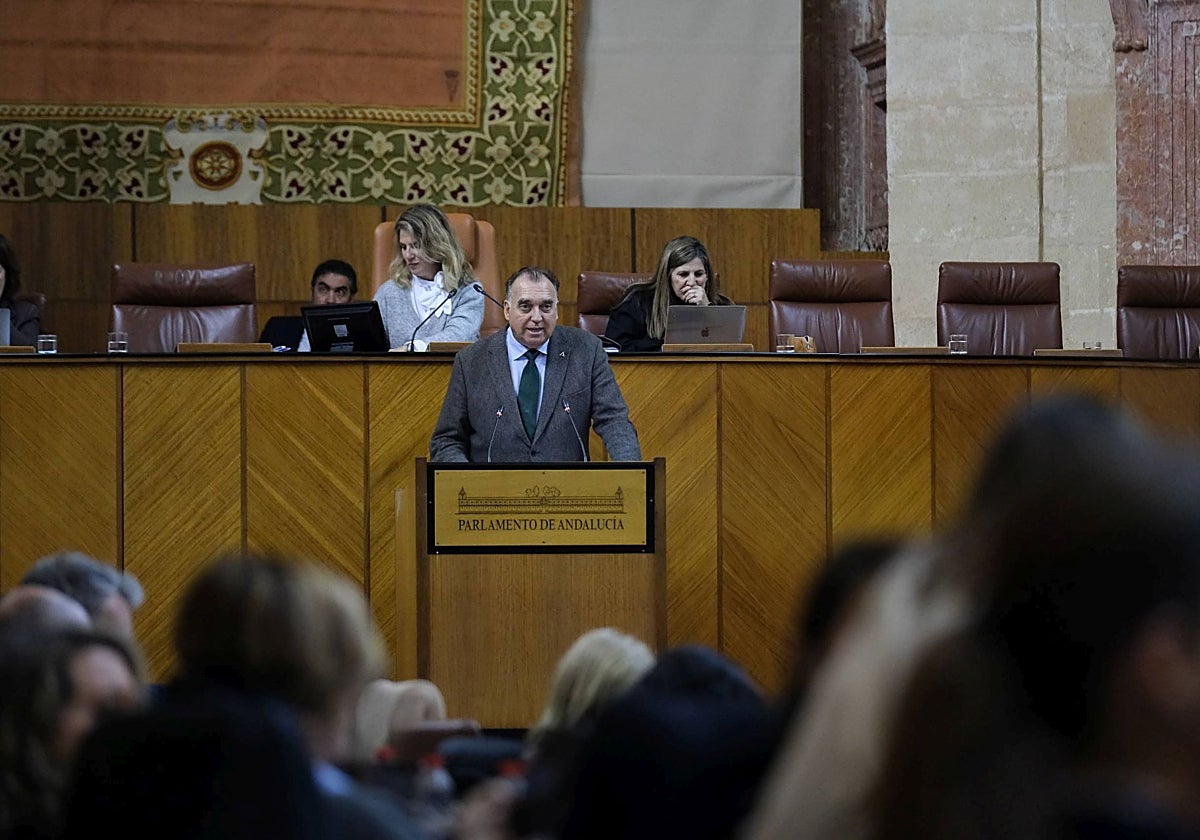

The new legal framework that will govern the Andalusian tourism sector, the Sustainable Tourism Law of Andalusia, which focuses, among other aspects, on combating illegal offerings, begins its countdown to approval next March. Arturo Bernal, the Tourism Commissioner of the Andalusian Government, defended this regulation in Parliament, after which a vote was held in which the total amendments presented by the PSOE and Por Andalucía were rejected with 69 votes from the PP and Vox. Thus, the project is sent to the Tourism Commission after overcoming the first milestone of the parliamentary process with a strenuous debate with the opposition. A second phase begins, which involves the presentation of amendments, to be addressed in a plenary debate next February, and then, subsequently, proceed to its definitive approval a month later.
In his speech in Parliament, Bernal insisted that "it is a good law. A solid legal framework commensurate with the importance of tourism in Andalusia, which will bring a series of benefits to the ecosystem. A regulation that will organize, modernize, and strengthen the region's main economic sector, which is tourism, based on the principles of sustainability, coexistence, and quality of life." He emphasized that "with this new law, Andalusia moves towards a model in which tourism not only generates wealth but also balances territories, preserves our identity, and builds a future for the entire community."
Among the aspects addressed by this new regulation, he highlighted that it will strengthen legal security and the fight against clandestine activity and illegal offerings. "Specific chapters are dedicated to this, to tourism inspection and the sanctioning regime, updating the amounts and types of infractions to adapt them to the current reality." Moreover, he explained that, while emphasizing the commitment to normative simplification and a "more orderly, clear, and efficient framework for companies and administrations," the law encompasses an integral vision of tourism and its impact on Andalusian society. "The regulation starts from a very clear idea: tourism is not just numbers. It's about people, territory, and coexistence," the commissioner stated, clarifying that "the future law sees the territory as a strategic asset that must be cared for and planned to ensure orderly development, compatible with hospitality, quality of life, and the sustainability of destinations."
After highlighting the high participation of all the sector's stakeholders, such as local entities, business organizations, and contributions from other councils and public bodies, as well as the social dialogue achieved, he stated that among the purposes of the law is the focus on people. "This regulatory text begins where it should: with the people. Its primary purpose is to care for and attend to them," he advanced, insisting that "it is not a rhetorical approach, but the foundation of the tourism model proposed by Andalusia."
"The regulation starts from a very clear idea: tourism is not just numbers. It's about people, territory, and coexistence"
In this new model, words like hospitality and coexistence gain great prominence as "a necessary condition in the relationship between visitors and residents, based on values such as respect, cordiality, the right to rest, and respect for habits and traditions." Sustainability and innovation are other central terms in this new legal framework. Thus, the commissioner detailed that the project integrates the environmental, social, economic, and governance dimensions transversally. "The sustainability incorporated in this law is not abstract or declarative. It translates into planning, resource protection, territorial balance, and public decisions based on data and the reality of each destination," he declared.
Furthermore, he advanced that another pillar of the project is innovation and tourism intelligence: "For the first time, our regulatory framework defines tourism policy, that is, it defines the purpose of our government action. It bets on a diversified, innovative, accessible, and competitive offering, respecting sustainability, and promoting a smart management model of sustainable tourism based on the characteristics of the territory."
Bernal valued that the regulation incorporates an ethical commitment of Andalusian tourism. "This text is not limited to technical regulation, but introduces a clear ethical framework for all agents of Andalusian tourism. It sets a shared ethical horizon," he explained.
Also, he recalled that the law bets on "a diversified, innovative, accessible, and competitive offering, with respect for sustainability, and promoting a smart management model of sustainable tourism based on the characteristics of the territory." At this point, he highlighted that it focuses on the inland destinations of the region, where it aims to promote tourism development with tools like the Rural Area Tourism Plans, aimed at promoting and boosting tourism in municipal or supra-municipal areas. "This measure directly connects with the demographic challenge and the need to balance the territory. We not only look at the big cities or established destinations but also at the villages, inland regions, and rural areas, which have heritage, culture, landscape, and projects that need a stable framework and planning to consolidate," he specified.
In the intense debate following the commissioner's presentation, the PSOE defended the total amendment based on five axes, which they said are based on reports from the Junta itself. In this regard, they described them as a lack of precision in the regulation; an excessively programmatic nature; a lack of funding provision to municipalities to promote this co-governance; an intended inspection reinforcement without additional inspectors; and a complicated fit with European regulations.
From Por Andalucía, they criticized that the new regulation "does not talk about regulating or reducing tourism, but about promoting and advertising" and that it also does not specify how the inspection of tourist homes will be reinforced. "Tourism generates a lot of money, but not much wealth," they pointed out, warning that "cities like Málaga are at their limit, and the situation in the province is unbearable. None of these central issues are corrected."
From Vox, they warned that they intend to introduce partial amendments "to correct the course of the regulation," which they said has a heavy ideological load, toughens the sanctioning regime for small entrepreneurs "who are heroes," and "intends to sacrifice the main industry from some Brussels dogmas. "We will present partial amendments to protect entrepreneurs," they affirmed before asking that "they do not turn tourism into a victim of their ideological agenda. That in the name of false sustainability, the main industry of the region is ruined."

Latest news





Upcoming events
12
Nov
El Desembarco, la traición de Viriato at La Caja Blanca
12
Nov
HOMER El Mero Mero at Sala Trinchera Málaga
13
Nov
Marbella Startup Lab – Innovate & Collaborate
13
Nov
Candlelight: Coldplay & Imagine Dragons at Sala Fundación Unicaja María Cristina
13
Nov
Candlelight: Tribute to Ludovico Einaudi at Anantara Villa Padierna
Similar News

Málaga Airport Makes History with More Than Three Million Passengers in One Month
Málaga

Port of Málaga looks beyond its docks to support future growth
Málaga

Guide to the Virgen del Carmen Processions in Málaga and the Province
Málaga
