


Rara Festival: Art with Identity Born from the Rural World
The cultural movement of Villanueva del Rosario showcases talent and creativity at the SUR Culture Hall.
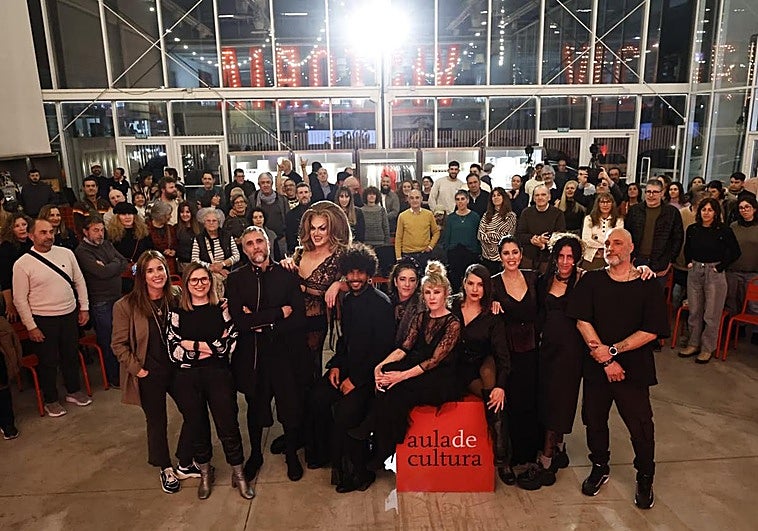

Nothing is fixed. Not a territory, not a community, not a way of creating. Like the ship of Theseus, which changes all its parts without ceasing to be the same, Rara Festival returned this Thursday to the Aula de Cultura de SUR showing that identity is not preserved intact, it transforms. And in that process, the rural world does not act as a border, but as a living, porous space capable of dialoguing with the center without losing its roots. From Villanueva del Rosario, the cultural movement articulated around Rara Residencia deployed in Malaga a collective work created just for this place and this day.
Follow Diario SUR on Google DiscoverThe third edition of the festival, with full capacity, gathered nine artists at the Victoria Beer Factory in a unified proposal, without interruptions, open to the unexpected. The project, driven by the Aula de Cultura de SUR and sponsored by Cervezas Victoria and Fundación Unicaja, once again claimed the creativity born in the rural environment as a contemporary phenomenon in constant mutation. The gala was presented by Regina Sotorrío, co-director of the Aula de Cultura, and Cyro García, co-founder of Rara Residencia along with Verónica Ruth Frías.
"We wanted to bring the periphery to the center to be aware that there is also a culture at the forefront of creation in the margins," said Sotorrío at the opening. García went deeper by defining Villanueva del Rosario as more than a geographical location: "Identity is not an immutable element, it is a transition. We change over time, and that shared path is what generates territory."
Related News
Photos | Rara Festival vol.3, at the Aula de Cultura de SUR
Under the industrial red of the factory, the piece began at the mixing desk. Sounds that separate and recombine, like atoms in motion. Raúl Navas, graphic designer and musician, acted as DJ and sound architect of a changing landscape, a visual and acoustic environment in permanent transformation over which the rest of the languages emerged. Nothing was imposed: each action was molded to the previous one, without hierarchies or cuts.
The word came from Pink Chadora, who recited her own poems from the book 'Everything was changing'. Texts crossed by the transformation of the body and the bond: "It never appears twice in the same way" or "when something changes in you, it also modifies me". As her voice progressed, the rest of the artists held a fixed gaze, without gesture, accompanying from stillness.
The music gained density with Julia Martín and her reinterpretation of the classic bolero 'Toda una vida', about a love marked by "anxiety, anguish, and despair". Accompanied by a live sound generation machine, the artist built a dialogue in two voices. On one side, the original version, sung with a deep and metallic register. On the other, her sweet voice, with altered lyrics that shifted the focus towards self-love: a whole life to love oneself. The contrast triggered a chain of kisses among the performers.
Expand
Pink Chadora, during her poetic recital at the third edition of Rara Festival. Salvador SalasFrom that contact emerged the transition to body language. Niche Ramírez entered the scene and Verónica Ruth Frías, co-founder of Rara Residencia, developed a choreography based on fusion. Bodies that support, modify, and transform each other, showing that identity only exists in relation.
Sara Gema's performance introduced an orational twist. Conceived as a prayer to art and life, she repeated "art and life that go hand in hand" while questioning "the market system that wants to bury them", molding bodies until they fell to the ground. Still standing, Giselle Lominchar burst in with a poetic rap built on action verbs. "Tear. Destroy. Encounter. Birth." A discourse on the wound and constant reconstruction.
The closure came with Boterita's singing just meters from the audience, starting with a Malagueña by La Trini and continuing with a homemade fandango. Her voice, firm at the beginning, mutated to a whisper as she sang about death, accompanied by the rest of the group.
Like the ship of Theseus, Rara Festival changes without ceasing to be. In that shared transformation lies the strength of a community that understands art as identity. Alive. Mutant. From rare residence.

Latest news





Upcoming events
12
Nov
El Desembarco, la traición de Viriato at La Caja Blanca
12
Nov
HOMER El Mero Mero at Sala Trinchera Málaga
13
Nov
Marbella Startup Lab – Innovate & Collaborate
13
Nov
Candlelight: Coldplay & Imagine Dragons at Sala Fundación Unicaja María Cristina
13
Nov
Candlelight: Tribute to Ludovico Einaudi at Anantara Villa Padierna
Similar News

Málaga Airport Makes History with More Than Three Million Passengers in One Month
Málaga

Port of Málaga looks beyond its docks to support future growth
Málaga

Guide to the Virgen del Carmen Processions in Málaga and the Province
Málaga
