


Quick Guide to Enjoying the Almond Blossoms in the Province
This ephemeral phenomenon dyes the interior with white and pink at various points in the Axarquía, the Guadalhorce Valley, or the Sierra de las Nieves, among other regions.
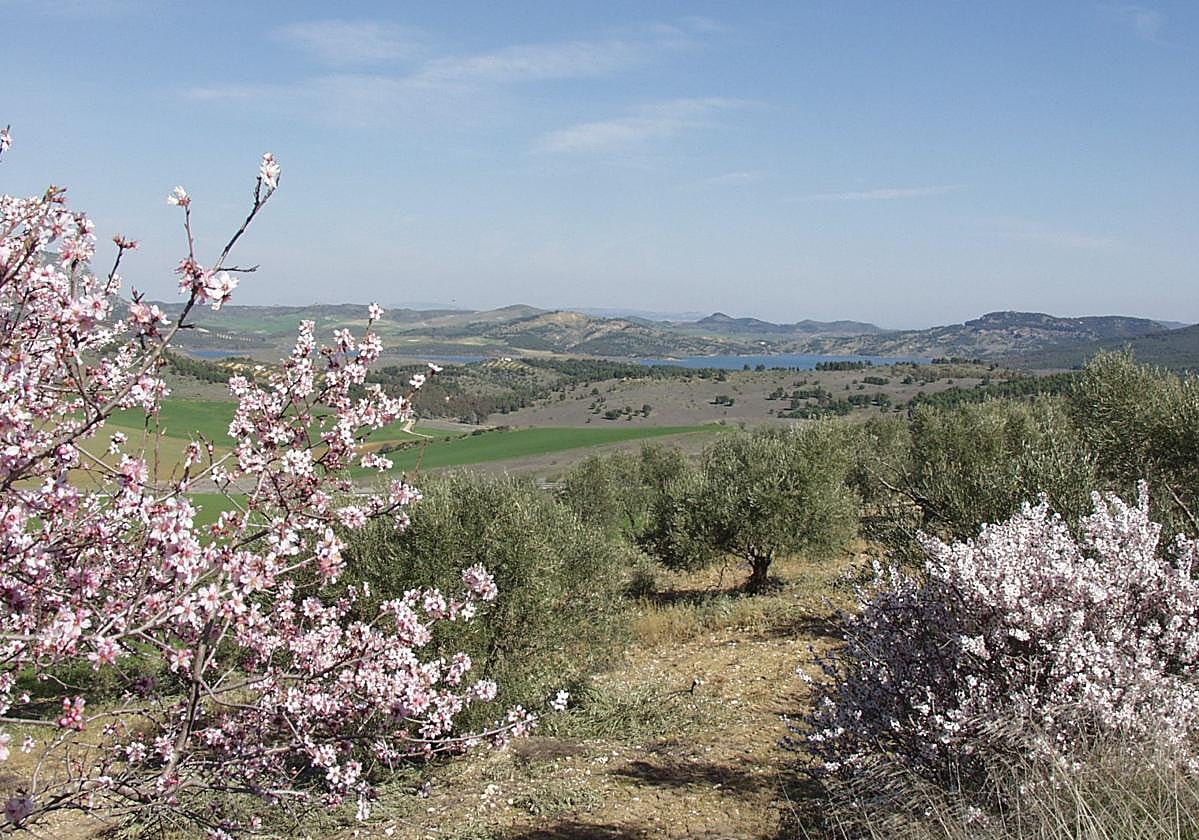

It timidly appears in the second half of January and extends until the first days of February. The almond blossom colors the interior of Málaga in white and pink. This phenomenon, which alters the usual appearance of the agricultural and mountainous landscape each winter, is one of the most appreciated natural attractions of the province. Although the almond tree is very common in numerous municipalities, there are areas where its flowering is especially visible and photogenic, creating a chromatic mosaic that symbolically anticipates spring.
The flowering calendar varies slightly depending on the weather each year, but maintains a recognizable pattern. The first almond trees usually begin to bloom around mid-January in thermally milder locations, such as some areas near Ardales or certain points in the Guadalhorce Valley. The peak of splendor usually occurs between the end of January and the first week of February, a period in which areas of the Axarquía, Montes de Málaga, Casabermeja, or Almogía stand out. Finally, the flowering extends a bit longer in elevated areas such as Alfarnate, Alfarnatejo, or some points in the Sierra de las Nieves.
Among all the routes that allow enjoying this phenomenon, the Fuentes and Almendros trail (SL-A 383), in Arenas, has established itself as one of the most complete itineraries due to the variety of landscapes and heritage elements it includes. It is a circular route of 7.5 kilometers that starts from the parking lot next to the municipal cemetery and, after an initial ascent, reaches the Pintá spring, the first of the historical springs that mark the route.
From there, the path advances towards the village of Daimalos, which is accessed by a narrow path where almond trees in bloom appear, mixed with olive groves and other traditional plantations. Entering this small rural core allows one to view one of its most unique elements: the Arab minaret that today is part of the church of Nuestra Señora de la Concepción. Very close by is the Amor spring, linked to a medieval legend and one of the most characteristic spots on the route.
After leaving Daimalos, the route faces its most demanding stretch, a notable slope that ascends to connect with the Canillas road. Once at the top, the landscape opens up towards the Sierra Tejeda, Almijara, and the towns on its slopes, offering a broad perspective where the almond trees stand out against an agricultural environment that combines hills, crops, and views towards the Mediterranean. The descent to Arenas is done through a comfortable lane that leads directly to the urban center, next to the monument of the Mule. Before concluding, the itinerary suggests a brief detour to visit the Grande spring, another of the historical springs of the municipality and a testament to the area's hydraulic past. Overall, it is a medium difficulty route, suitable for those who wish to combine accessible hiking, rural heritage, and one of the most representative flowered landscapes of the Axarquía.
Beyond Arenas, the province offers numerous locations where the almond blossom takes center stage. In Casabermeja, the hills surrounding the urban center and the routes leading to Torre Zambra or to the network of springs allow for observing extensive almond groves that, on clear days, blend into panoramas that even reach the Montes de Málaga.
In Guaro, the municipality has turned this phenomenon into a consolidated tourist resource, celebrating each January a thematic day that combines hiking and interpretive activities. There, the flowering creates a very characteristic contrast with the olive grove that dominates much of its municipal term. Here it is important to note a significant date, Sunday, February 1st, when the flowering is expected to reach its peak and the Ruta del Almendro of the locality takes place. Two options for a guided and free excursion are offered. The simplest is of low difficulty and has a length of 4 kilometers. The other is of medium difficulty, with almost ten kilometers of length on a circular route, where a stream must be forded.
In Almogía, the presence of large almond farms configures one of the most extensive flowered landscapes of the Guadalhorce Valley, especially prominent on the ascent to Mount Santi Petri. In Cártama, the flowering is distributed among the hills near Gibralgalia and the surroundings of the hermitage of the Three Crosses, a traditional space that offers wide views over the citrus grove. Meanwhile, Ardales and Carratraca have numerous roads and trails where almond trees alternate with olive groves and gentle hills; some of these sections are also linked to the Gran Senda de Málaga, allowing them to be integrated into broader routes. Finally, the so-called Mudéjar Route of the Axarquía, which connects towns like Salares, Árchez, or Sedella, offers a less dense flowering, but particularly attractive for its integration with Andalusian elements such as minarets, whitewashed streets, and medieval bridges, creating scenes of strong personality.
The almond blossom in Málaga is a brief event, but each year it offers a different view of the territory. The landscape changes quickly and, in just two weeks, provides some of the most recognizable natural scenes of the Malaga winter. For those wishing to explore these enclaves, it is advisable to monitor the weather evolution, choose suitable routes, and, above all, enjoy a phenomenon that, despite repeating each season, never appears the same way.

Latest news





Upcoming events
12
Nov
El Desembarco, la traición de Viriato at La Caja Blanca
12
Nov
HOMER El Mero Mero at Sala Trinchera Málaga
13
Nov
Marbella Startup Lab – Innovate & Collaborate
13
Nov
Candlelight: Coldplay & Imagine Dragons at Sala Fundación Unicaja María Cristina
13
Nov
Candlelight: Tribute to Ludovico Einaudi at Anantara Villa Padierna
Similar News

Málaga Airport Makes History with More Than Three Million Passengers in One Month
Málaga

Port of Málaga looks beyond its docks to support future growth
Málaga

Guide to the Virgen del Carmen Processions in Málaga and the Province
Málaga
