


The Black Stones of Agdam
We continue a journey through forgotten corners of the world with a fertile plain that ended up as a ghost town due to the war between Armenia and Azerbaijan.
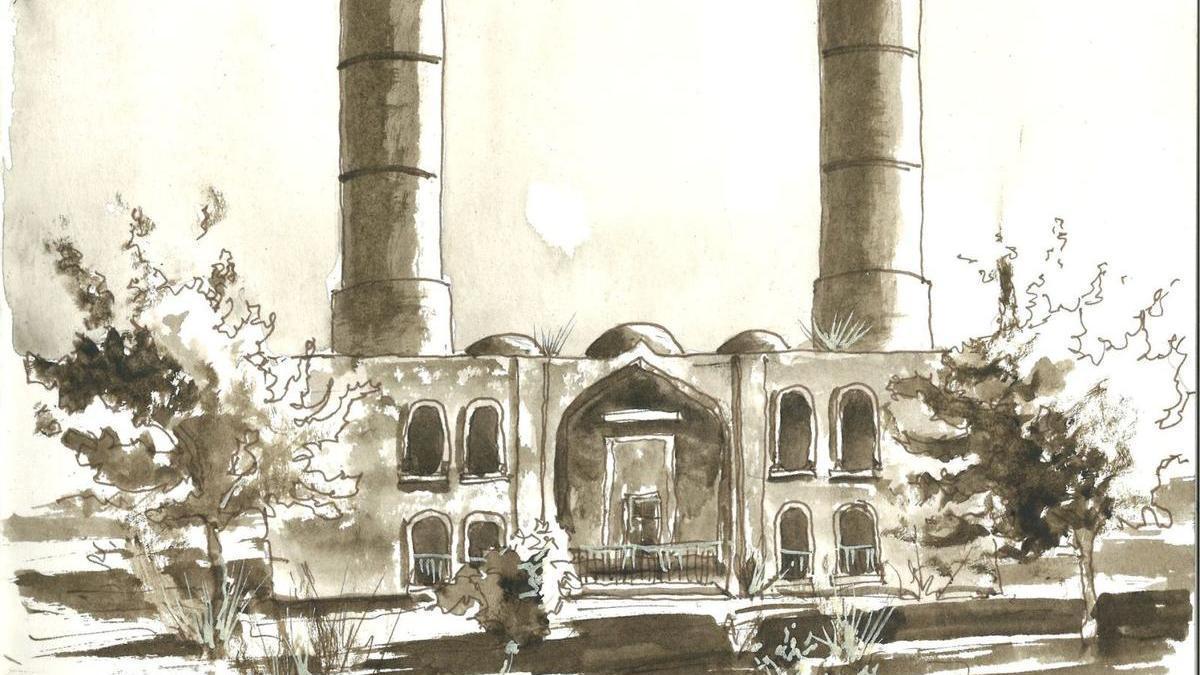

The stones of Agdam were moved. Stones impregnated with hatred, like grease on tile. The stones, which know nothing of religion or borders, were separated from each other by the bombing of the Armenian army in 1993. A bloody battle that not only dismembered buildings but also families. From the city, only the outline of the avenues and houses survived, as if it were a gigantic two-dimensional plan.
Many years earlier, the mountains of the Caucasus shaped a fertile plain, which was named Karabakh, abundantly watered by the Kura River and its tributaries. The landscape was dyed with poppies and tulips, planted by nature alongside thyme and wormwood. The meadow harbored wetlands next to the river basins, where herons and ducks delighted in a habitat abundant with Caucasian trouts, barbels, and silversides. A bit further, on the slopes of the hills that began the ascent to the peaks, dense forests of elms, walnuts, and conifers spread, releasing a scent of wet earth, resin, and moss. There, where bears and lynxes ruled the frost, where time passed with serene slowness from the early lights to the last glows of the sun.
To this watercolor of light, the Azerbaijanis arrived at the end of the eighteenth century, and it seemed to them an appropriate place to found a city which they named Agdam (White House). They parceled out their farmland and fenced the pastures for their cattle. They built their houses with limestone and leveled the roads that connected strategic points for trade routes in the Caucasus. Their effort funded mosques with sharp minarets from where the muezzin recited his prayers as the light of the afternoon faded, Allahu Akbar, Allahu Akbar. The echoes, with their long arms, reached the horizon and slipped through the gaps in the windows where a lit hearth flickered, gathering the family around to listen to local legends narrated with the experienced and wise voice of someone who has lived several lives.
Agdam was no different from the rest of the cities. It grew, expanded, and rapidly modernized with the arrival of the Soviet era, but the inhabitants remained the same farmers and ranchers who engraved their identity on that plain. No stranger should have drawn a border line between them.
At the end of the eighties, independence tensions ignited a war between Armenia and Azerbaijan. Both claimed a territory, although in reality their claim was the authority to govern their people. Agdam was the epicenter of the conflict and ended up reduced to emptiness and a perishable status. The Independent Republic of Nagorno Karabakh, recognized only by its inhabitants, kept the city under surveillance for years, like a scheme of the past, where each house, each shop, each school provided an argument that prevented returning to the past.
Despite the Bishkek Agreement, which ended the conflict, Azerbaijan did not file away either its reasons or its arrogance, and in September 2020, they once again stirred the scars with a cruel offensive that allowed them to recover the territory, but not its inhabitants.
Travelers arriving at the border from Armenia or Azerbaijan find an empty plain, only interrupted by the silhouette of the two minarets of the Juma Mosque. A guide explains to them that in that valley lie the remains of Agdam. It's a lie. The city does not belong to the landscape. The city is made up of the stones and those who placed them. In reality, Agdam is scattered. Distributed among the countless villages and settlements that make up Nagorno Karabakh.
To build those houses, its inhabitants used the same stones that once erected Agdam, stones impregnated with hatred like grease on tile.

Latest news





Upcoming events
12
Nov
El Desembarco, la traición de Viriato at La Caja Blanca
12
Nov
HOMER El Mero Mero at Sala Trinchera Málaga
13
Nov
Marbella Startup Lab – Innovate & Collaborate
13
Nov
Candlelight: Coldplay & Imagine Dragons at Sala Fundación Unicaja María Cristina
13
Nov
Candlelight: Tribute to Ludovico Einaudi at Anantara Villa Padierna
Similar News

Málaga Airport Makes History with More Than Three Million Passengers in One Month
Málaga

Port of Málaga looks beyond its docks to support future growth
Málaga

Guide to the Virgen del Carmen Processions in Málaga and the Province
Málaga
