


This is one of the places in Málaga that holds the most secrets and unresolved stories.
The Sanctuary and Convent of Santa María de la Victoria, located in the heart of Málaga, has a rich history and holds secrets within its walls. The 16 on the Red List of Heritage in the province of Málaga.
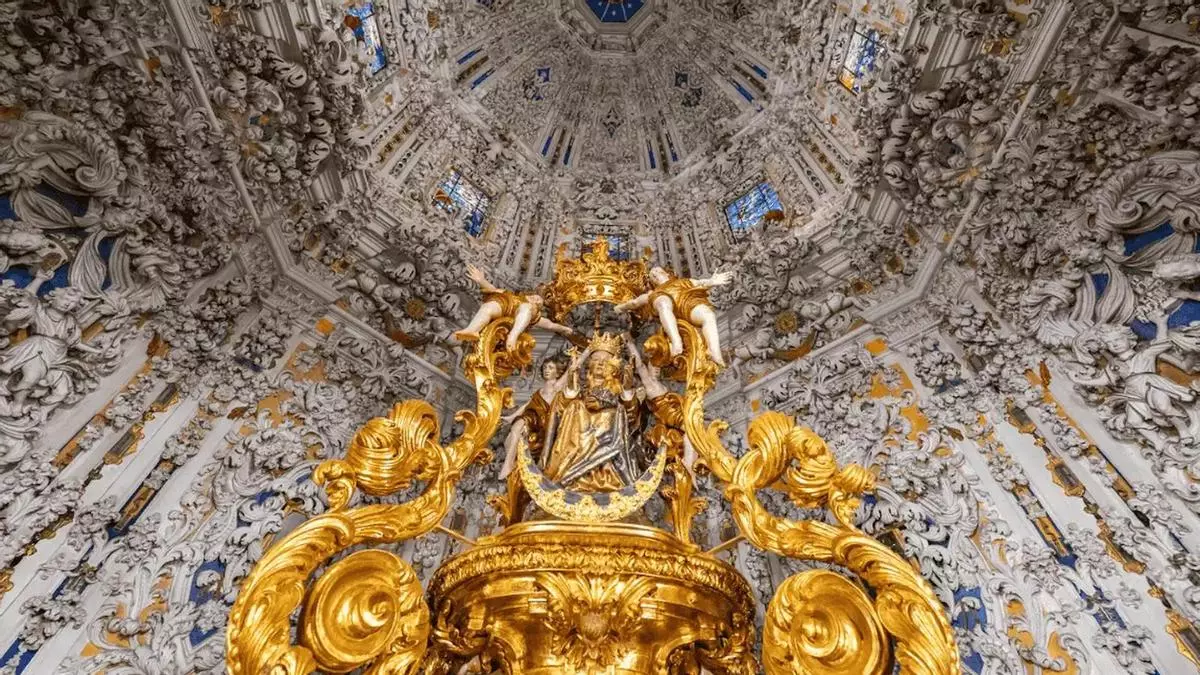

In the heart of Málaga, among its narrow streets and bustling crowds, there lies a place steeped in centuries of history, art, and mysticism: the Sanctuary and Convent of Santa María de la Victoria. This overlooked site for many locals holds within its walls a fascinating legacy, rich in symbolism and historical significance, undoubtedly one of the city's most enigmatic corners. More than five centuries old, this sanctuary is recognized not only as a contextualized Andalusian Baroque landmark but also as a nexus linking architecture, religious tradition, and the legends that permeate it.
The origin of the Santuario de la Victoria dates back to one of the most significant events in the history of Málaga: the siege and capture of the city by the Catholic Monarchs in 1487. It is said that during the siege, King Ferdinand the Catholic was visited by brothers from the Minim order, who, inspired by St. Francis of Paola, conveyed to him the prophecy of an imminent victory. The prophecy was fulfilled, and this place was consecrated to Santa María de la Victoria, the patron saint of Málaga, in gratitude for this favor. Beneath this temple, Scottish masons keep a Masonic secret that could illustrate how King Ferdinand achieved his victory. A Flemish Gothic image presides over the altar. Made by anonymous craftsmen, it was a gift from Emperor Maximilian I to the Spanish monarch and symbolizes that triumph.
Although the original temple dates back to the 16th century, its deteriorated state led to its complete reconstruction at the end of the 17th century. Built in 1700, the new church, in Baroque style, features a Latin cross floor plan more in line with Baroque ideals than with the principles of the Counter-Reformation: a high and bright central nave, attached side chapels, and extensive decoration that draws the eye to the altar.
Its dressing room tower, the most emblematic element, is a gem of Spanish Baroque in its highest expression. Both the architecture and the ornamentation used combine well to convey a complex message of symbolism. Being divided into three levels, it represents that mystical journey in three phases that the soul had to undertake from hell to heaven. The darkness and ghost of the crypt leave one chilled, and the skeletons and other macabre dance motifs related to death create a medieval atmosphere. These rooms have an intermediate symbolism for purgatory and the sacristy.
Art and mystery in every corner
The sanctuary is notable not only for its architecture but also for its artistic value. Among the important works are a sculpture of Santa María de la Victoria, probably German, and works by well-known artists such as Pedro de Mena, Luis Ortiz de Vargas, and Jerónimo Gómez de Hermosilla. Each element, from the main altarpiece to the sculptures and reliefs, helps to create an atmosphere of spirituality and symbolism.
In addition to its historical and artistic significance, the Santuario de la Victoria is an active center of religious and cultural life in Málaga. Here, important traditions such as the Holy Week processions of brotherhoods like Humildad, Amor, and Monte Calvario are celebrated. Its connection with the Málaga Fair in August also underscores its role in the historical memory of the city. This site, which could inspire mystery tales by an author like Dan Brown, showcases the link between past and present. Each visit to the Basilica de la Victoria is a journey through time, an encounter with untold stories and secrets waiting to be revealed. If you wish to explore a place in Málaga full of meaning and beauty, this sanctuary is undoubtedly a necessary stop.
Cripta Nuestra Señora de la Victoria. / Hispanianostra.org
Latest news





Upcoming events
12
Nov
El Desembarco, la traición de Viriato at La Caja Blanca
12
Nov
HOMER El Mero Mero at Sala Trinchera Málaga
13
Nov
Marbella Startup Lab – Innovate & Collaborate
13
Nov
Candlelight: Coldplay & Imagine Dragons at Sala Fundación Unicaja María Cristina
13
Nov
Candlelight: Tribute to Ludovico Einaudi at Anantara Villa Padierna
Similar News

Málaga Airport Makes History with More Than Three Million Passengers in One Month
Málaga

Port of Málaga looks beyond its docks to support future growth
Málaga

Guide to the Virgen del Carmen Processions in Málaga and the Province
Málaga
