


Route of the Fuente Gorda: A Walk Among Cliffs, Springs, and Historic Paths in Comares
This circular and easy route combines water, heritage, and broad views from the Balcony of the Axarquía.
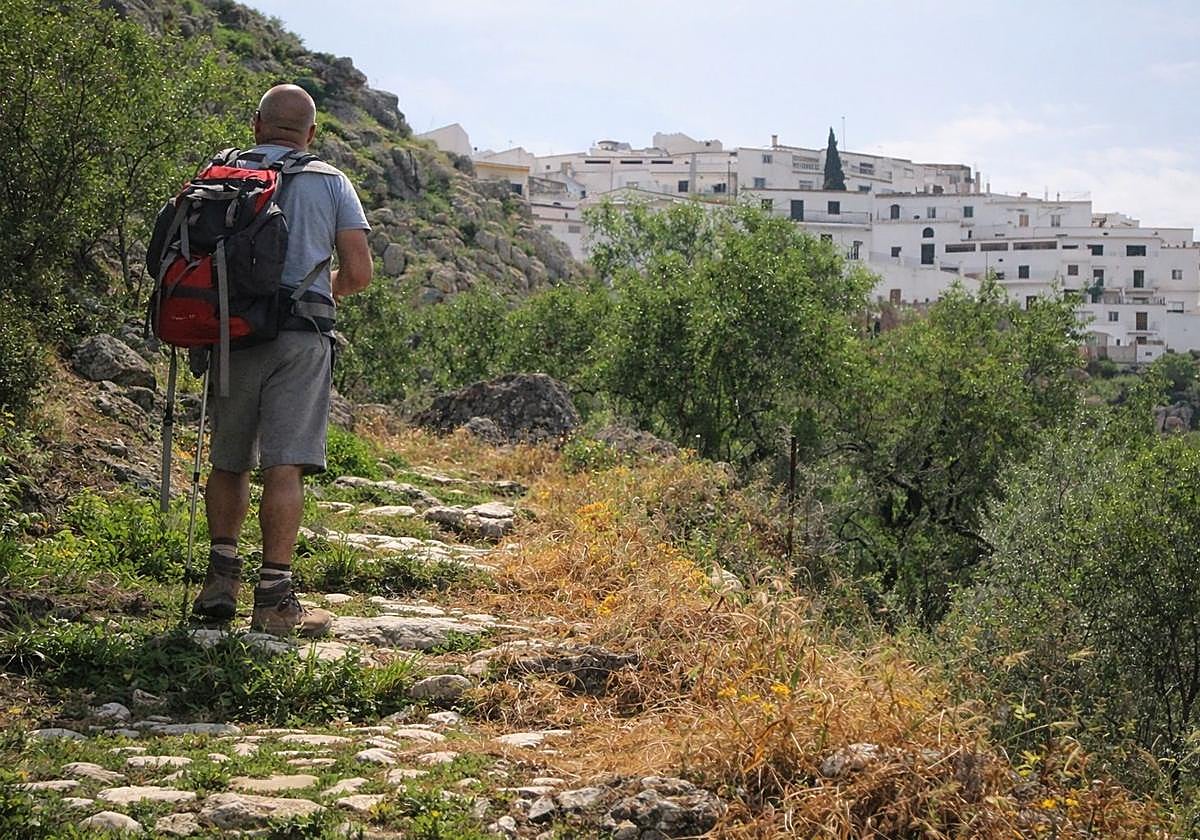

This is a circular itinerary that starts from Comares and follows a perimeter route that allows visitors to discover its oldest springs, as well as other significant historical remains. Currently, it is officially recognized as SL-A-394.
-
Route Details
Region: Axarquía
Municipality: Comares
Difficulty Level: Low. Although there are alternating ascending and descending slopes, it is a relatively short and comfortable path. It is well signposted and has suitable places to rest along the way.
Type of Route: Circular
Approximate Duration: 1 hour
Length: 2.5 kilometers
Minimum Altitude: 598 meters
Maximum Altitude: 699 meters
Nearby Points of Interest: Puertas del Agua and de Málaga, ancient Roman road, Gorda and Delgada springs, Comares zip line, La Tahona and other remnants of the castle, Church of Our Lady of the Incarnation, old town of Comares, viewpoints, and Mazmúllar cistern.
Expand
Location of the former Arab castle of Comares J. Amellones-
How to Get to the Starting Point
To start the route, head to the village of Comares. There are several options to reach this village (via Montes de Málaga, Olías, Riogordo, or Benamargosa, among others). Once in the town (it is advisable to park on the outskirts), look for the so-called Puerta del Agua, where this circular itinerary officially begins.
Expand
The route begins next to the Puerta del Agua-
Route Description
1This circular itinerary starts at the entrance of Comares to tour the perimeter of the urban area through water springs, some with medicinal properties, that even date back to Andalusian origins. Among them are the Gorda and Delgada springs, which are close to each other but offer distinctly different water sources. The former has high mineralization, while the latter is much lighter.
Expand
View of the cliffs of Comares in the first part of the route J. Amellones2The journey begins at the Puerta del Agua, one of the historic accesses to the urban area, from where the descent towards Fuente Gorda begins, a spring that has traditionally supplied water to Comares. For generations, the women of the village would go down here with a jug on their hip to later carry the water up to their homes. Its name comes from the "thick" taste of these waters, due to their mineral hardness, and for a long time, it was also a watering place and rest area for animals. Next to the spring stand the Tajos de la Fuente Gorda, today equipped with climbing routes and via ferratas, in an environment where caves -like the Window Cave- and archaeological remains of Arab origin are not lacking. Special attention deserves the stone-carved pillar, a unique work sculpted by the ancient master builders.
Expand
Arrival at Fuente Gorda J. Amellones3From Fuente Gorda, the path leads to the other major milestone of the journey, Fuente Delgada, a site of significant ethnographic value that preserves an ancient cistern, possibly from the Andalusian period. Between both springs -named for the density of their waters- the layout maintains a clearly descending profile, comfortable and well defined. However, upon reaching the Delgada, the terrain trend changes and the first slope of the itinerary begins, marking a turn in the character of the route.
Expand
Interior of Fuente Delgada J. Amellones4From this point, after about five hundred meters of progress towards the south, the itinerary makes a turn to the northeast to face the ascent towards the town of Comares via its main access road. The path passes by the area known as La Molina and connects with Malaga Avenue, where vehicle parking is usually located. This road leads to one of the most emblematic entrances of the municipality, the so-called Puerta de Málaga. Before reaching it, on the right, a couple of viewpoints appear that allow understanding why Comares is known as the Balcony of the Axarquía, with views that span from the Mediterranean Sea to the Sierra de Tejeda, passing through more than a dozen villages in the region.
Expand
Panoramic view to the interior (Periana) J. Amellones5Once past the Puerta de Málaga, the route continues along the perimeter of Comares, without entering the old town, although this option could also be considered as an alternative. In the layout of this approved route, the path begins to descend along a wide and comfortable track that offers broad views of the interior. The old castle is now elevated to the left. After about four hundred meters, the itinerary makes a turn close to 180 degrees to start the final ascent and connect with an ancient Roman road, which leads directly back to the starting point, the aforementioned Puerta del Agua.
Expand
Final stretch of ascent by an ancient Roman road J. AmellonesFlora and Fauna
The environment through which this route runs is closely linked to traditional agricultural activity, with a prominent presence of olive and almond crops that shape much of the landscape. To this agricultural character is added the rupicolous vegetation associated with the cliffs, where mosses, lichens, and ferns appear, as well as species typical of wet areas around the springs, such as maidenhair fern, ivy, violet, rush, blackberry, small lanterns, or spearmint. Regarding the arboreal vegetation, there are carob trees, wild olive trees, holm oaks, hawthorns, blackthorns, sarsaparilla, gajomba, fig trees, and even orange and lemon trees in the more sheltered areas. Regarding fauna, it is common to observe birds of prey, both small and large, which take advantage of the thermal currents of the cliffs and the diversity of ecosystems that the route crosses.
Expand
In this route, traditional crops of the area abound J. Amellones
Latest news





Upcoming events
12
Nov
El Desembarco, la traición de Viriato at La Caja Blanca
12
Nov
HOMER El Mero Mero at Sala Trinchera Málaga
13
Nov
Marbella Startup Lab – Innovate & Collaborate
13
Nov
Candlelight: Coldplay & Imagine Dragons at Sala Fundación Unicaja María Cristina
13
Nov
Candlelight: Tribute to Ludovico Einaudi at Anantara Villa Padierna
Similar News

Málaga Airport Makes History with More Than Three Million Passengers in One Month
Málaga

Port of Málaga looks beyond its docks to support future growth
Málaga

Guide to the Virgen del Carmen Processions in Málaga and the Province
Málaga
