


The town of Málaga that was razed in the Civil War and today is a refuge and a fairy-tale spot
With a sad history behind it, La Sauceda is one of the hidden and secret locations in the province of Málaga where you can stay overnight in the midst of nature. Abandoned after the Civil War, it is now a rural paradise: this is the most remote village in Málaga.
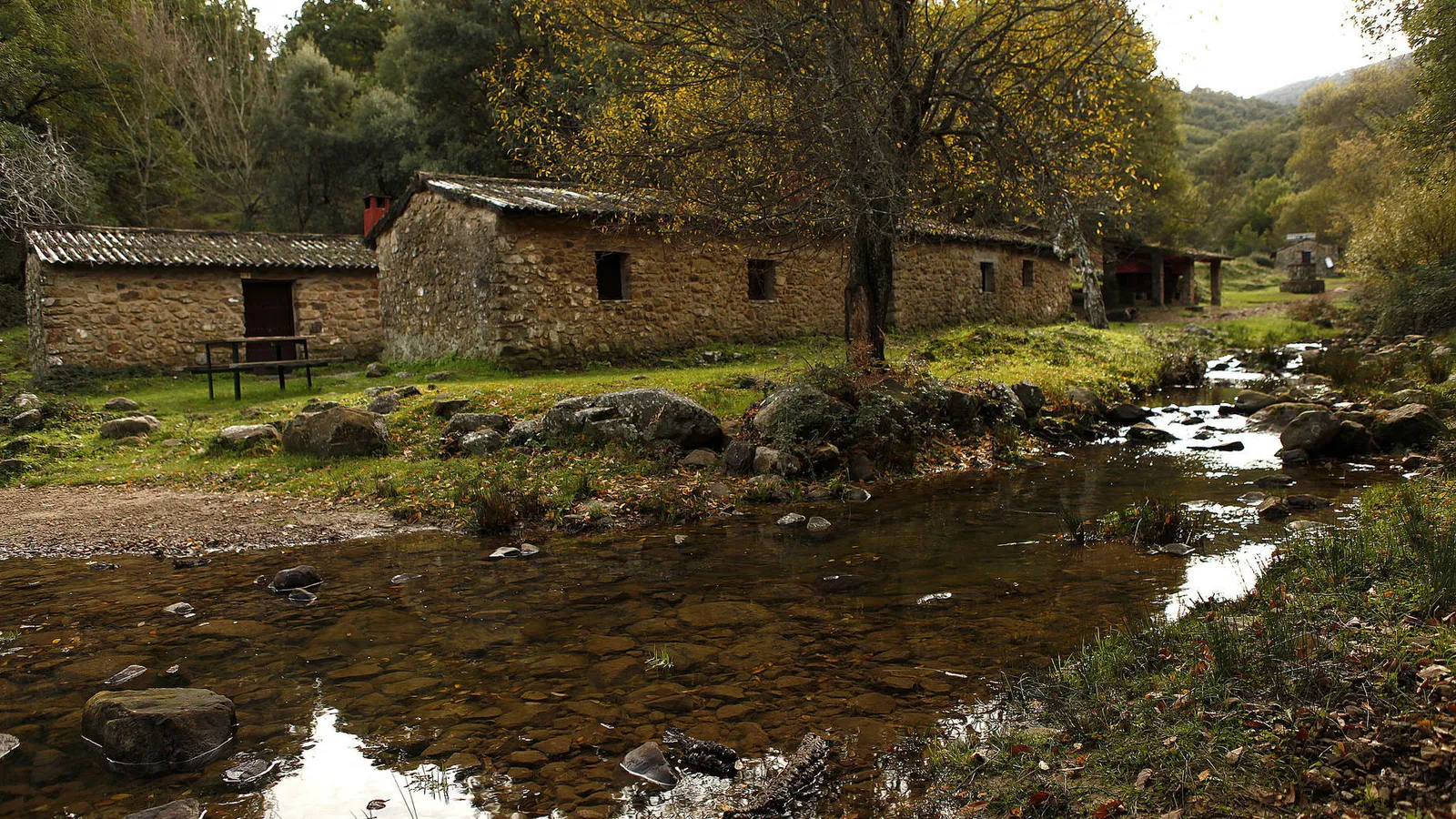

There are places where silence is not empty, but memory. In the very green heart of the Serranía de Ronda, between moss-covered ravines and trails where moisture pervades everything, La Sauceda emerges as one of those enclaves where history and nature coexist without clamor. Today, it is a fairytale landscape within the Parque Natural de Los Alcornocales; yesterday, a village erased from the map by the Spanish Civil War, turned into a symbol of refuge, resistance, and tragedy.
The deserted village of La Sauceda is located in the municipality of Cortes de la Frontera, at the western edge of the province of Málaga, at a point where the Málaga territory blends with the province of Cádiz. Its location, surrounded by ravines and dense forests of cork oaks, gall oaks, ferns, and mosses, historically made it an isolated place, complex to access and naturally protected.
The influence of the Atlantic breezes creates a humid microclimate that maintains the greenery for much of the year. Streams, small water currents, and lush vegetation construct a landscape that, depending on the season, seems taken from a fantastical tale. This natural environment is one of the great current values of La Sauceda, fully integrated into the Parque Natural de Los Alcornocales.
Refuge during the Spanish Civil War
During the first months of the Civil War, La Sauceda played a key role as a refuge. To this enclave arrived combatants from the Republican side and, above all, numerous civilians fleeing from the Francoist repression from the countryside of Jerez and other points of the province of Cádiz. Málaga, still resisting, became a destination for escape, and La Sauceda was a strategic stop on that path.
El Despoblado de La Sauceda. / Javier FloresIts orography, with narrow and enclosed paths, hindered the advance of a regular army, which temporarily halted the advancing rebel troops. However, this natural advantage was not enough to prevent the outcome.
The assault and destruction of the village
October 31, 1936 marked the beginning of the end for La Sauceda. Breguet model airplanes bombed the enclave, and the next day several columns of the rebel army carried out a surrounding attack. The village was completely destroyed. Of the original buildings, only a few remains stood, with the chapel being one of the most recognizable elements among the ruins.
After the fall of the village, brutal repression ensued. Executions, tortures, and murders marked those days. Very close to La Sauceda, the farmhouse of El Marrufo was used as a barracks, becoming one of the darkest scenes of this episode. In its surroundings, one of the largest mass graves in Spain was later located, with remains of numerous civilian victims.
Historian Fernando Sígler has defined what happened in La Sauceda as a true genocide, as it involved the systematic elimination of a complete population nucleus. To this day, research and excavation work have allowed part of the truth to be recovered, although much remains to be documented.
From abandonment to environmental recovery
After decades of abandonment, in 1979 work began on the partial reconstruction of the old forest settlement. From this process was born the Núcleo Recreativo Ambiental de La Sauceda, a space that combines the conservation of the natural environment with the recovery of the historical memory of the place.
El Despoblado de La Sauceda. / Javier FloresThe old ruins gave way to a set of cabins and common areas integrated into the landscape. The available energy comes from solar systems with limited supply, a feature that reinforces the isolated and quiet character of the enclave. Common showers, spaces for cooking, and open areas complete a set designed to coexist with the environment without altering it.
Nature, history, and memory in Los Alcornocales
Today, La Sauceda is synonymous with biodiversity, trails among closed forests, and visible remains of a past that remains present. Visitors can walk the paths that cross the deserted village, observe the natural richness of the Parque Natural de Los Alcornocales, and learn about a fundamental episode in the recent history of southern Spain.
El Despoblado de La Sauceda. / Javier FloresAccess is via Cortes de la Frontera, following the road to Puerto de Gáliz and subsequently linking with the road leading to Jimena de la Frontera. The journey itself is an immersion into one of the most unique forest landscapes of Andalusia.

Latest news





Upcoming events
12
Nov
El Desembarco, la traición de Viriato at La Caja Blanca
12
Nov
HOMER El Mero Mero at Sala Trinchera Málaga
13
Nov
Marbella Startup Lab – Innovate & Collaborate
13
Nov
Candlelight: Coldplay & Imagine Dragons at Sala Fundación Unicaja María Cristina
13
Nov
Candlelight: Tribute to Ludovico Einaudi at Anantara Villa Padierna
Similar News

Málaga Airport Makes History with More Than Three Million Passengers in One Month
Málaga

Port of Málaga looks beyond its docks to support future growth
Málaga

Guide to the Virgen del Carmen Processions in Málaga and the Province
Málaga
