


Twelve Curiosities That Will Make You Visit Comares: A Surprising Past, Panoramic Views, and a Unique Pattern in Spain
A village perched on the rock that was the Andalusian capital, gives its name to a musical style, borders the city of Málaga, and surprises with history, nature, and unique traditions.
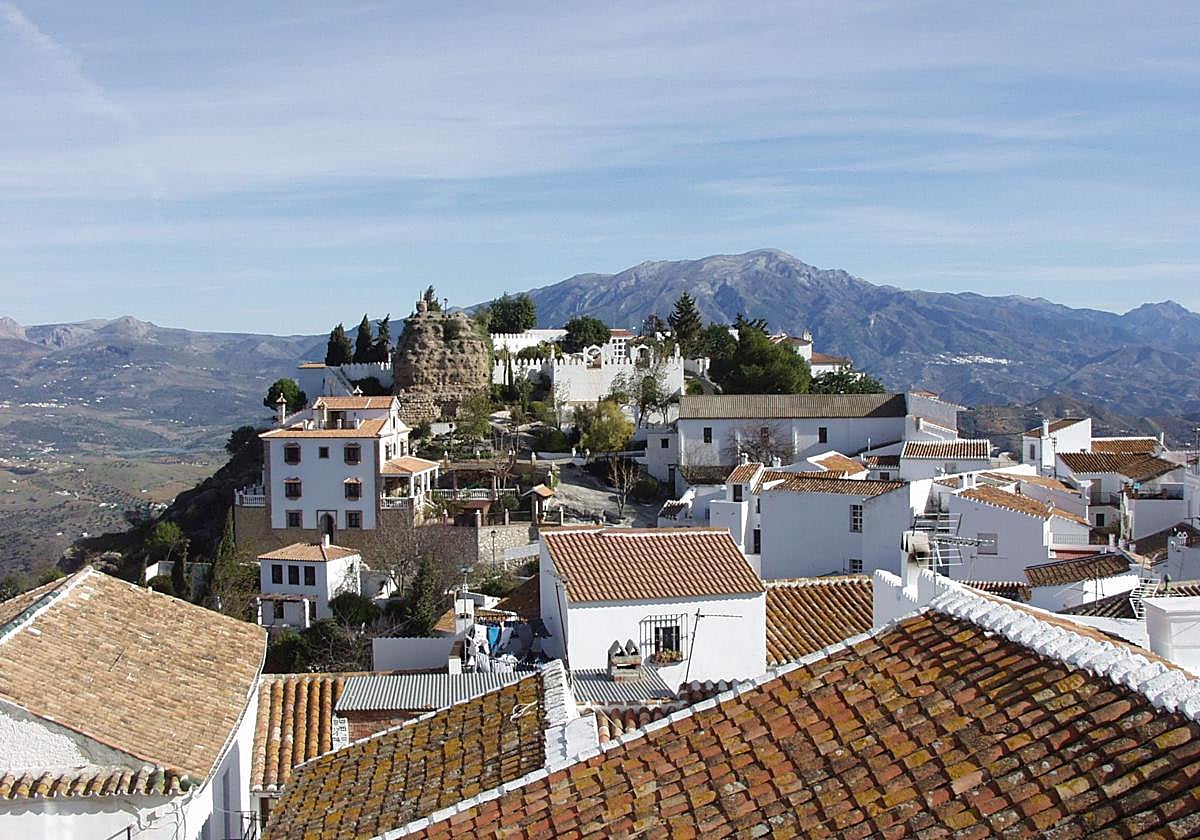

Comares is not only one of the towns with the best views of the Axarquía region. It is also a place where medieval history, ancestral folklore, extreme nature, and uncommon traditions intersect on the Andalusian map. Perched on a hill that seems almost inaccessible from afar, this town in Málaga holds secrets that go far beyond its photogenic appearance: it was the capital of an ancient Andalusí district, it is the only town in Spain with a French patron saint, it gives its name to one of the styles of verdiales music, and offers unique experiences such as sleeping suspended in the air. Here are twelve reasons—twelve curiosities—to see Comares with different eyes.
For over half a century, Comares has been promoted with this nickname, and it is no coincidence. From its natural viewpoints, some of the widest panoramic views of the region can be obtained, from the peaks of Sierra Tejeda to the Mediterranean, with more than a dozen towns visible in the area.
Comares is part of a select group of municipalities recognized as a Magical Town of Spain, a distinction that values the charm of the historic center, the natural environment, and the cultural heritage. In the province of Málaga, it shares this recognition with towns like Júzcar, Frigiliana, or Genalguacil.
Its image on a rocky hill gives the impression of being one of the highest towns in Málaga, but it is not. Comares is located about 703 meters above sea level, below Alfarnate, Alfarnatejo, or Cartajima, although few convey such a sense of elevation as Comares.
Although it is about an hour's drive from the capital, Comares borders the municipal area of Málaga. Additionally, it is located on the perimeter of the Montes de Málaga natural park, in a transitional position between this mountain range and the Ruta de la Pasa.
Comares is not only a town but also one of the three recognized styles of verdiales music, along with those from Almogía and Montes. It is characterized by a slower rhythm and a more solemn sound. The passion for this folklore remains very much alive in the municipality.
Every year, Comares is one of the first municipalities in Málaga to celebrate its patron saint festivals. The patron saint's day is January 13, although the celebration is usually moved to the following Saturday, with a procession, popular dance, and gastronomic tastings. Thus, sometimes, as is the case this year, it may coincide with other January patron saint festivals from other towns, like those of San Antón.
The municipality has Saint Hilary of Poitiers, a 4th-century French bishop, as its patron saint. Comares adopted him after a Mozarabic revolt that occurred on January 13, 1442, a date that coincided with his feast day. It is an exceptional case in the Spanish calendar of saints.
Comares features a dizzying zip line that overcomes a great slope and has become one of the main tourist attractions for adventure lovers and high-altitude experiences. It is managed by the company Viveaventura, which has more than two decades of experience in outdoor sports. Linked to this zip line, there is the possibility of practicing what is known in English as 'highline', that is, spending the night in a hammock hung from the cable, over a hundred meters high. A unique and extreme experience in the province.
In addition to the zip line, Comares offers hiking routes such as the circular route of the Fuentes or the ascent to Mazmúllar, it is a waypoint on the Great Trail of the Axarquía, and allows for via ferratas or donkey rides with a muleteer through the rural surroundings.
During the Nasrid period, it was the capital of an important administrative division that included Cútar, El Borge, Almáchar, and Benamargosa. From its fortress, all this fertile territory was visually dominated. Subsequently, the importance of the Marquisate of Comares, which still exists within the Duchy of Medinaceli, must be mentioned. The historical importance of this town in the Axarquía also goes beyond the provincial boundary. In fact, today Comares gives its name to one of the towers and one of the courtyards of the Alhambra and is present in one of the reliefs of the choir stalls of the Toledo Cathedral.
Comares preserves remains of the La Tahona castle and, within its area, the Mazmúllar cistern, a Mozarabic hydraulic jewel from between the 9th and 11th centuries, accessible via an attractive hiking route.
The gastronomy of Comares is a meeting point between the cuisine of the Montes de Málaga and that of the Axarquía. On its tables, mountain dishes such as migas or the Montes dish coexist with more Axarquía-like recipes such as ajoblanco or Malaga kid goat. A simple cuisine, linked to the territory and seasonal products, that well summarizes the geographic and cultural position of the municipality.

Latest news





Upcoming events
12
Nov
El Desembarco, la traición de Viriato at La Caja Blanca
12
Nov
HOMER El Mero Mero at Sala Trinchera Málaga
13
Nov
Marbella Startup Lab – Innovate & Collaborate
13
Nov
Candlelight: Coldplay & Imagine Dragons at Sala Fundación Unicaja María Cristina
13
Nov
Candlelight: Tribute to Ludovico Einaudi at Anantara Villa Padierna
Similar News

Málaga Airport Makes History with More Than Three Million Passengers in One Month
Málaga

Port of Málaga looks beyond its docks to support future growth
Málaga

Guide to the Virgen del Carmen Processions in Málaga and the Province
Málaga
