


Delayed Retirement Gains Ground: The Experience of Three Professionals in Málaga
The number of workers who delay their professional retirement is growing: sometimes to improve their pension; other times, simply out of "love for the craft."
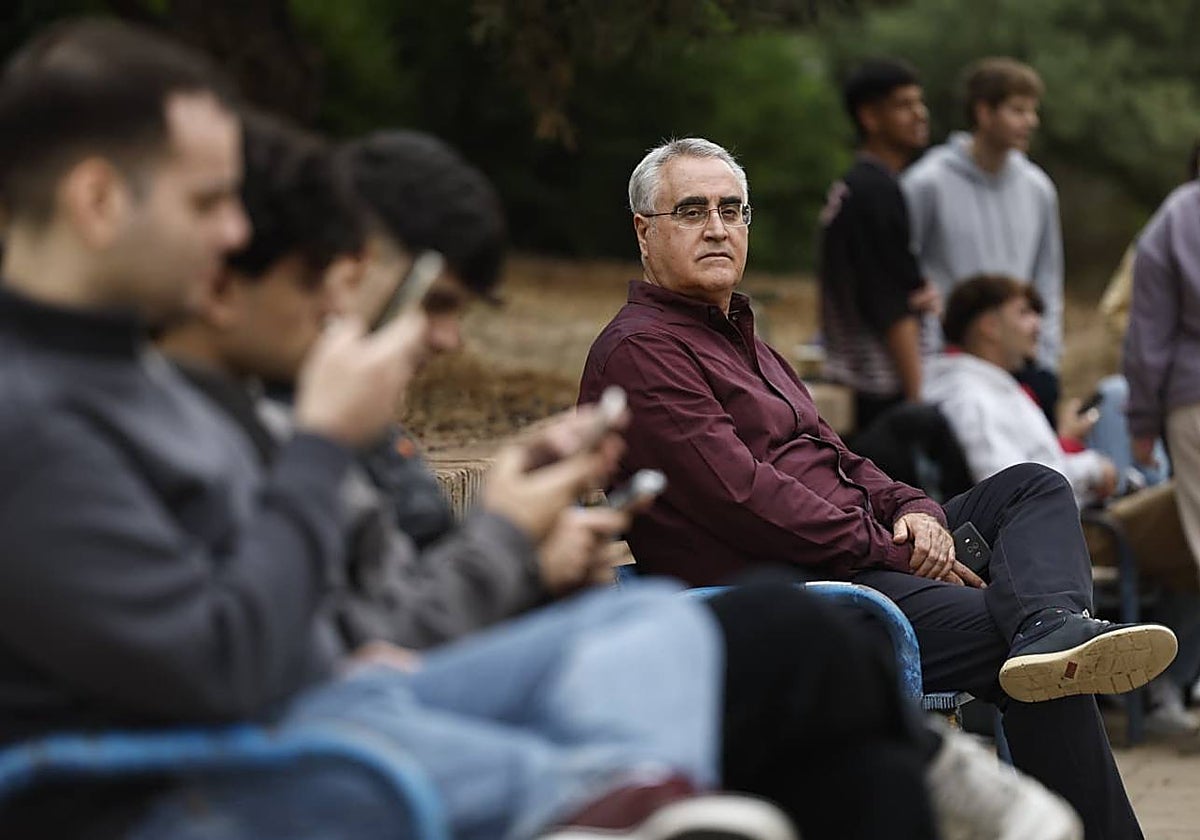

Delayed retirement is gaining ground in Spain for reasons ranging from careers with insufficient contributions to a lack of generational replacement in businesses. Additionally, the growing appeal of economic incentives for those who decide to extend their working life contributes to this trend.
This trend received a new boost with Royal Decree-Law 11/2024, which strengthened the advantages of delaying retirement and mitigating the impact of the massive retirement of baby boomers.
Data from the National Institute of Social Security shows a sustained growth since 2022, the year in which the first bonuses were introduced. And the figures for 2025 support this shift in trend at the time of applying for retirement pensions, as delayed retirements increase and early retirements decrease. Between January and November of last year, the latest data available, 342,665 new retirement pensions were registered. In the same period, 11.1% of the new registrations corresponded to delayed retirement, compared to 4.8% in 2019. There are 37,920 new registrations of this type, while in 2019 there were only about 14,000.
As a result of the voluntary delay in retirement, the average age of access to retirement is 65.3 years. Additionally, women retire later than men both in the General Regime and among the self-employed.
In 2026, the legal retirement age is 66 years and 10 months, although those who can prove 38 years and 3 months of contributions can retire at 65. Those who wish to continue working can increase their pension by 4% for each additional full year contributed. Since April 1, 2025, periods of delay longer than six months also count, with an additional increase of 2%.
The regulations also allow for a choice of a lump sum payment for each additional year, ranging between 4,800 and 13,500 euros, or a mixed formula for those who extend their retirement between two and ten years.
SUR has spoken with three professionals who, out of necessity or "love for the job," have postponed their retirement.
At 68, Antonio Heredia, a professor of Biochemistry and Molecular Biology, still walks the halls of the University of Malaga with the same energy as when he began his academic journey 46 years ago. Born in 1957 in Jódar (Jaén), he first entered the university in October 1979 as a teaching assistant. Since then, he has never stopped teaching or researching, two activities that, he assures, continue to be a source of daily enthusiasm. "I am in a fantastic professional moment," he acknowledges. Therefore, when he turned 65 and had already accumulated 43 years of contributions, he did not even consider it.
The decision to prolong his working life is not due to a single reason, but to a factor he considers absolutely decisive: health. "As long as I feel well, I'll stay here. That's the main requirement," he states. More than a decade ago, he suffered a heart attack, but today he feels fully capable of continuing until 70. And if the law allowed it, even longer.
To this physical motivation is added another that he defines as the essence of his decision: the vocation of service. Heredia assures that the last ten years have been the best of his entire career, a period in which he has experienced a professional fulfillment that encourages him to continue. "I enjoy my work more than ever. The accumulated experience allows you to view research more globally and relate better to students. It's a privilege to remain active," he states. He currently directs a national plan project, accompanies the final stage of two doctoral theses, and maintains an intense teaching schedule that, far from exhausting him, stimulates him. For the past six years, he has been on the list of most cited researchers at UMA (index and ranking from Stanford University) for his research career.
Interestingly, the economic aspect does not weigh in his decision. The extension until 70 years old entails an additional 4% incentive for each extra year worked, but he considers it "irrelevant." "I say this with absolute sincerity: that issue has had no importance for me," he emphasizes.
However, he recognizes that the prolonged stay of older professors is not always well understood socially or institutionally. Heredia perceives a lack of recognition towards senior talent in the Spanish university. He recalls an especially revealing anecdote: "The professor who gave this year's inaugural lecture asked the rector to take care of the older professors. That struck me because it summarizes a need that we all feel and that is not always addressed." He believes that the experience of these teachers is a valuable resource that should not be wasted and that the media and society should value more to combat ageism.
He also rejects the idea that his continuity harms the promotion of young people. "The career of a young professor depends on their accreditation and their work, not on whether I retire a couple of years earlier," he maintains. He also remembers that his generation lived through very different circumstances: in the 80s and 90s, it was possible to obtain a tenured position before 30 (he achieved it at 28) and reach the rank of professor before 45, "something unthinkable today."
Looking to the future, Heredia feels at peace. His family (his wife, his two children, and a granddaughter) do not pressure him to retire; they see him happy. When the time comes, he assures, he will handle retirement with serenity. He has hobbies he has always cultivated: photography, classical music, and managing a magazine. "I would only leave if my students or colleagues make me feel that it's enough," he concludes.
In the small town of Fuente de Piedra, Charo García (Antequera, 1960) faces the last years of her working life at the helm of the drugstore-perfumery she opened with her husband nearly two decades ago. At 65, she continues lifting boxes, serving customers, and adjusting expenses every month: if she retires before 67, her pension would be penalized. "I have one year left until ordinary retirement, and I wouldn't like to lose a single euro," she explains. "I've worked all my life, since I was 14, but many of those jobs didn't contribute. And now that's taking its toll on me."
Her career proves it. Before becoming self-employed and at just 14, she already took care of a small child, then worked as an ironer for the firm Mayoral, at the Antequera City Hall, and in a drilling company. "Back then, no one talked about contributing, you linked jobs as you could," she recalls. That precariousness she denounces today marked her future: she did not gather the necessary years to access an early retirement without cuts.
The drugstore she opened with her husband survived the Covid-19 crisis, changes in shopping habits, and the expansion of large stores. But the pandemic was decisive. Since then, Charo explains, sales have not picked up. "You compete with the Internet and giant stores, and in the end, you can't lower prices anymore; what you do is work practically to pay."
The profitability is so scarce that she only opens in the mornings: a way to contain expenses and save energy. "If I didn't lack these two years to retire, I would have closed it already," she confesses. "I keep the store to contribute, not for profit."
Charo will retire in a year, at 67. In 2027, it will be the ordinary retirement age for those who have contributed less than 38 years and 6 months. She has no intention of delaying further. She believes that delaying the retirement age "depends a lot on the job."
While some of her friends opt to retire earlier, even with a penalty, she dismisses it. "I'm telling you the truth, I'm holding on because of this retirement issue, because if I already had my years contributed, I wouldn't continue." Thus, her idea is to coordinate her retirement with that of her husband, younger but with more years contributed.
Charo speaks frankly when the contribution system is mentioned. "We self-employed are the most screwed," she states. "You pay a lot and receive little." But her concern extends beyond the present. Her two children work, and Charo rules out them continuing with the family business. "They don't even consider it, seeing how things are going," she assures.
In 2027, if nothing changes, Charo will close her business and end more than half a century of work. Until then, she continues opening every morning, enduring.
Ramón Blesa (Linares, 1954) has little time left to turn 72 and, with that, to leave a profession he has practiced for almost four decades (the last 26 years in Malaga). The law does not allow him to continue beyond February 19, 2026. "The same day I turn 72, I have to cease. Not a day more," he explains calmly, although the idea of leaving the profession still weighs on him.
His case is representative of a generation of notaries who have seen how the retirement age has moved over the last few decades. "Until 1983 we retired at 75. Then it was progressively reduced to 70, and a few years ago it was extended again to 72, just like for registrars, judges, and magistrates," he recalls.
Blesa is not leaving voluntarily. And neither for economic reasons. After 38 years of contributions, he has long been entitled to the maximum pension. "I did not extend my retirement to earn more. I did it out of pure vocation," he states. In fact, he admits that he barely thought about his situation until a few months ago, when he accepted that there would be no more extensions.
While talking with SUR, Blesa reveals a personal dilemma that has grown over the years. His passion for the profession pushes him to continue. His family life, on the other hand, calls him. "On occasion, I have wondered if it was worth continuing, especially when my granddaughters were born," he admits. But he always came to the same conclusion, which was to continue.
His wife, Maribel, has always supported him, and she sacrificed her career for him. Now she is the one who most celebrates the arrival of this new stage. And since their children live in Madrid and he will be retired, "we would like to visit them more often," he explains with contained emotion.
Despite the "urban legend" that notaries only limit themselves to signing, Blesa claims the complexity of his work: "People think we arrive, read, and sign, but it's not like that. Much earlier, there are hours of preparation, case study, and legal review." He often takes files home in the evening, to have a document up to the legal standards and the client's requirements the next day.
That human part, he assures, is what he will miss the most. "Notaries are called civil confessors. People tell you their entire life when they come to grant a will or resolve an inheritance. It's a privilege," admits the one who has been for years a vocal representative for Malaga in the board of directors of the Notarial College of Andalusia.
Although he is not mentally prepared for retirement, Blesa tries to look at it with optimism. "I'm going to have more time for my family, to travel, read, and walk. But I know I'm going to miss my job a lot." After decades of dedication, of days that started at nine in the morning and often ended at eight in the evening, he will soon face a completely new pace. And although he doesn't say it openly, he reveals a certain anticipated nostalgia for a profession that has been his life. "The day I passed the examination was perhaps the happiest of my life. At the threshold of retirement, I think I could not have chosen a profession that fulfilled my aspirations more and made me prouder than being a notary," he confesses with a mix of emotion and farewell.

Latest news





Upcoming events
12
Nov
El Desembarco, la traición de Viriato at La Caja Blanca
12
Nov
HOMER El Mero Mero at Sala Trinchera Málaga
13
Nov
Marbella Startup Lab – Innovate & Collaborate
13
Nov
Candlelight: Coldplay & Imagine Dragons at Sala Fundación Unicaja María Cristina
13
Nov
Candlelight: Tribute to Ludovico Einaudi at Anantara Villa Padierna
Similar News

Málaga Airport Makes History with More Than Three Million Passengers in One Month
Málaga

Port of Málaga looks beyond its docks to support future growth
Málaga

Guide to the Virgen del Carmen Processions in Málaga and the Province
Málaga
