


The Malaga metro, the first in Spain to incorporate sign language
The Malaga suburban area includes informational videos aimed at people with hearing disabilities through Navilens.
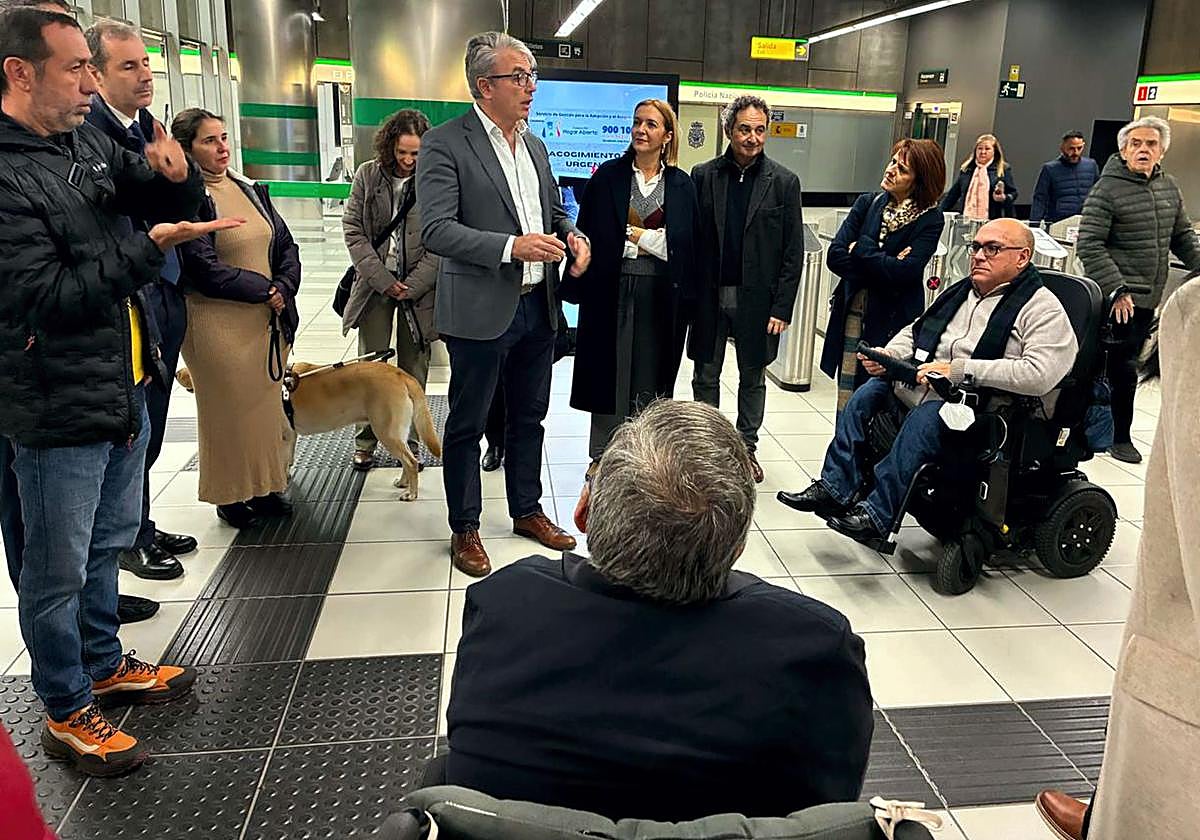

Metro de Málaga, the concessionaire company of the Junta de Andalucía, becomes the first metro in Spain to integrate sign language into its communication channels to inform people with hearing disabilities. The subway has included in the NaviLens codes of its stations informative videos in sign language that can be viewed using the NaviLens Go app.
"In this way, accessible communication channels are expanded, reinforcing the autonomy and safety of deaf people and consolidating NaviLens as a tool especially aimed at users with sensory disabilities, both visual and auditory," they highlight.
According to a statement, this new functionality, developed in collaboration with the Agrupación de Desarrollo Málaga Accesible, allows people with hearing disabilities to access clear and adapted information during their travels.
The official presentation of this new service featured the participation of the general director of Metro de Málaga, Fernando Lozano; the president of the Agrupación de Desarrollo Málaga Accesible, Alfredo de Pablos; the head of Social Services at ONCE Málaga, Irene García; as well as representatives from various associations of deaf people from the province and members affiliated with ONCE.
Also attending were the Heads of Accessibility from the Málaga City Council, María Luz Alcarazo, and from Málaga Airport, Patricia Cárdenas, as well as a sign language interpreter from the City Council.
NaviLens Technology
Metro de Málaga was the first subway in Andalusia to incorporate NaviLens technology in 2022, which has since facilitated guidance at stops and stations, especially for people with visual disabilities, thanks to the accessible instructions provided by the app. Additionally, the tool is useful for foreign people, as it automatically adapts the language to the one set on their mobile devices.
From the end of 2024, NaviLens will also incorporate estimated information about train times at stations and stops. Concurrently, Metro de Málaga is advancing another key accessibility initiative. In the coming weeks, it will publish an easy-read version of its usage guide, adapted by the non-profit association Aproinla and specifically aimed at people with intellectual disabilities.
Lines 1 and 2 of the Metro de Málaga cover 13.6 kilometers and have 19 stations and stops, including the extensions to El Perchel and Atarazanas, which have driven a significant increase in demand. So far this year, the metropolitan railway has carried more than 17.8 million passengers, consolidating itself as an essential pillar of sustainable mobility in the city.

Latest news





Upcoming events
12
Nov
El Desembarco, la traición de Viriato at La Caja Blanca
12
Nov
HOMER El Mero Mero at Sala Trinchera Málaga
13
Nov
Marbella Startup Lab – Innovate & Collaborate
13
Nov
Candlelight: Coldplay & Imagine Dragons at Sala Fundación Unicaja María Cristina
13
Nov
Candlelight: Tribute to Ludovico Einaudi at Anantara Villa Padierna
Similar News

Málaga Airport Makes History with More Than Three Million Passengers in One Month
Málaga

Port of Málaga looks beyond its docks to support future growth
Málaga

Guide to the Virgen del Carmen Processions in Málaga and the Province
Málaga
