


Albert Boadella, on his first performance in Malaga:
The founder of Els Joglars opens this Friday the Theater Festival with the premiere in Spain of the new version of 'El retablo de las maravillas', a production that also celebrates the 65 years of the tireless company.
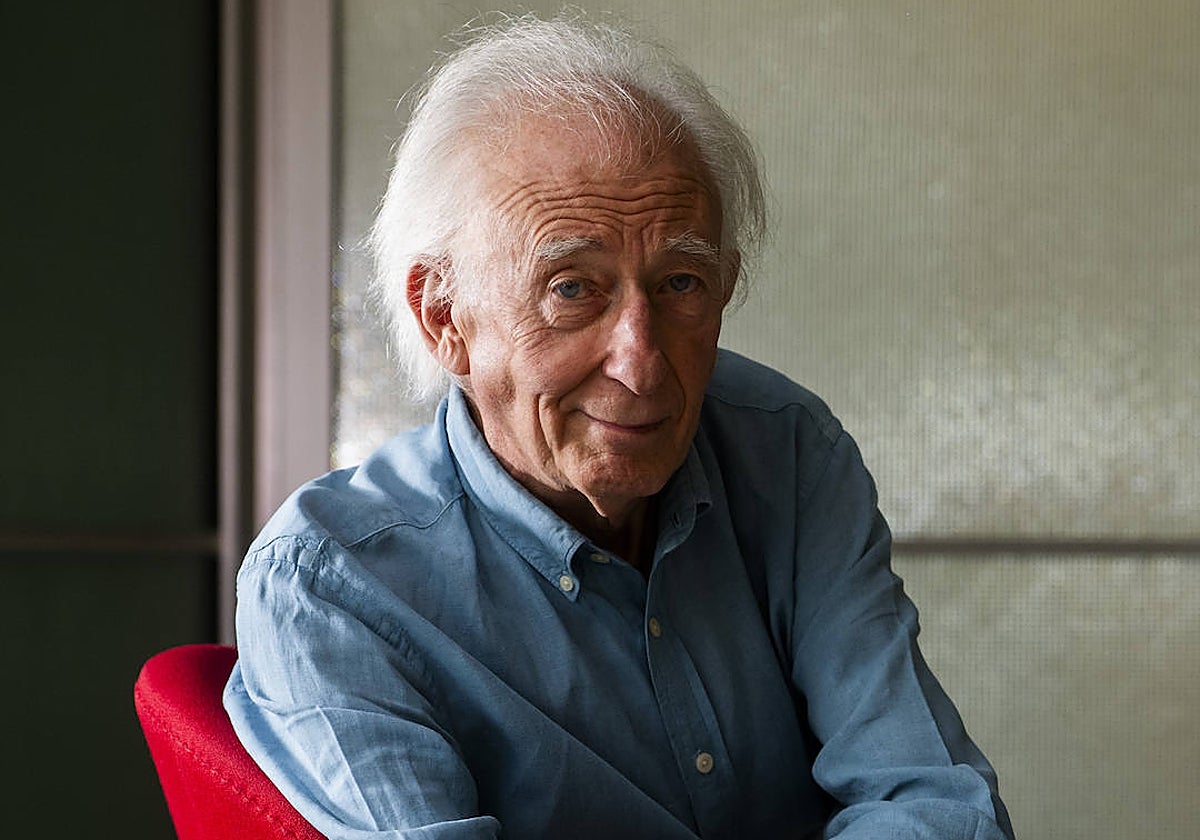

He warns that he has a "tremendous" flu, but, all things considered, he shows no loss of faculties whatsoever. Nor does he seem affected by his 82 years. He admits that he no longer has the vitality to rehearse as much as before, but Albert Boadella still has things to say, so retirement is not on his mind. Nor on the mind of his company, Els Joglars, which celebrates its 65th anniversary by taking to the stage with the intention of continuing to criticize our society through humor. With this intention, he updates Miguel Cervantes' classic 'The Puppet Show of Wonders,' which satirically alerts us to the "everyday deceits." Also turned into an essential classic, the Catalan company opens this Friday at the Theater Festival in Cervantes, where Boadella himself and actor Ramón Fontseré will also receive the award from this edition of the festival. Ironic, agile, and mocking in the interview, the theatrical director recalls that time in Malaga when he pulled a 'sabinazo' from the stage.
-Do you remember your first performance in Malaga?
-It was many years ago, in 1970, when I was still an actor, but it wasn't at the Teatro Cervantes, but in another hall whose name I can't remember. What I can't forget is that performance because I was doing somersaults on a sloped platform and I overdid it. I fell off the stage and ended up in the orchestra pit. Luckily I landed on my feet, because if I had fallen headfirst, I don't think I'd be talking to you now.
-Now they give you the Theater Festival award, does that make up for that mishap…
-The truth is that Andalusia is probably the region in Spain where Els Joglars has performed the most and I think there is a reason for that. For us, satire is fundamental and, of course, nobody can teach Andalusians a sense of humor. So after so many years, I'm happy about the award.
-After 65 years, how do you face a premiere?
-There's always some anxiety. The audience is not the same as when I started and the challenge for an artist is to connect with the audience of this moment. I am 82 years old and I have to communicate with an audience that generally belongs to younger generations than mine. And the challenge is to capture what interests, impresses, amuses, or angers these new generations.
"In our time, the sale of deceits has become our daily bread"
-And why will 'The Puppet Show of Wonders' interest them?
-Because it's a classic that, like some works written over 2,000 years ago in Greece, addresses myths that are still valid today. The theme of this play we would call the dissemination of nothingness, that is, the promotion of deceits. Due to the great expansion of written, visual, and auditory media in our time, the sale of deceits has become our daily bread. Therefore, Cervantes and his 'puppet show' are more relevant than ever.
-Are politicians the biggest liars?
-Els Joglars has always observed its social, human, and political environment. And, obviously, our productions have always caused controversy because some parts of society did not like it. We must not forget that in 1977 we were subjected to a court-martial and went to jail for a play. We must not forget that in 1985 and 1986 we had trials and attacks on the company. Obviously, there have always been powerful people who did not like what we did. And this is still the same. What happens is that now we are in a society with very thick skin. We tolerate things that surely 50 years ago we would have been more upset about. Now we see attitudes of power that seem scandalous that pass with some indifference for society as a whole, since people get angry at home, but do not dare to say anything.
"I do not trust unquestionable pulpits. Therefore, my advice is distrust"
-Do we now have the worst political class or is that something every generation always thinks?
-That is part of human nature. Deception is always present in society. What happens is that, at this moment, the means to deceive are very sophisticated. And there are people who, very easily, do not pass these things through a critical filter and swallow them calmly. Surely this did not happen 500 years ago, when deceiving was a bit more complicated. They deceived with a stick behind you, and if you did not believe it, they hit you with the stick. Now the stick is not even necessary, now people believe things without any coercion, things that are really incredible. And we are full of taboos. I always say that in Franco's time there were some taboos that were untouchable and that it was expensive if you touched them, such as religion, the regime, or sex issues. There were four taboos, but now there are many more. You make a satire about a female issue and the feminist world jumps on you. You defend bullfighting and you have all the animal rights activists calling you a murderer. There are many taboos that the progressive world has been building and this is what I take advantage of in the 'Puppet Show' to reflect on art, politics, and religion.
-Are social networks a fertile ground for lies and taboos?
-Networks have positive aspects such as the ease of communication, but the counterpart is the ease of deceiving. And it is a very dangerous tool for one essential fact since the one who says something does not have to identify themselves. And the anonymity of social networks fosters insinuations, lies, and the lowest aspects of the human being. If everyone had to identify themselves, our social networks would surely have a much more positive side.
-And is the antidote the central phrase of this Cervantes play: "See slowly what happens quickly?"
-Yes, the antidote is to think, not just look. It is not enough to observe. When they tell you something, it is good to have some distrust. Whenever I read something important, I check it through other channels. I do not trust unquestionable pulpits. Therefore, my advice is distrust. I am a great skeptic, sometimes excessively, as my wife says.
-One of the aspects you deal with in 'The Puppet Show of Wonders' is religiosity. After a period of loss of influence of Christianity, there is now a revival that is being seen in movies like 'The Sundays' or Rosalía's staging.
-My generation and the next lived under a moral of Christian tradition. That has partly disappeared and now people do not have very precise moral limits. What has happened is that people still have the religious instinct, because that impulse belongs to the human being itself, and they hook on to secular religions. That is, they become fanatics about climate change or other things, which they take as authentic religions. And I think that, for that, it is better the known one. The one we had. At least it was poetic. There, is the Trinity, the Holy Spirit, or the guardian angel. It has some poetry compared to the current ones that are purely material and that is something that we, to some extent, satirize in the play.
-What is the secret to being on stage for 65 years?
-Well, the complicated thing about a company is to endure the first ten years. After that, there is a tradition. That is, a whole school of acting is created within the same company that is passed from one to another. Evidently, Els Joglars is not the same company it was 65 years ago, but those who arrive find a passion for well-done work. And like footballers, our system is one of concentration since we have a headquarters near the Pyrenees, in the northern part of Catalonia, and we prepare a play by spending many hours together. It is a very artisanal and communicative work. We are not in a big city, but it is a kind of convent without vows of chastity. Well, a vow of obedience to the direction yes there is. And the vow of poverty I would say is mandatory because the theater is always very poor. But anyway, jokes aside, it is a way of working that has given many results and those who participate always say that they have been very happy with this way of rehearsing.
"As long as I have something to say, here I am. And it is also good to listen, as in antiquity, to the voice of the elders, which at this moment has no prestige"
-So, 65 years is not synonymous with retirement for the company.
-An artist has to retire when he has nothing to say. The theater has a problem for an actor, as it has physical limits, that is evident. In my case, I am the director and, indeed, I get more tired than 20 years ago and I cannot rehearse the number of hours I used to. This is how it is and, possibly, it will get worse, but as long as I have something to say, here I am. And I believe that it is also good to listen, as in antiquity, to the voice of the elders, which at this moment has no prestige.
-In the previous play about Juan Carlos I, you were accused of having too sympathetic a view of the character. How do you handle criticism?
-Critics have said everything, both good and bad. We have been praised and we have been cursed. About Juan Carlos, we think that what will remain above all is that he was the man who went from being an absolute king to a king limited by a Constitution. Therefore, he brought democracy to Spain and this is what will go down in history. All his whims, his feminine and economic obsessions, will remain in the small print, because the important thing was the other. Those of us who lived under the dictatorship know what this step means. I understand that there are generations that have not experienced it and may say that we left this gentleman very well. After all, that he likes women, well, that is essential in a king because basically he is made for procreation, because otherwise, the monarchy ends. Therefore, that he likes to fuck around the world, it seems that it must be forgiven to a king. That he appropriates public money, that has less grace. That he wanted to charge for the effort does not seem right to me and that was perfectly reflected in the play. So, we do not forgive him certain things, but we do understand the character with a broad view of history.
"'Ubú president' would be a case of total premonition, although we also fell short"
-Recently we saw Jordi Puyol testify by videoconference about the alleged corruption of his great family. Was 'Ubú president' premonitory?
-Absolutely. In the play, there were briefcases that went up and down, that opened and were full of bills. The first 'Ubú' was made in 1981, imagine if it was already premonitory of the situation. The truth is that I knew the character, but I dared to say it at that time. It would be a case of total premonition, although we also fell short, as always.
-What politician would deserve an 'Ubú' today?
-Many. Politics has set aside dignity or public service to become a game of personal interests with absolutely intolerable, completely crude forms. A politics of constant and rude attack, which is disgusting. That, unfortunately, is increasing and one does not know how we are going to end up. I do not say that it is one hundred percent, because I know people who work magnificently in politics and in city councils who sacrifice themselves in an extraordinary way, but the most important politicians give a lamentable spectacle.
-Between Sánchez and Trump, which one would you portray?
-Man, I see Trump in a 'far west' type of work, about deep America and without restrictions. The problem with Sánchez is another: amorality, so much so that there is not even ideology. He is a politician who can come out of anywhere. He is in the PSOE, but he could be in the PP or in VOX. He is a politician who only looks at himself and this is the side that, in a work, would be the most interesting. The endogamy of a person who passes everything through his own filter, even his own wife. It is a very unusual case, because he belongs to those people who today can tell you one thing and tomorrow tell you the opposite. That is why many people vote for him, because deep down they feel identified with this conception of life of not committing to anything. He is an interesting character and it surprises me that no playwright has made a work about him and amorality.

Latest news





Upcoming events
12
Nov
El Desembarco, la traición de Viriato at La Caja Blanca
12
Nov
HOMER El Mero Mero at Sala Trinchera Málaga
13
Nov
Marbella Startup Lab – Innovate & Collaborate
13
Nov
Candlelight: Coldplay & Imagine Dragons at Sala Fundación Unicaja María Cristina
13
Nov
Candlelight: Tribute to Ludovico Einaudi at Anantara Villa Padierna
Similar News

Málaga Airport Makes History with More Than Three Million Passengers in One Month
Málaga

Port of Málaga looks beyond its docks to support future growth
Málaga

Guide to the Virgen del Carmen Processions in Málaga and the Province
Málaga
