We didn't go from being hunters to being farmers and ranchers overnight: this is how the Neolithic was established in Europe.
The Evolution from Hunters to Farmers
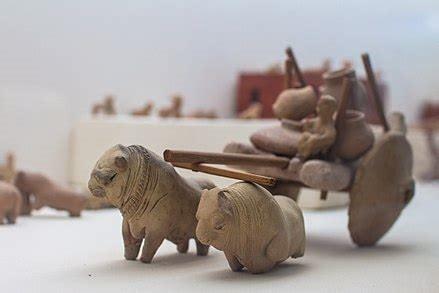

There was a time when our European ancestors sourced their food by hunting and gathering from the plants they found. This period, called the Mesolithic, ended when they began to practice agriculture and livestock farming, which was termed the Neolithic. And it was a gradual transition, not a sudden one.
From what we know, the Neolithic spread through Europe via well-differentiated routes. One went along the northern coast of the Mediterranean. The other crossed through the interior (the Balkans and Central Europe). The coastal route was faster, as individuals moved longer distances per generation.
Both routes exhibit very different cultural remains, such as pottery. Additionally, each route has some genetic sequences that do not appear in farmers from the other route. This has led to the belief that the mechanisms of Neolithic spread were entirely different in each case.
Surprisingly, however, it has now been found that the hybridization of the first Neolithic immigrants with the native populations was virtually the same along both routes.
Advancing through millennia
The Neolithic, originating from the Near East and Turkey,
first arrived in the southeast (Greece) about 9,000 years ago. It then spread westward and northward across Europe, until about 4,000 years ago.
At the end of the last century, some archaeologists believed that the last hunter-gatherers acquired domestic species from neighboring farmers and began practicing agriculture. But in recent decades, thanks to the analysis of prehistoric genetic remains, it has been shown that this was not the case.
We now know that it was populations of immigrant farmers who brought agriculture. But we also know that there was hybridization between both populations. The challenge is quantifying it, because data from many individuals are needed.
The genes speak
Together with my colleague Joaquim Pérez-Losada, we have analyzed in the journal Nature
Communications all the European Neolithic individuals whose genetic sequences are known (961 individuals in total). We have grouped them into 16 different geographical regions, some along the coastal route and others along the interior route.
The variation in the percentage of individuals who have a certain genetic sequence is different along the two routes, which have very different speeds and cover very different distances: about 6,000 kilometers for the coastal and about 3,000 km for the interior.
So far, there are no surprises, as it was known that the two routes were different. However, using computer simulations, we have discovered that the percentage of immigrant farmers who mated and had offspring with hunter-gatherers was virtually the same along both routes, approximately 3.6%.
This type of study, which combines computer simulations with archaeological and genetic data, may in the future allow us to better understand the evolution of European populations and also compare the roles of men and women in the hybridization between populations.

Latest news





Upcoming events
12
Nov
El Desembarco, la traición de Viriato at La Caja Blanca
12
Nov
HOMER El Mero Mero at Sala Trinchera Málaga
13
Nov
Marbella Startup Lab – Innovate & Collaborate
13
Nov
Candlelight: Coldplay & Imagine Dragons at Sala Fundación Unicaja María Cristina
13
Nov
Candlelight: Tribute to Ludovico Einaudi at Anantara Villa Padierna