


This was the most beautiful town in Andalusia in 2025, it's in Malaga and you haven't visited it yet.
Casares is one of the most beautiful towns in Málaga, with a privileged location, the birthplace of Andalusian nationalism, and unknown to many. This is the best town in Málaga that you can visit in January 2026: magical, land of bandits, and known as the 'Raisin Town'.
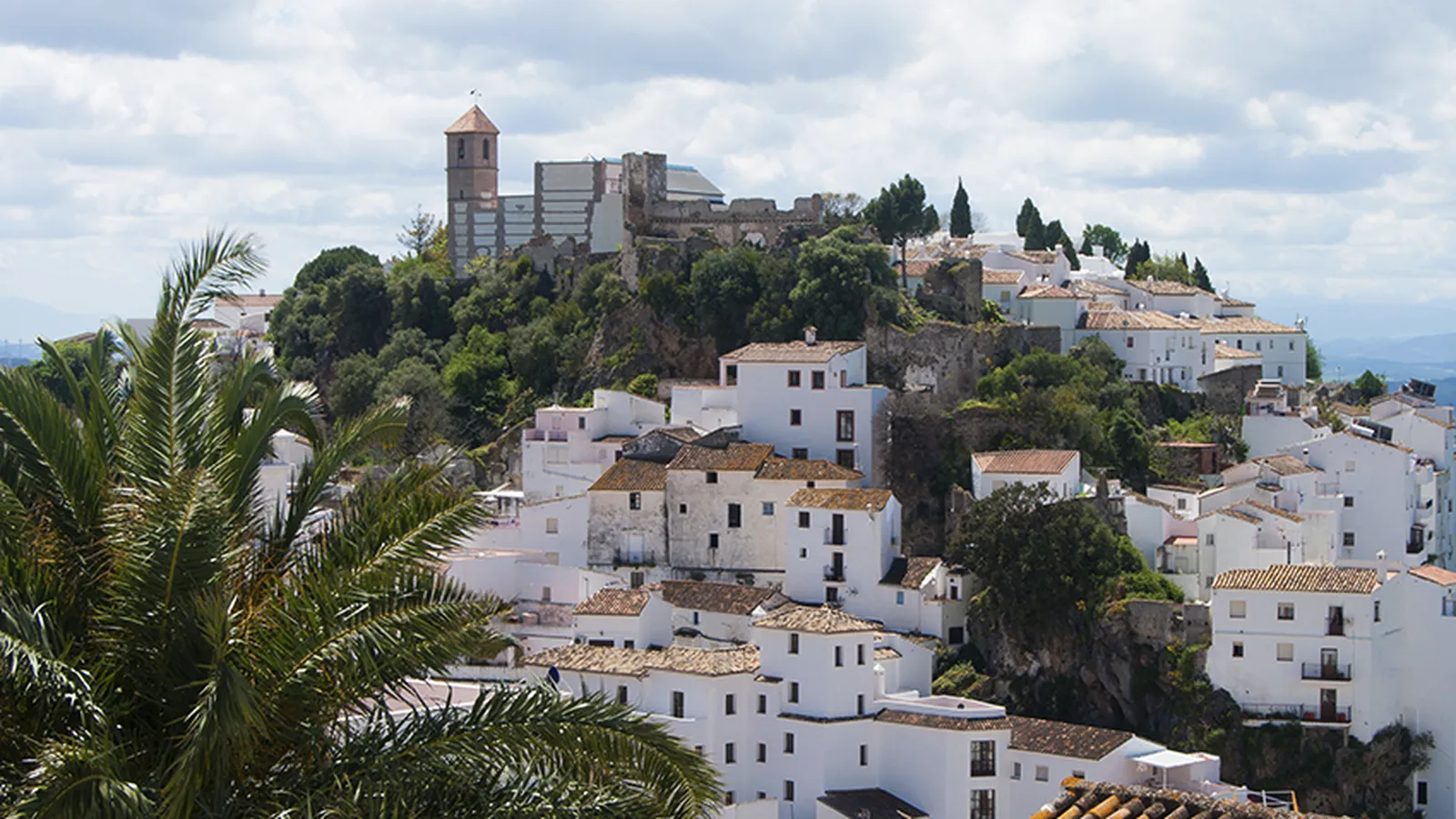

There are places that do not need to raise their voice to be noticed. Just a silhouette outlined against the mountains, a white hamlet that seems suspended on the hillside, and a history that seeps through every cobblestone street. This is how Casares presents itself, a name that in 2025 was etched on the map of Andalusian tourism after being chosen as the most beautiful village in Andalusia, an accolade that positions it as the representative of the community in the Spain Tourism Destination 2025 contest. A municipality of Málaga that encapsulates landscape, memory, and heritage in a single location.
Located at the western end of the province of Málaga, on the border with Cádiz, Casares precisely embodies the image of the Andalusian white villages. Its urban layout, declared a Historic-Artistic Site, adapts to the mountain's topography with whitewashed houses that seem to be part of the relief itself. From various points in the urban center, the viewpoints offer open panoramas towards the valleys, the surrounding hills, and, on clear days, the blue of the Mediterranean on the horizon.
The selection of Casares as the most beautiful village in Andalusia in 2025 by the Spain Tourism app reinforces a trajectory of recognitions that had already placed it among the country's most prominent villages, highlighting its scenic, historical, and cultural value within the province of Málaga.
A village tied to the history of Andalusia
Casares holds a unique place in Andalusian history as the birthplace of Blas Infante, a key figure in Andalusianism. In the municipality, spaces directly related to his legacy are preserved, such as the Blas Infante Birthplace House, now converted into an information office and cultural center, as well as the Blas Infante Cultural Center, reinforcing the town's connection with the historical identity of Andalusia.
The origins of Casares date back to prehistory, with human presence documented in its surroundings for more than 100,000 years. Over time, Romans, Visigoths, and Muslims left their mark on a site that had its own mint, forum, and walls in Roman times, and later consolidated as a strategic fortress during the Middle Ages.
Monumental heritage and unique architecture
The heritage of Casares is manifested in a monumental ensemble that allows visitors to traverse different historical stages. In the heart of the village lies the Carlos III Fountain, one of the most notable in the province of Málaga, built in the 18th century as part of a hydraulic system that supplied the urban core.
At the top of the hamlet stands the Castle of Casares, a fortress of Arab origin from the 13th century that retains remains of walls, towers, and access points. From this elevated spot, the view extends to the natural surroundings, including the Los Alcornocales Natural Park, reinforcing the connection between defensive heritage and landscape.
Ruins of Casares Castle.The tour is completed with religious buildings such as the Church of the Incarnation, whose Mudejar-style bell tower marks the town's profile, the parish church of San Sebastián, and the hermitage of the Veracruz, which add a spiritual and traditional character to the urban ensemble.
Nature, coast, and diverse landscapes
Although its most well-known image is that of a mountain village, Casares also has access to the Mediterranean. Within its municipal boundaries are beaches such as Playa Ancha, Piedra Paloma, Playa Chica, or the Playa de la Sal, which expand the landscape diversity of the municipality and reinforce its dual character between mountain and coast.
Playa Ancha, Casares / M. VidalInland, the natural environment offers multiple possibilities linked to hiking and landscape observation. Casares is located next to areas of high ecological value such as the Los Alcornocales Natural Park and Sierra Bermeja, where the reddish rock formations and the presence of the pinsapo, a unique endemic fir, stand out. In this context, the Sierra Crestellina integrates, with steep crests and marked trails that connect nature and the urban center.
Los Baños de la Hedionda, a unique enclave
Baños de la Hedionda. / Malaga.esAmong the most unique enclaves in the municipal area are the Baños de la Hedionda, a Roman-origin spa located about twenty minutes from the center of Casares, in the Manilva river valley. Its sulfurous waters, known for their intense characteristic smell, have generated stories and legends since antiquity, linked even to figures like Julius Caesar and episodes from the Roman world.
Gastronomy and local tradition
Gastronomy is an essential part of the identity of Casares. In its bars and restaurants, traditional dishes made with local products are maintained, reflecting a cuisine linked to the territory and rural culture. A good example of its gastronomy is Sarmiento, a restaurant recently recognized by the Michelin Guide led by brothers Juan Diego and Miguel. In the surroundings of the municipality is also located the Finca Cortesín, one of the most recognized hotel complexes in the province of Málaga, introducing an element of sophistication in a landscape dominated by tradition.

Latest news





Upcoming events
12
Nov
El Desembarco, la traición de Viriato at La Caja Blanca
12
Nov
HOMER El Mero Mero at Sala Trinchera Málaga
13
Nov
Marbella Startup Lab – Innovate & Collaborate
13
Nov
Candlelight: Coldplay & Imagine Dragons at Sala Fundación Unicaja María Cristina
13
Nov
Candlelight: Tribute to Ludovico Einaudi at Anantara Villa Padierna
Similar News

Málaga Airport Makes History with More Than Three Million Passengers in One Month
Málaga

Port of Málaga looks beyond its docks to support future growth
Málaga

Guide to the Virgen del Carmen Processions in Málaga and the Province
Málaga
