


Twelve Months to Discover Gaudí
Exhibitions, outreach activities, and new studies on his work and his figure will allow for a deeper understanding of the work of the Catalan genius, who passed away on June 10, 1926.
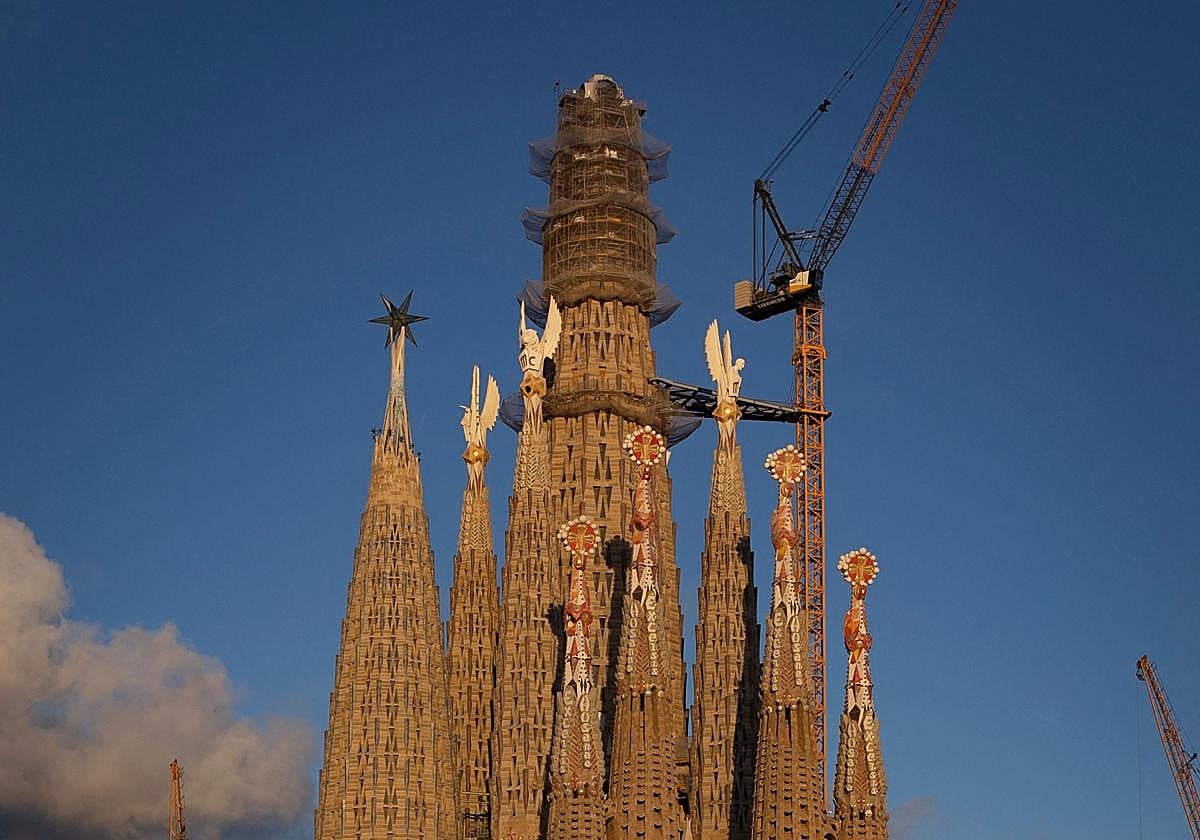

"Today we have awarded the title of architect to either a madman or a genius," commented Elies Rogent in 1878, then director of the School of Architecture in Barcelona. The genius, as we now know, was none other than Antonio Gaudí, whose centenary of death in 2026 is being commemorated with a program of activities that are not to be missed. The Gaudí Year is making a strong impression to be one of the cultural milestones of 2026.
The program will culminate with the crowning of the Sagrada Familia as the tallest temple in the world, pending the beatification of its creator, Antoni Gaudí, likely in the presence of the new Pope, Leo XIV, at the basilica. This event will be held before the International Union of Architects, which will gather 10,000 professionals in Barcelona this summer to present the latest studies on the master of Modernism.
Gaudí died on June 10, 1926, after having already established himself as an architect with works such as La Pedrera, Casa Batlló, and all the projects sponsored by his great patron, Eusebio Güell: from the Crypt in his factory colony to Park Güell, envisioned as a futuristic -for its time- urban development on the outskirts of Barcelona.
By then, the brilliant architect was immersed in what would be his great work, the Sagrada Familia. An expiatory temple where Gaudí unleashed his two great passions: architecture and a deep religious faith. A century later, the dozens of institutions and entities managing Antonio (or Antoni) Gaudí's works across Spain have united to commemorate the centenary of his death.
It is no coincidence that he is the architect with the most works recognized as World Heritage by UNESCO. Gaudí represents for UNESCO an "exceptional and outstanding creative contribution to the development of architecture in the late 19th and early 20th centuries." Moreover, he "anticipated and influenced many of the forms and techniques that were relevant for the development of modern construction in the 20th century." And he did so with "outstanding examples of different construction typologies," both residential and public.
The crowning of the Tower of Jesus, the pinnacle of the Sagrada Familia, will undoubtedly be the highlight of this Gaudí year, which the temple's construction managers have planned to celebrate in grand style.
With its height of 172.5 meters, the structure will be completed with the placement of the cross. A large three-dimensional cross with four arms and 12 meters high, similar to those seen in other Gaudí works like Casa Batlló, Park Güell, or the Torre Bellesguard.
But Gaudí's legacy is represented in all his buildings, such as the Palau Güell, Casa Vicens, the Teresianas College, or the Nau de Mataró, in addition to the previously mentioned works. And those that testify to his legacy in northern Spain, such as the Episcopal Palace of Astorga, El Capricho de Comillas, or Casa Botines in León.
All will be the setting for exhibitions and informative activities about the work of Gaudí, from which we will learn new historiographical studies this year. Indeed, the goal of the Gaudí Year, curated by the architect and director of the Gaudí Chair, Galdric Santana, is to delve deeper into his work. With 10 million visitors a year just to the Sagrada Familia and Park Güell, the goal is no longer just to introduce Gaudí to the world, but to explain what made him the brilliant architect he was.
This will be the aim of the international scientific congress to be held at La Pedrera -from June 28 to July 2- where all the new local and international research on Gaudí's work will be validated. Also, the exhibition Gaudí, the Invisible Order -at the Museum of History of Catalonia during the second half of 2026- will focus on "contributions that are absolutely unprecedented today," explains the curator of the Gaudí Year.
Architecture, Nature, and Faith
A man of faith, a keen observer of nature, and a brilliant architect, Antoni Gaudí has become a universal figure in modern architecture. His contribution to this discipline broke established molds. With innovative construction and structural systems -like the detailed models built inversely with systems of threads and weights- he defined his own unique and unprecedented methodology.
The result is expressed in an equally unique body of work, with a style full of symbolism and a meticulous attention to detail that manifests in his love for artisan crafts.
A detailed precision with two mirrors: nature and faith. Nature as a source of inspiration, not imitation, for the construction of new models. Faith as the ultimate goal: to reach God through beauty, which earned him the title of venerable by Pope Francis in 2025.

Latest news





Upcoming events
12
Nov
El Desembarco, la traición de Viriato at La Caja Blanca
12
Nov
HOMER El Mero Mero at Sala Trinchera Málaga
13
Nov
Marbella Startup Lab – Innovate & Collaborate
13
Nov
Candlelight: Coldplay & Imagine Dragons at Sala Fundación Unicaja María Cristina
13
Nov
Candlelight: Tribute to Ludovico Einaudi at Anantara Villa Padierna
Similar News

Málaga Airport Makes History with More Than Three Million Passengers in One Month
Málaga

Port of Málaga looks beyond its docks to support future growth
Málaga

Guide to the Virgen del Carmen Processions in Málaga and the Province
Málaga
