


A man buried with Iberian, Mediterranean, and North African roots was found in the Menga dolmen in Antequera.
The DNA content was very low and highly degraded. One hundred people evacuated from an illegal New Year's Eve party in Cruz de Humilladero.
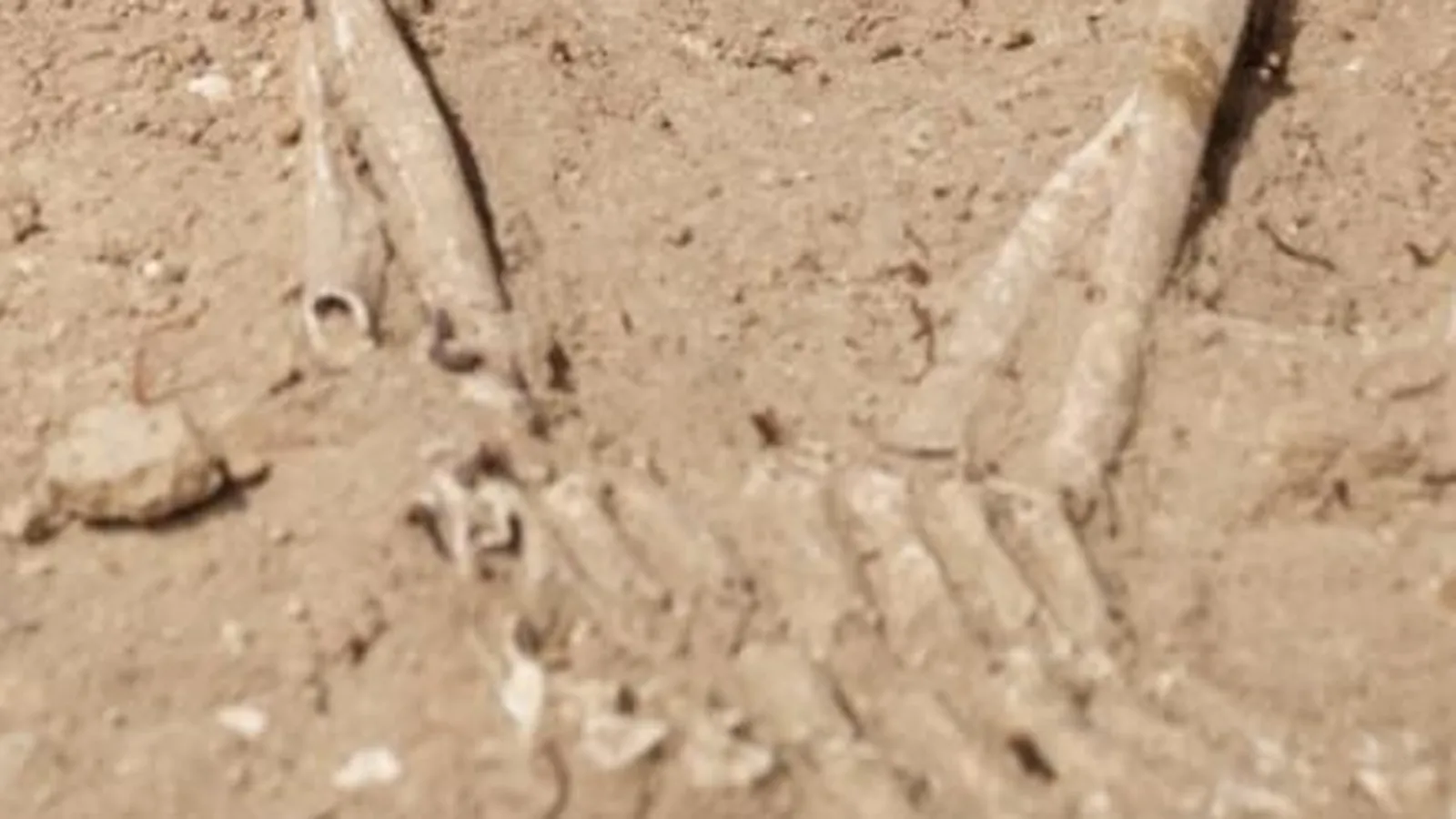

A group of experts have unveiled the complex genetic heritage of an individual buried in the Menga dolmen, in Antequera. The Atlas Research Group from the University of Seville (HUM-694) collaborates in an archaeogenomic study conducted by the British universities of Huddersfield and London (Francis Crick Institute) and Harvard University (USA), which reveals information about the genetic ancestry of two adult males buried in the atrium of the Menga dolmen, between the 8th and 11th centuries A.D. (Andalusian period).
The study is based on previous research carried out by the Atlas group, which provided data on the funerary context, physical anthropology, and the radiocarbon age of these two individuals, who were buried at the entrance of the large Neolithic dolmen in a highly formalized manner, with their heads pointing towards the inside of the dolmen, as stated in a press release. The study has been published in the Journal of Archaeological Science Reports.
In this research, the DNA of two medieval individuals, dated by radiocarbon between the 8th and 11th centuries A.D., buried in the atrium aligned with the symmetry axis of the dolmen, was analyzed.
The DNA content was very low and highly degraded, consistent with previous observations in prehistoric and historic Mediterranean Iberia. However, the genetic profile of one of the individuals was obtained after using the SNP enrichment technique, used to obtain useful genetic information when DNA is highly degraded or present in very low amounts.
This individual exhibits uniparental lineages typical of European populations but a mitochondrial DNA lineage (mtDNA) shared with modern North African individuals, and at the autosomal level also showed North African and Levantine ancestry, consistent with the general trend in the region during this period. In his mtDNA lineage, this individual shared two mutations with a sequence observed in a modern Mozabite individual from Algeria.
The Mozabites are a native Berber group from the M'zab Valley in northern Algeria, with their own language -- Mozabite, a variant of Berber -- which currently has a population of between 150,000 and 300,000 people. The genomic analysis of this individual "thus reflects the genetic, demographic, and cultural diversity of Andalusian society."
The study also proposes an interpretation of these burials based on archaeological and historical data, framed in the broader archaeological context of the reuse of prehistoric monuments during the Middle Ages, a widely documented phenomenon in Iberia.
The data collected suggest that during the period in which these two individuals were buried, the Menga dolmen was used as a hermitage or sanctuary (morabito).
The Menga dolmen, part of the Unesco World Heritage site in Antequera, was built in the fourth millennium B.C. during the Neolithic, but it has a long history of use and frequentation that extends to modern historical times. Indeed, it is likely that this large dolmen was used as a sacred and/or funerary space continuously from its construction between 3800 and 3600 B.C.

Latest news





Upcoming events
12
Nov
El Desembarco, la traición de Viriato at La Caja Blanca
12
Nov
HOMER El Mero Mero at Sala Trinchera Málaga
13
Nov
Marbella Startup Lab – Innovate & Collaborate
13
Nov
Candlelight: Coldplay & Imagine Dragons at Sala Fundación Unicaja María Cristina
13
Nov
Candlelight: Tribute to Ludovico Einaudi at Anantara Villa Padierna
Similar News
Agriculture generates 300 million euros in the Antequera region
Antequera


The new Leroy Merlin logistics center in Antequera begins operations
Antequera
