


The Young Churchill's History
150 Years Since the Birth of Sir Winston Churchill - His Youth
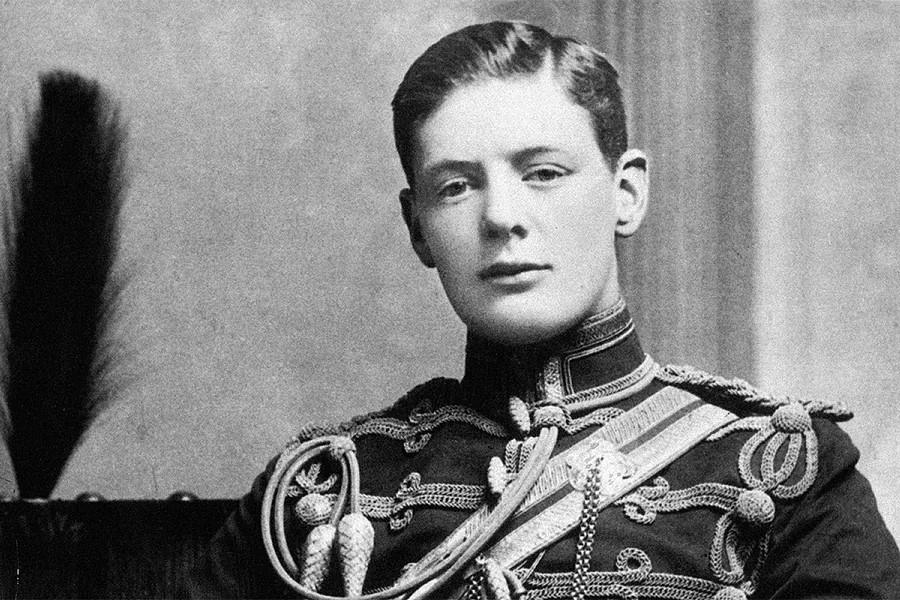

Anniversary History of the young Churchill: "His bravery, his
impudence and his impact were remarkable. At the age of 25 he was already world
famous"
The life of Winston Churchill, born 150 years
ago, continues to fascinate a growing legion of followers. His years at the
head of the United Kingdom during World War II are well known; in his youth he
participated in several wars in defense of the interests of the British Empire.
"On that morning of November 15, 1899, I
carried with me, despite my position as correspondent, my Mauser pistol,"
Winston Churchill would later write in My Early Life, the autobiographical
account of his prolific years of youth, in which he dedicated several chapters
on his experiences in South Africa during the Second Boer War. "I thought
I could kill that man, and after the treatment I had received I ardently wanted
to do it. I put my hand on my belt, but the pistol was not there. When I was
busy clearing the track, getting on and off the locomotive, etc. , I had
dropped it (...) The Boer continued to look at me and I believed that he had
absolutely no chance of escaping; if he fired he would hit me, without a doubt,
so I raised my hands and surrendered as a prisoner of war".
Along with a group of companions also detained
while traveling on an armored train from Estcourt, the young Churchill was
imprisoned in a Pretoria camp. The heroic story of his escape made him a very
popular and beloved legendary character in his country and marked the beginning
of his long political career, while putting an end to an epic period of his
life in which he served the British Empire as a military man and journalism as
a correspondent on different war fronts. In South Africa it was no different.
"As on previous occasions, this dual status as journalist and officer did
not mean that Churchill did not fight," explains the British politician
and historian Roy Jenkins in his now classic biography of the character
published in 2001, shortly before his death. "If he had not always done
this," he concludes, "he would not have been able to claim that he
had killed five and perhaps seven dervishes in Sudan."
AT BLENHEIM PALACE
The
following year, in 1900, at only 25 years old, he managed to enter Parliament
and begin a political career that would keep him in the Chamber until shortly
before his death in 1965 and in which he would occupy almost all possible
ministries in different governments. until reaching the head of the Council of
Ministers during the difficult years of the Second World War. His solid
training, his temperance, his ambition and his tough character had been forged,
however, in that first quarter of a century of vital explosion, which had taken
him to the confines of the British Empire. And wherever he went, since he was a
teenager and almost self-taught, writing became for him an essential and
complementary activity, regardless of his position, which would lead him, in
1953, to receive the Nobel Prize in Literature. What began as a necessity to
supplement his meager military salary would become a habit over the years
thanks to an inalienable drive to leave testimony of his privileged life. His
texts on the two world wars are well known, but much less is what he wrote
about his military adventures as a youth, collected in 1930 in the volume My
Early Life.

Latest news





Upcoming events
12
Nov
El Desembarco, la traición de Viriato at La Caja Blanca
12
Nov
HOMER El Mero Mero at Sala Trinchera Málaga
13
Nov
Marbella Startup Lab – Innovate & Collaborate
13
Nov
Candlelight: Coldplay & Imagine Dragons at Sala Fundación Unicaja María Cristina
13
Nov
Candlelight: Tribute to Ludovico Einaudi at Anantara Villa Padierna
Similar News
Jorge Rando, Painter, from Malaga and with a museum in his native land
Spanish chef José Andrés receives the highest distinction possible in the US
